


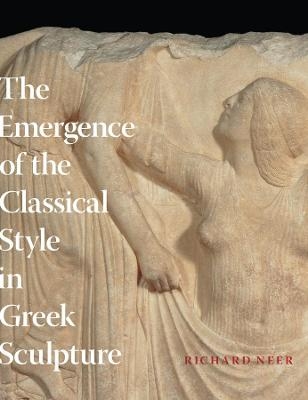
The Emergence of the Classical Style in Greek Sculpture
Seiten
2010
University of Chicago Press (Verlag)
978-0-226-57063-1 (ISBN)
University of Chicago Press (Verlag)
978-0-226-57063-1 (ISBN)
In the fifth century BCE, an artistic revolution occurred in Greece, as sculptors developed the ways of representing bodies, movement, and space. This title tells the story of Greek sculpture. It provides the ways to understand classical sculpture in Greek terms, and analyzes the relationship between political and stylistic histories.
In the fifth century BCE, an artistic revolution occurred in Greece, as sculptors developed new ways of representing bodies, movement, and space. The resulting 'classical' style would prove influential for centuries to come. Modern scholars have traditionally described the emergence of this style as a steady march of progress, culminating in masterpieces like the Parthenon sculptures. But this account assumes the impossible: that the early Greeks were working tirelessly toward a style of which they had no prior knowledge. In this ambitious work, Richard Neer draws on recent work in art history, archaeology, literary criticism, and art theory to rewrite the story of Greek sculpture. He provides new ways to understand classical sculpture in Greek terms, and carefully analyzes the relationship between political and stylistic histories. A much-heralded project, "The Emergence of the Classical Style in Greek Sculpture" represents an important step in furthering our understanding of the ancient world.
In the fifth century BCE, an artistic revolution occurred in Greece, as sculptors developed new ways of representing bodies, movement, and space. The resulting 'classical' style would prove influential for centuries to come. Modern scholars have traditionally described the emergence of this style as a steady march of progress, culminating in masterpieces like the Parthenon sculptures. But this account assumes the impossible: that the early Greeks were working tirelessly toward a style of which they had no prior knowledge. In this ambitious work, Richard Neer draws on recent work in art history, archaeology, literary criticism, and art theory to rewrite the story of Greek sculpture. He provides new ways to understand classical sculpture in Greek terms, and carefully analyzes the relationship between political and stylistic histories. A much-heralded project, "The Emergence of the Classical Style in Greek Sculpture" represents an important step in furthering our understanding of the ancient world.
Richard Neer is the David B. and Clara E. Stern Professor of Humanities, Art History, and the College at the University of Chicago, where he is also a coeditor of Critical Inquiry. He is the author of several previous volumes on Greek art and archaeology.
| Erscheint lt. Verlag | 23.12.2010 |
|---|---|
| Sprache | englisch |
| Maße | 23 x 28 mm |
| Gewicht | 1191 g |
| Themenwelt | Kunst / Musik / Theater ► Kunstgeschichte / Kunststile |
| Kunst / Musik / Theater ► Malerei / Plastik | |
| ISBN-10 | 0-226-57063-0 / 0226570630 |
| ISBN-13 | 978-0-226-57063-1 / 9780226570631 |
| Zustand | Neuware |
| Informationen gemäß Produktsicherheitsverordnung (GPSR) | |
| Haben Sie eine Frage zum Produkt? |
Mehr entdecken
aus dem Bereich



aus dem Bereich
kleine Kulturgeschichte einer brillanten Allianz
Buch | Softcover (2025)
Iudicium (Verlag)
CHF 33,90


