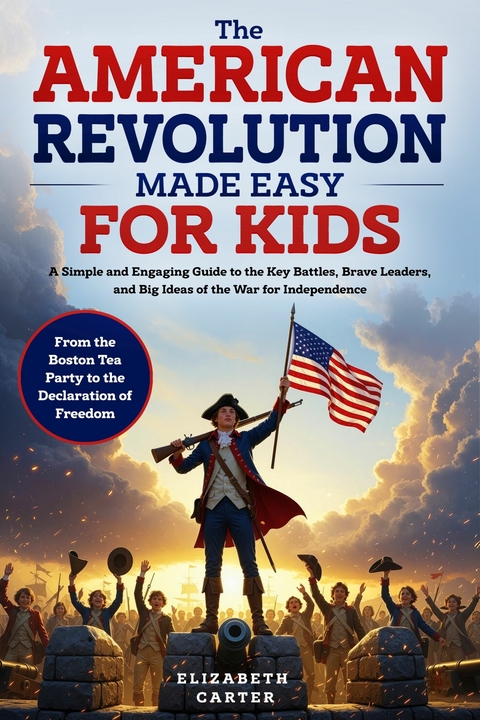
The American Revolution Made Easy for Kids (eBook)
98 Seiten
Publishdrive (Verlag)
978-0-00-096600-1 (ISBN)
• Taxes and Tension
As we move into the heart of the American Revolution, we step into a world brimming with rising tension and simmering unrest. The American colonies, once celebrated as lands of promise and fresh beginnings, were fast becoming centers of conflict and defiance. At the core of this mounting turmoil lay two deeply connected forces: taxes and the tension they unleashed. Let’s unravel this critical moment and trace the sparks that ignited the Revolution.
The trouble began in the 1760s when the British government introduced new taxes aimed not at guiding trade, as earlier tariffs had done, but at raising money. Britain had just emerged from the costly Seven Years’ War burdened by enormous debt. British leaders argued that since the colonies had gained protection and advantages from this war, they should shoulder part of the financial load.
The first of these measures was the Sugar Act of 1764, which taxed molasses—a crucial ingredient in the booming rum industry. Then came the Stamp Act of 1765, which required colonists to purchase official British stamps for every printed document they used, from newspapers to legal papers to playing cards. This outraged colonists. To them, these taxes violated their long-standing rights as Englishmen. Under English tradition, taxes were only lawful if approved by representatives of the people. But the colonists had no representatives in Parliament. They were being taxed without their consent—a direct affront to what they believed was fair and just.
As resentment grew, protests erupted throughout the colonies. In Boston, tradesmen and merchants formed the Sons of Liberty, determined to resist the Stamp Act. They organized large public demonstrations, drafted petitions, and sometimes turned to violent tactics. In a notorious incident, they destroyed the home of the appointed stamp distributor, sending a clear message of their fury.
The British response was to tighten control. Troops were dispatched to Boston to enforce order, a move that only fueled colonial anger. The daily sight of British soldiers on the streets was a stark, unsettling symbol of their lost autonomy—an ever-present reminder of British power over their lives.
Tensions reached a tragic climax on March 5, 1770. A confrontation between an agitated crowd and British soldiers escalated until the soldiers fired into the mass of colonists, killing five. This grim event, quickly known as the Boston Massacre, reverberated through the colonies, highlighting in blood the costs of submission and the urgency of their grievances.
Despite this, British leaders pressed on, levying more taxes, including the Tea Act of 1773. This act triggered the famous Boston Tea Party, where colonists, disguised as Mohawk Indians, boarded ships and dumped entire shipments of tea into the harbor to protest the unfair tax. Across the colonies, people met in town halls, penned passionate letters, and set up committees to organize their pushback. Slowly, they began to see themselves not merely as British subjects, but as something new—Americans.
In 1774, delegates from twelve of the thirteen colonies gathered in Philadelphia at the First Continental Congress. They compiled a formal list of complaints and agreed to boycott British goods. This was more than just protest—it was an early stride toward unity and collective resistance.
Keep this volatile period in mind as we delve deeper into the Revolution’s unfolding story. It was an era of profound change, difficult choices, and fierce debates over what freedom truly meant. It was a time when the colonists' vision of liberty faced severe tests. And it was in this charged atmosphere of taxes and tension that the seeds of rebellion took root. The American Revolution was far more than a clash of armies; it was a determined fight for the very idea of freedom—born out of frustration, injustice, and an unyielding belief in the right to self-govern.
• The Stamp Act
With tensions already simmering across the colonies, we come to a critical turning point in the road to revolution: the Stamp Act. This single piece of legislation would ignite colonial anger in ways that forever changed the relationship between Britain and its American colonies. To understand the birth of the Revolution, it’s essential to grasp the profound impact of this Act.
In 1765, the British Parliament enacted the Stamp Act, mandating that colonists pay a tax on virtually every piece of printed paper they used. This included legal documents, licenses, newspapers, pamphlets, and even humble playing cards. What’s more, this tax had to be paid in British currency—not colonial paper money—making compliance even more burdensome. The official reason for the tax was to help cover the expenses of maintaining British troops in North America after the costly Seven Years’ War.
At first glance, the Stamp Act might appear to be just a minor financial nuisance, a reasonable fee for the security and benefits of British rule. But to the colonists, it carried far deeper and more troubling implications. This was the first direct tax Britain had ever levied on the colonies, reaching into the pockets of everyday people, not just merchants engaged in overseas trade. Even more importantly, it was imposed without their consent. The colonies had no elected representatives in the British Parliament, meaning they had no voice in approving this tax—or any other laws imposed by London.
The colonial backlash was immediate and fierce. “No taxation without representation!” became their thunderous slogan. To the colonists, the Stamp Act was a glaring violation of their rights as English subjects. Under long-standing British tradition, taxes required the approval of elected representatives—a safeguard of liberty they believed was being shamelessly ignored. Now, they were being compelled to pay taxes decreed by a legislature thousands of miles away in which they had no seat and no vote.
Outrage swept through the colonies. Protests flared in towns and cities from north to south. Merchants banded together to boycott British goods, putting powerful economic pressure on British exporters. Lawyers refused to use the taxed paper, effectively halting court proceedings. In Boston, Samuel Adams and the Sons of Liberty organized dramatic demonstrations. They burned effigies of tax collectors and vandalized the homes of British officials, leaving no doubt about their fury.
The Stamp Act revealed just how fragile the ties between the colonies and Britain had become. Until this point, the colonies had managed much of their own affairs, with minimal interference from London. The Stamp Act signaled a new era—an era of heavy-handed oversight and direct taxation that the colonists had no intention of accepting quietly.
Facing relentless opposition and the crushing economic impact of the widespread boycotts, Parliament repealed the Stamp Act in 1766, less than a year after it had become law. But the repeal did little to mend the damage. The Stamp Act had already planted seeds of mistrust and defiance. It had unified the colonies in common cause and proven that collective resistance could sway British policy. More importantly, it sparked a spirit of determined resistance that would continue to grow.
As we continue exploring the story of the American Revolution, keep in mind the true weight of the Stamp Act. It was far more than a tax—it was a symbol of a brewing struggle over rights and self-governance. It stood as proof of the colonists’ willingness to challenge injustice and protect their freedoms. The Stamp Act was one of the first crucial steps on the long road to independence—a road that would ultimately give rise to a new nation.
• The Boston Massacre
Following the turmoil of the Stamp Act, the fragile relationship between the American colonists and the British crown continued to unravel. Although the Act’s repeal offered a short-lived sense of relief, new policies soon emerged, reigniting colonial frustration. Amid this growing discord, one event would push tensions to a breaking point and become a powerful symbol of the colonists’ quest for independence: the Boston Massacre.
By 1770, the streets of Boston were charged with hostility and suspicion. British soldiers patrolled the city, dispatched to enforce the new tax measures and maintain British authority. To many Bostonians, these redcoats were not guardians of peace but stark reminders of foreign domination—a daily embodiment of the oppressive control they resented.
On a frigid night, March 5, a clash began when a British soldier and a colonist exchanged heated words. The dispute drew a swelling crowd that soon numbered in the hundreds. Insults flew, snowballs and debris were thrown, and tensions spiked into chaos. Surrounded and unnerved, the outnumbered soldiers panicked. Muskets were raised, shots rang out, and when the haze of gunpowder lifted, five colonists lay dead or mortally wounded.
This incident, quickly branded the Boston Massacre, reverberated throughout the colonies. Engravings by Paul Revere and impassioned reports spread rapidly, framing the tragedy as a brutal slaughter of defenseless colonists by merciless British troops. The truth was tangled and far less clear-cut: the soldiers had fired under intense fear and confusion. Still, the story that captured the public imagination was one of British cruelty and colonial innocence, fueling outrage and deepening the divide.
The Boston Massacre marked a pivotal escalation in colonial resistance. It ignited a wave of indignation, strengthening the push for independence and sharpening the colonists’ sense of shared...
| Erscheint lt. Verlag | 10.7.2025 |
|---|---|
| Sprache | englisch |
| Themenwelt | Kinder- / Jugendbuch |
| ISBN-10 | 0-00-096600-2 / 0000966002 |
| ISBN-13 | 978-0-00-096600-1 / 9780000966001 |
| Informationen gemäß Produktsicherheitsverordnung (GPSR) | |
| Haben Sie eine Frage zum Produkt? |
 EPUB (Adobe DRM)
Größe: 13,7 MB
Kopierschutz: Adobe-DRM
Adobe-DRM ist ein Kopierschutz, der das eBook vor Mißbrauch schützen soll. Dabei wird das eBook bereits beim Download auf Ihre persönliche Adobe-ID autorisiert. Lesen können Sie das eBook dann nur auf den Geräten, welche ebenfalls auf Ihre Adobe-ID registriert sind.
Details zum Adobe-DRM
Dateiformat: EPUB (Electronic Publication)
EPUB ist ein offener Standard für eBooks und eignet sich besonders zur Darstellung von Belletristik und Sachbüchern. Der Fließtext wird dynamisch an die Display- und Schriftgröße angepasst. Auch für mobile Lesegeräte ist EPUB daher gut geeignet.
Systemvoraussetzungen:
PC/Mac: Mit einem PC oder Mac können Sie dieses eBook lesen. Sie benötigen eine
eReader: Dieses eBook kann mit (fast) allen eBook-Readern gelesen werden. Mit dem amazon-Kindle ist es aber nicht kompatibel.
Smartphone/Tablet: Egal ob Apple oder Android, dieses eBook können Sie lesen. Sie benötigen eine
Geräteliste und zusätzliche Hinweise
Buying eBooks from abroad
For tax law reasons we can sell eBooks just within Germany and Switzerland. Regrettably we cannot fulfill eBook-orders from other countries.
aus dem Bereich