



Deutsche Erbengemeinschaft und italienische comunione ereditaria
Eine historisch-vergleichende Untersuchung
Seiten
2026
Mohr Siebeck (Verlag)
978-3-16-200238-9 (ISBN)
Mohr Siebeck (Verlag)
978-3-16-200238-9 (ISBN)
- Noch nicht erschienen (ca. März 2026)
- Versandkostenfrei
- Auch auf Rechnung
- Artikel merken
Kira Behre examines the historical development of the German community of heirs and the Italian comunione ereditaria and then uses a functional analysis of the applicable law in both countries to show the weaknesses and strengths of both concepts of multiple heirship.
If a deceased person has multiple heirs, the law has to answer a number of important questions: Who may administer, take possession of and use the deceased's assets and to what extent? Who is liable for the debts left by the deceased and to what extent, and to whom must the deceased's creditors turn? As substantive inheritance law has so far been spared fundamental standardization, European countries answer these questions differently. The German community of heirs was essentially developed from that of Prussian land law. Today, it presents itself as a community of joint heirs in which the co-heirs are generally treated as a collective until the estate is divided. Although the Italian Codice civile of the 19th century goes back to the Code Napoléon, it was also significantly influenced by Austrian law and was reissued in 1942. Today, the comunione ereditaria presents itself as a hybrid form, in which the legal power of the individual heir still extends further than in Austria, but his responsibility for the liabilities of the estate has also increased. On the one hand, this work examines the question as to which historical assessments have given the community of heirs of the German Civil Code and that of the Italian Civil Code their current forms and, on the other hand, sheds light on the currently applicable German and Italian law.
If a deceased person has multiple heirs, the law has to answer a number of important questions: Who may administer, take possession of and use the deceased's assets and to what extent? Who is liable for the debts left by the deceased and to what extent, and to whom must the deceased's creditors turn? As substantive inheritance law has so far been spared fundamental standardization, European countries answer these questions differently. The German community of heirs was essentially developed from that of Prussian land law. Today, it presents itself as a community of joint heirs in which the co-heirs are generally treated as a collective until the estate is divided. Although the Italian Codice civile of the 19th century goes back to the Code Napoléon, it was also significantly influenced by Austrian law and was reissued in 1942. Today, the comunione ereditaria presents itself as a hybrid form, in which the legal power of the individual heir still extends further than in Austria, but his responsibility for the liabilities of the estate has also increased. On the one hand, this work examines the question as to which historical assessments have given the community of heirs of the German Civil Code and that of the Italian Civil Code their current forms and, on the other hand, sheds light on the currently applicable German and Italian law.
Born 1990; studied law at the University of Freiburg and the Università degli Studi Firenze (Italy); 2015 First State Examination in Law; legal clerkship in Freiburg, Frankfurt a.M., and Budapest; 2018 Second State Examination in Law; PhD expected in 2025 (Freiburg i.Br.); legal assessor in a notary office in Freiburg i.Br.
| Erscheint lt. Verlag | 31.3.2026 |
|---|---|
| Reihe/Serie | Studien zum ausländischen und internationalen Privatrecht |
| Verlagsort | Tübingen |
| Sprache | deutsch |
| Maße | 155 x 232 mm |
| Themenwelt | Geschichte ► Teilgebiete der Geschichte ► Militärgeschichte |
| Recht / Steuern ► Allgemeines / Lexika | |
| Recht / Steuern ► EU / Internationales Recht | |
| Recht / Steuern ► Privatrecht / Bürgerliches Recht ► Besonderes Schuldrecht | |
| Recht / Steuern ► Rechtsgeschichte | |
| Schlagworte | ABGB • BGB • Code Napoléon • Codice civile • comunione ereditaria • Deutsches Recht • Eigentum • Erbengemeinschaft • Erbrecht • Europäisches Privatrecht • Gesamthandsgemeinschaft • Haftung • historische Rechtsentwicklung • Italienisches Recht • Miterben • Nachlass • Nachlassverbindlichkeiten • Rechtsvergleichung • Vermögensverwaltung |
| ISBN-10 | 3-16-200238-9 / 3162002389 |
| ISBN-13 | 978-3-16-200238-9 / 9783162002389 |
| Zustand | Neuware |
| Informationen gemäß Produktsicherheitsverordnung (GPSR) | |
| Haben Sie eine Frage zum Produkt? |
Mehr entdecken
aus dem Bereich


aus dem Bereich
von der Wiederbewaffnung bis zur Zeitenwende
Buch | Softcover (2025)
C.H.Beck (Verlag)
CHF 16,80
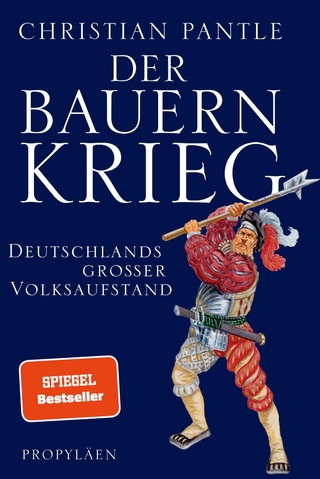
Deutschlands großer Volksaufstand
Buch | Softcover (2024)
Propyläen Verlag
CHF 30,80


