


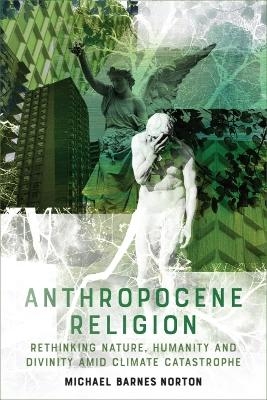
Anthropocene Religion
Rethinking Nature, Humanity and Divinity Amid Climate Catastrophe
Seiten
2026
Edinburgh University Press (Verlag)
978-1-4744-2540-7 (ISBN)
Edinburgh University Press (Verlag)
978-1-4744-2540-7 (ISBN)
- Noch nicht erschienen (ca. August 2026)
- Portofrei ab CHF 40
- Auch auf Rechnung
- Artikel merken
Offers a constructive, philosophical approach to religion informed by environmental philosophy, one that is neither dismissive of religion nor apologetic.
Anthropocene Religion argues that addressing a future, and present, shaped by worldwide catastrophic climate change involves not only radically rethinking the ideas of nature, and humanity’s place within it, inherited from Western modernity. It also demands a reconceptualization of the nature and role of religion. The advent of the Anthropocene simultaneously displaces the human from the centre of the world and erodes all sharp distinctions between the natural environment and the realm of human activity. Similarly, the Anthropocene renders untenable concepts of religion that rely on reference to realms, beings or forces that wholly transcend nature. It is, however, possible to understand both religion and its divine referents in worldly rather than transcendent terms, just as it is possible to understand nature as dynamic and creative. The Gaia hypothesis offers us a figure through which to approach these concepts in their interconnectedness.
Anthropocene Religion argues that addressing a future, and present, shaped by worldwide catastrophic climate change involves not only radically rethinking the ideas of nature, and humanity’s place within it, inherited from Western modernity. It also demands a reconceptualization of the nature and role of religion. The advent of the Anthropocene simultaneously displaces the human from the centre of the world and erodes all sharp distinctions between the natural environment and the realm of human activity. Similarly, the Anthropocene renders untenable concepts of religion that rely on reference to realms, beings or forces that wholly transcend nature. It is, however, possible to understand both religion and its divine referents in worldly rather than transcendent terms, just as it is possible to understand nature as dynamic and creative. The Gaia hypothesis offers us a figure through which to approach these concepts in their interconnectedness.
Michael Barnes Norton is Associate Professor of Philosophy and Associate Dean of the College of Humanities, Arts, Social Sciences, and Education at the University of Arkansas at Little Rock.
Acknowledgements
Introduction: Rethinking Religion in a New Climate
1. The Time of the Anthropocene
2. Nature’s Rough Edges
3. Nature and Gaia in the Anthropocene
4. What Religion Does
5. Religion in the Anthropocene
6. The Anthropocene Divine
Conclusion: Understanding Religion in the World Ahead
Bibliography
| Erscheint lt. Verlag | 31.8.2026 |
|---|---|
| Verlagsort | Edinburgh |
| Sprache | englisch |
| Maße | 156 x 234 mm |
| Themenwelt | Geisteswissenschaften ► Philosophie |
| Geisteswissenschaften ► Religion / Theologie | |
| ISBN-10 | 1-4744-2540-2 / 1474425402 |
| ISBN-13 | 978-1-4744-2540-7 / 9781474425407 |
| Zustand | Neuware |
| Informationen gemäß Produktsicherheitsverordnung (GPSR) | |
| Haben Sie eine Frage zum Produkt? |
Mehr entdecken
aus dem Bereich



aus dem Bereich
wie Tiere den Tod verstehen
Buch | Hardcover (2025)
Insel Verlag
CHF 42,90
eine Ethik des Verzichts
Buch | Softcover (2025)
Reclam (Verlag)
CHF 9,80
Buch | Softcover (2025)
Wiley-VCH (Verlag)
CHF 30,80


