Post-Stroke Communication Therapy
Routledge (Verlag)
978-1-041-00731-9 (ISBN)
- Noch nicht erschienen (ca. April 2026)
- Versandkostenfrei
- Auch auf Rechnung
- Artikel merken
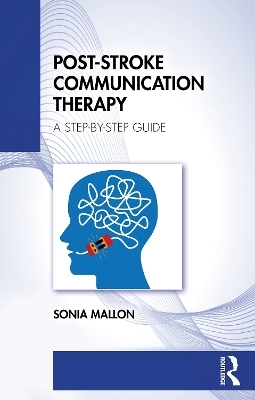
Post- Stroke Communication Therapy: A Step – By – Step Guide is a manual for undertaking communication therapy with patients who have survived a stroke.
The book provides step-by-step instructions on therapy with patients who have aphasia, dyspraxia and dysarthria following a stroke. Each chapter provides details on how to undertake communication therapy including singing, semantic feature analysis, drilling and conversation practice. Each technique is supported by hints and tips developed by the author over the course of her career and provide additional advice on what to do if a patient is struggling, plus guidance on how to make tasks easier or more stretching. There is a mix of impairment and functional based therapies with tips throughout to make therapy easier for the patient and the therapist.
This accessible guide is a great resource for qualified Speech and Language therapists, as well as Speech and language therapy students looking for further reading to support their studies.
Sonia Mallon is a specialised speech and language therapist and the Speech and Language Therapy Stroke Lead within the NHS in West Wales. Mallon oversees the running of four acute stroke wards and three out-patient stroke services and has been working within this field for over ten years.
Chapter 1 – Introduction
Ø Dysarthria
Ø Dyspraxia
Ø Aphasia
· Broca’s aphasia
· Wernicke’s aphasia
· Conduction aphasia
· Global aphasia
Ø Cognitive – communication disorder
Ø Therapy
Chapter 2 – Assessment first?
Ø Differential diagnosis: Aphasia, Dysarthria, Dyspraxia and Cognitive – communication disorder
Ø Aphasia
Ø Dysarthria
Ø Dyspraxia
Ø Still unsure?
Ø Patient goals and the impact of impairment
Chapter 3 – Word finding
Ø Semantic feature analysis
· How to do semantic feature analysis
· Semantic tasks to work on SFA
- Semantic category sorting
o How to do semantic category sorting
Ø Category listing
· How to do category listing
Ø Reverse Semantic feature analysis
· How to do reverse semantic feature analysis (Method 1)
· How to do reverse semantic feature analysis (Method 2)
Ø Semantic Links
· How to do semantic link therapy
Ø Phonological component analysis
· How to do phonological component analysis
Ø Picture naming therapy
· How to do picture naming therapy
Chapter 4 – Verbs
Ø Verb Network strengthening Therapy
· How to do verb network strengthening therapy
Ø Verb picture naming task
· How to do verb picture naming
Ø Sentence completion
· How to do sentence completion therapy
Ø Tense therapy
· How to do tense therapy
Ø Morphophonological therapy
Ø Inflected verb-form auditory discrimination therapy
· How to do inflected verb-form auditory discrimination therapy
Ø Inflected forms lexical decision therapy
· How to do inflected forms lexical decision therapy
Ø Inflected verb form generation
· How to do inflected verb form generation
Ø Transformation of verb tense
· How to do transformation of verb tense therapy
Chapter 5 – Singing
Ø Melodic intonation therapy
· How to do melodic intonation therapy
· How can MIT be stepped up and down
· Ways of incorporating MIT outside of therapy
Chapter 6 – Sentences
Ø Mapping therapy
· How to do mapping therapy
Ø Colour coding
· How to do colour coding
Ø Treatment of underlying forms
· How to do Treatment of underlying forms therapy
Ø Response Elaboration therapy
· How to do response elaboration therapy
Ø Intensive Language Action therapy
· How to do Intensive language action therapy
· How to do request version of ILAT
· How to do planning version of ILAT
Chapter 7 – Writing
Ø Copy and Recall therapy
· How to do copy and recall therapy
Ø Anagram copy therapy
· How to do Anagram copy therapy
Ø Homophone written word matching
· How to do homophone written word matching
Ø Phoneme – grapheme writing therapy
· How to do phoneme – grapheme writing therapy
Ø Problem solving writing therapy
· How to do problem solving writing therapy
Ø Two staged phonological and interactive spelling therapy
· How to do the first stage of phonological and interactive two-stage spelling therapy
· The second stage of phonological – interactive writing therapy
· How to do the second stage of the phonological – interactive writing therapy
Ø Writing in longer sentences
Chapter 8 – Reading
Ø Pure alexia
· Multiple Oral re-reading (MOR)
§ How to undertake multiple oral re-reading (MOR)
· Speeded letter matching task
§ How to do speeded letter matching therapy
· Whole – word reading therapy
§ How to do whole – word reading therapy
· Tactile – kinaesthetic reading therapy
§ How to do phase one of tactile – kinaesthetic therapy
§ How to do the second phase of tactile – kinaesthetic reading therapy
Ø Surface alexia
· Grapheme to phoneme conversion reading therapy
§ How to undertake grapheme to phoneme conversion reading therapy
Ø Deep Alexia
· Single - word oral reading therapy
§ How to do single word oral reading therapy
· Blending phonological reading therapy
§ How to do phonological blending reading therapy
Ø Phonological alexia
· Phonological rehabilitation therapy
§ How to do phonological rehabilitation therapy
§ The second stage of phonological rehabilitation
§ How to do the second stage of phonological rehabilitation
Chapter 9 – Dysarthria
Ø Boost articulation therapy
· How to do Boost articulation therapy
Ø Orofacial – Myofunctional therapy
· How to do Orofacial – Myofunctional therapy
§ Phase 1 - Increasing awareness of the muscles of the tongue, cheeks, lips and jaw
§ Phase 2 – Exercises for the tip of the tongue
§ Phase 3 – Exercises for the posterior end of the tongue
§ Phase 4 – Improvement of labial seals
§ Phase 5 – Tongue resting postures
§ Phase 6 – Exercises for the jaw
§ Phase 7 – Exercises for the cheek musculature
Ø Be Clear therapy technique
· How to do Be Clear therapy
§ The pre-practice stage
§ The intensive therapy stage
Ø Hand tapping
· How to do hand tapping therapy
Chapter 10 – Dyspraxia
Ø Dyspraxia drills
· How to do dyspraxia drills
· How to make drilling easier or harder?
Ø Tapping
· How to do tapping
· Stepping tapping therapy up and down
· Utilising tapping as a functional support cue
Ø Articulatory – kinematic approaches
· Sound production treatment
§ How to do sound production treatment (SPT)
§ Using Sound Production Treatment techniques in conversation
· Articulatory cueing therapy
§ How to do articulatory cueing therapy
Ø Working with dyspraxia in practice
Chapter 11 – Conversation
Ø Total communication
· What’s in the total communication toolkit
· How to do total communication
Ø Word finding strategies and conversations
· What are word finding strategies
· How to practice word finding strategies
Ø Script training
· How to do script training
Ø Promoting Aphasic’s communication Effectiveness
· How to do PACE therapy
· Making PACE therapy harder or easier
Chapter 12 – Where next?
Ø Generalisation
Ø Real-life activities
· How to practice real-life activities
§ Activities for role playing task
Ø Positive communication exchanges
· How to do positive communication exchanges
§ Scenarios for introducing positive communication exchanges
Ø Communication partner training (CPT)
· How to do communication partner training
§ Strategies that can be utilised when undertaking communication – partner training
Ø Focusing on goals
Ø Group therapy
· How to do group therapy
· Ideas for different groups
Ø Getting back to work
· Tasks that can be undertaken to prepare for returning to work
Bibliography
| Erscheint lt. Verlag | 28.4.2026 |
|---|---|
| Zusatzinfo | 5 Tables, black and white |
| Verlagsort | London |
| Sprache | englisch |
| Maße | 138 x 216 mm |
| Themenwelt | Geisteswissenschaften ► Psychologie ► Allgemeine Psychologie |
| Geisteswissenschaften ► Psychologie ► Biopsychologie / Neurowissenschaften | |
| Geisteswissenschaften ► Psychologie ► Verhaltenstherapie | |
| Medizin / Pharmazie ► Gesundheitsfachberufe ► Logopädie | |
| ISBN-10 | 1-041-00731-0 / 1041007310 |
| ISBN-13 | 978-1-041-00731-9 / 9781041007319 |
| Zustand | Neuware |
| Informationen gemäß Produktsicherheitsverordnung (GPSR) | |
| Haben Sie eine Frage zum Produkt? |
aus dem Bereich