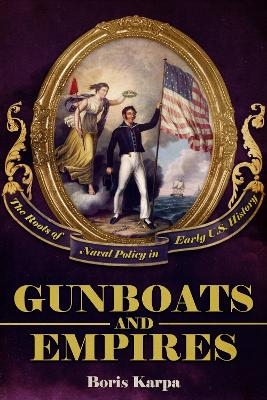
Gunboats and Empires
Casemate Publishers (Verlag)
978-1-63624-641-3 (ISBN)
- Noch nicht erschienen (ca. Mai 2026)
- Versandkostenfrei
- Auch auf Rechnung
- Artikel merken
Gunboats and Empires reveals how Thomas Jefferson’s naval strategy—favoring small, fast gunboats over a traditional ocean-going fleet—was influenced by Enlightenment ideals and a selective interpretation of European military history. In the years before the War of 1812, Jefferson and his allies looked to the Russo-Turkish War, and especially the 1788 battle of the Liman, as validation of his belief in smallcraft tactics, despite the battle’s contested interpretations and its limited relevance to the American context.
Drawing on letters, newspapers, and official records, the book reveals how Jefferson’s strategic vision was shaped not only by military reality but his own political and ideological convictions. This is a story of how leaders use history to confirm their beliefs, a compelling case study of the ways preconceptions and political agendas can influence strategic decision-making—offering lessons that resonate well beyond the early republic.
Boris Karpa is a historian specializing in early 19th-century military history and U.S.-Russian relations. He holds a PhD in history from Tel Aviv University, where his research focused on the ideological and strategic influences shaping early American naval policy. His work explores how political perception and foreign military models—particularly those of Russia and Britain—affected the formation of Jeffersonian strategy. Beyond academia, Karpa has published articles on military history, diplomacy, and strategic thought. His expertise combines archival research with accessible storytelling, making complex historical debates engaging for both scholars and general readers. He currently resides in Batumi, Georgia, where he continues researching and writing on military history.
Part I: Ideological Foundations
1. The British Origins of American Anti-Militarism and Anti-Navalism
How British political traditions shaped early American skepticism toward standing militaries and navies.
Part II: Perception vs. Reality
2. The Battle of the Liman—Reality and Perception
How Jefferson and his allies misunderstood Russia’s naval engagements and drew lessons that would shape U.S. policy.
Part III: Policy in Action
3. Thomas Jefferson’s First Presidential Term (1801–1805)—Setting the Terms
The foundation of Jeffersonian naval policy and early influences.
4. Jefferson’s Second Term: The Naval Program Takes Shape
5. The gunboat strategy solidifies and naval investments shift.
6. Madison’s First Term: Madison as the Implementer of Jeffersonian Policy
7. How the War of 1812 tested Jefferson’s naval philosophy.
| Erscheint lt. Verlag | 15.5.2026 |
|---|---|
| Zusatzinfo | 5–10 |
| Sprache | englisch |
| Maße | 152 x 229 mm |
| Themenwelt | Geisteswissenschaften ► Geschichte ► Teilgebiete der Geschichte |
| Sozialwissenschaften ► Politik / Verwaltung | |
| ISBN-10 | 1-63624-641-9 / 1636246419 |
| ISBN-13 | 978-1-63624-641-3 / 9781636246413 |
| Zustand | Neuware |
| Informationen gemäß Produktsicherheitsverordnung (GPSR) | |
| Haben Sie eine Frage zum Produkt? |
aus dem Bereich