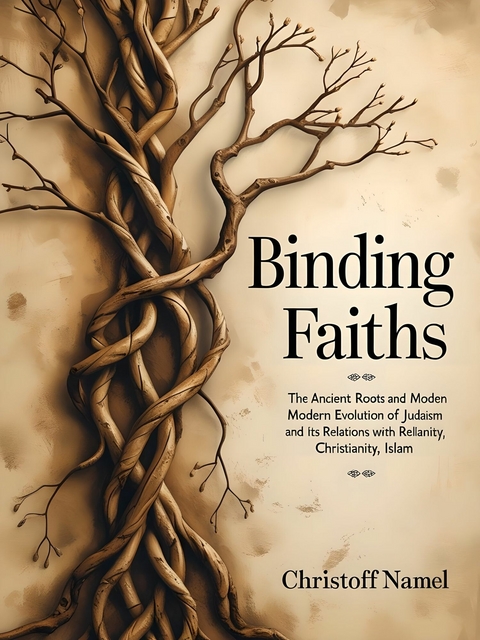
Binding Faiths (eBook)
522 Seiten
Publishdrive (Verlag)
978-0-00-111167-7 (ISBN)
Unlock the Timeless Bonds of Faith: A Deep Dive into Judaism's Ancient Roots, Modern Evolution, and Interfaith Relations
In Binding Faiths: Exploring the Ancient Roots, Modern Evolution, and Interfaith Relations of Judaism with Christianity, Islam, and Global Religions, embark on an enlightening journey through the rich tapestry of Judaism history-from its ancient origins in the Fertile Crescent to its dynamic role in today's interconnected world. This authoritative book delves into the foundational stories of Abrahamic religions, revealing how Judaism's core tenets have evolved over millennia while forging profound connections-and sometimes tensions-with Christianity, Islam, and other global faiths.
Discover the ancient Judaism that shaped biblical narratives, including the Exodus, the Temple eras, and the wisdom of prophets that influenced Western civilization. Trace the religion's resilience through diasporas, persecutions, and reforms, from the Babylonian Exile to the Enlightenment and beyond. The book explores Judaism and Christianity's shared Messianic hopes and doctrinal divergences, such as the role of Jesus in interfaith relations, and examines Judaism and Islam's intertwined histories through figures like Maimonides and shared Abrahamic heritage in the Middle East.
But Binding Faiths doesn't stop at the past. It charts modern Judaism's evolution amid globalization, secularism, and cultural shifts-covering Zionism, the Holocaust's impact, and contemporary movements like Reform, Conservative, and Orthodox Judaism. Gain insights into ongoing interfaith dialogues, including peace initiatives in Israel-Palestine, ecumenical councils, and global religious pluralism. With comparative religion analysis, the book addresses how Judaism interacts with Eastern philosophies, atheism, and emerging spiritualities, offering a balanced perspective on harmony, conflict, and mutual enrichment.
Written for scholars, students, religious leaders, and curious minds, this comprehensive guide combines rigorous research with accessible storytelling. Whether you're studying Judaism history for academic purposes, seeking to understand Abrahamic religions in a divided world, or exploring interfaith relations to foster tolerance, Binding Faiths provides invaluable context. Backed by historical timelines, key figure profiles, and thought-provoking discussions, it equips readers with tools to navigate today's religious landscape.
Why read this book? In an era of cultural clashes and spiritual seeking, Binding Faiths bridges divides, promoting understanding and empathy. Perfect for fans of comparative religion classics like Karen Armstrong's A History of God or Reza Aslan's God: A Human History, but with a focused lens on Judaism's enduring legacy. Expand your worldview, challenge assumptions, and discover how ancient roots continue to shape modern evolution.
Don't miss this essential resource on Judaism history and interfaith relations. Order Binding Faiths today and uncover the binding threads that connect us all-ancient wisdom meeting modern insight for a more unified future!
Chapter 22: The Talmud. An In-Depth Overview
Introduction:
The Talmud is the central text of Rabbinic Judaism, comprising a vast compendium of laws, ethics, philosophy, history, and folklore. It is considered the most comprehensive record of Jewish oral law and tradition, and it serves as the foundational authority for Jewish religious practice.
The Talmud consists of two main parts:
- Mishnah: The core legal code compiled around 200 CE.
- Gemara: The extensive commentary and discussion elaborating on the Mishnah, compiled over the next few centuries, with the Jerusalem Talmud completed around 400 CE and the Babylonian Talmud around 500 CE.
Characteristics of the Talmud:
Complex Structure:
The Talmud is organized into 63 tractates (Masekhtot), covering diverse topics like laws of Sabbath, festivals, civil law, torts, purity, and ethics.
Dialectical and Analytical Style:
Its style revolves around debates, conflicting opinions, and dialogues among rabbis (Amoraim and Tannaim). This dialectical approach encourages continuous study, interpretation, and debate.
Multi-layered Text:
The Talmud features rulings, stories, philosophical discussions, legal principles, and folklore, all interconnected. Problems are posed and analyzed from multiple perspectives.
Language:
Primarily written in two languages: Rabbinic Hebrew and Aramaic, reflecting the linguistic environment of the Jewish communities during late antiquity.
Legal and Religious Authority:
It is regarded as the ultimate authority on Jewish law, interpretation, and ethics, shaping Jewish life for centuries and influencing Christianity and Islam.
Study as a Spiritual Practice:
The Talmud is traditionally studied in pairs or groups, emphasizing critical thinking, debate, and deep engagement—a spiritual exercise that fosters community and learning.
Significance:
As the backbone of Rabbinic Judaism, the Talmud has preserved and elaborated upon biblical teachings, adapted religious observances, and addressed ethical quandaries. It embodies the dynamic, living nature of Jewish tradition.
Selected Quotes from the Talmud (Original Hebrew, with transliteration and translations):
1.
Hebrew:
“הלכה כאברהם אבינו בכל דבר בין בזמנו בין בדורותיו.”
Transliteration:
“Halacha keAvraham Avinu bechol davar bein bizmano bein bedorotav.”
English:
“The law follows Abraham our forefather in all matters, whether in his time or in generations to come.”
French:
“La halakha suit Abraham notre ancêtre en toutes choses, que ce soit de son temps ou dans les générations futures.”
Italian:
“La legge segue Abramo nostro antenato in tutte le questioni, sia nel suo tempo che nelle generazioni successive.”
Spanish:
“La halajá sigue a Abraham nuestro patriarca en todos los asuntos, ya sea en su tiempo o en las generaciones futuras.”
Romanian:
“Legea urmează lui Avraam, strămoșul nostru, în toate privințele, fie în vremea lui, fie în generațiile viitoare.”
2.
Hebrew:
“איזה יפה מי שמטהר את כפיו ומדליק נרות בראשית.”
Transliteration:
“Eize yafe mi she-me’taher et kafav u-medalik nerot Be’reshit.”
English:
“How beautiful is he who purifies his hands and lights candles at the beginning (of Shabbat).”
French:
“Combien il est beau celui qui purifie ses mains et allume des bougies au début (du Shabbat).”
Italian:
“Quanto è bello chi si purifica le mani e accende le candele all’inizio (del Shabbat).”
Spanish:
“Qué hermoso es quien purifica sus manos y enciende velas al comenzar (el Shabbat).”
Romanian:
“Cât de frumos este cel care își curăță mâinile și aprinde lumânări la început (de Shabbat).”
3.
Hebrew:
“אין דברי חברים אלא דברי הקב״ה.”
Transliteration:
“Ein divrei chaverei ella divrei Hakadosh Baruch Hu.”
English:
“My friends’ words are nothing but the words of the Holy One, blessed be He.”
French:
“Les paroles de mes amis ne sont que les paroles du Saint, béni soit-Il.”
Italian:
“Le parole dei miei amici sono nulla se non le parole del Santo, benedetto egli sia.”
Spanish:
“Las palabras de mis amigos no son nada más que las palabras del Santo, bendito sea.”
Romanian:
“Cuvintele prietenilor mei nu sunt nimic altceva decât cuvintele Sfântului, binecuvântat să fie.”
4.
Hebrew:
“הוי זהיר בבדיקת דבריך, שמא תמצא עצמך בשגגה תועה.”
Transliteration:
“Hav ezhir b’vodat d’varayich, shama timtza atzmecha bishgaga to’a.”
English:
“Be careful in examining your words, lest you find yourself mistakenly wandering.”
French:
“Sois prudent en examinant tes paroles, de peur de te retrouver errant par erreur.”
Italian:
“Sii cauto nel esaminare le tue parole, temo di trovarti sbagliando accidentalmente.”
Spanish:
“Ten cuidado al examinar tus palabras, no sea que te encuentres errando por accidente.”
Romanian:
“Fii atent în verificarea cuvintelor tale, ca să nu te găsești rătăcind din greșeală.”
5.
Hebrew:
“הפך את דבריך לחרב, ואחר כך לכתוב, כדי שיקראו בארץ.”
Transliteration:
“Hafach et divrayich lekarav, ve’achar kach lich’tov, k’dei sheyikru ba’aretz.”
English:
“Turn your words into a sword, and then into writing, so that they will be read in the land.”
French:
“Transforme tes paroles en épée, puis en écriture, afin qu’elles soient lues dans le pays.”
Italian:
“Trasforma le tue parole in una spada, e poi in scrittura, affinché siano lette nel paese.”
Spanish:
“Convierte tus palabras en una espada, y luego en escritura, para que sean leídas en la tierra.”
Romanian:
“Transformă-ți vorbele în sabie, apoi în scriere, pentru ca să fie citite în țară.”
6.
Hebrew:
“עַל־פִּי שֶׁתַּרְאֶה לְרַחַם עַל־אָבִיךָ וְעַל־אִמָּךְ.”
Transliteration:
“Al pi shetareh l’racham al avicha v’al ima.”
English:
“Plead for compassion for your father and mother.”
French:
“Implore pour la compassion pour ton père et ta mère.”
Italian:
“Preghi per compassione per tuo padre e tua madre.”
Spanish:
“Ruega por compasión por tu padre y tu madre.”
Romanian:
“Roagă pentru milă pentru tatăl și mama...
| Erscheint lt. Verlag | 28.11.2025 |
|---|---|
| Sprache | englisch |
| Themenwelt | Geisteswissenschaften ► Religion / Theologie ► Judentum |
| ISBN-10 | 0-00-111167-1 / 0001111671 |
| ISBN-13 | 978-0-00-111167-7 / 9780001111677 |
| Informationen gemäß Produktsicherheitsverordnung (GPSR) | |
| Haben Sie eine Frage zum Produkt? |
 EPUB (Adobe DRM)
Größe: 1,8 MB
Kopierschutz: Adobe-DRM
Adobe-DRM ist ein Kopierschutz, der das eBook vor Mißbrauch schützen soll. Dabei wird das eBook bereits beim Download auf Ihre persönliche Adobe-ID autorisiert. Lesen können Sie das eBook dann nur auf den Geräten, welche ebenfalls auf Ihre Adobe-ID registriert sind.
Details zum Adobe-DRM
Dateiformat: EPUB (Electronic Publication)
EPUB ist ein offener Standard für eBooks und eignet sich besonders zur Darstellung von Belletristik und Sachbüchern. Der Fließtext wird dynamisch an die Display- und Schriftgröße angepasst. Auch für mobile Lesegeräte ist EPUB daher gut geeignet.
Systemvoraussetzungen:
PC/Mac: Mit einem PC oder Mac können Sie dieses eBook lesen. Sie benötigen eine
eReader: Dieses eBook kann mit (fast) allen eBook-Readern gelesen werden. Mit dem amazon-Kindle ist es aber nicht kompatibel.
Smartphone/Tablet: Egal ob Apple oder Android, dieses eBook können Sie lesen. Sie benötigen eine
Geräteliste und zusätzliche Hinweise
Buying eBooks from abroad
For tax law reasons we can sell eBooks just within Germany and Switzerland. Regrettably we cannot fulfill eBook-orders from other countries.
aus dem Bereich