


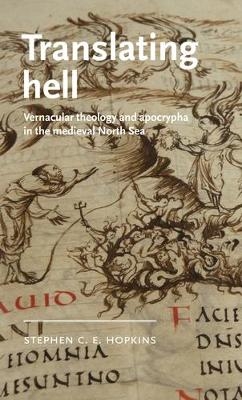
Translating Hell
Vernacular Theology and Apocrypha in the Medieval North Sea
Seiten
2026
Manchester University Press (Verlag)
978-1-5261-7503-8 (ISBN)
Manchester University Press (Verlag)
978-1-5261-7503-8 (ISBN)
- Noch nicht erschienen (ca. Mai 2026)
- Versandkostenfrei
- Auch auf Rechnung
- Artikel merken
A groundbreaking comparative study of the weird apocryphal hells found in the vernaculars of medieval Ireland, England, Wales, and Iceland. This book explores how apocrypha about hell encouraged early vernacular literary experiments with hefty theological and local implications, as writers harnessed creativity in the face of uncertainty. -- .
In the Middle Ages, hell was useful because it was vaguely defined. Canonical scriptures scarcely mention hell, leaving much to the imaginations of early Christians, who used it to sort out who belonged within the faith. This book explores how hell became a place for literary experiments with local challenges in theology and identity. Following the reception and transformations of two popular hell apocrypha, it argues that they served as this role because of their liminal textual authority. As noncanonical scriptures, apocrypha afforded medieval writers space to revise their hells (since they were not actually scripture), while also encouraging readers to revere those experiments as valid (since they seemed like scripture). The book brings together adaptations from early medieval England, Iceland, Ireland, and Wales, placing the early vernacular theologies of the North Sea in comparative conversation. -- .
In the Middle Ages, hell was useful because it was vaguely defined. Canonical scriptures scarcely mention hell, leaving much to the imaginations of early Christians, who used it to sort out who belonged within the faith. This book explores how hell became a place for literary experiments with local challenges in theology and identity. Following the reception and transformations of two popular hell apocrypha, it argues that they served as this role because of their liminal textual authority. As noncanonical scriptures, apocrypha afforded medieval writers space to revise their hells (since they were not actually scripture), while also encouraging readers to revere those experiments as valid (since they seemed like scripture). The book brings together adaptations from early medieval England, Iceland, Ireland, and Wales, placing the early vernacular theologies of the North Sea in comparative conversation. -- .
Stephen Hopkins is Assistant Professor of English Literature at the University of Virginia -- .
Introduction: Concocting hell in vernacular theologies
1 Divining the inferno: Late antique apocrypha and the invention of hell
2 Baptising the past: Irish apocrypha and the limits of salvation
3 Heath, harrows or home? Competing metaphors for hell in early medieval England
4 Raiding hell’s borders: Purgatory and courtly culture in medieval Wales
5 Angling for salvation: Heathen myth and typological thought in Old Norse literature
Conclusion
Bibliography
Index -- .
| Erscheint lt. Verlag | 5.5.2026 |
|---|---|
| Reihe/Serie | Manchester Medieval Literature and Culture |
| Zusatzinfo | 7 illustrations |
| Verlagsort | Manchester |
| Sprache | englisch |
| Maße | 138 x 216 mm |
| Themenwelt | Geschichte ► Allgemeine Geschichte ► Mittelalter |
| Religion / Theologie ► Christentum ► Kirchengeschichte | |
| Geisteswissenschaften ► Sprach- / Literaturwissenschaft ► Anglistik / Amerikanistik | |
| Geisteswissenschaften ► Sprach- / Literaturwissenschaft ► Literaturwissenschaft | |
| ISBN-10 | 1-5261-7503-7 / 1526175037 |
| ISBN-13 | 978-1-5261-7503-8 / 9781526175038 |
| Zustand | Neuware |
| Informationen gemäß Produktsicherheitsverordnung (GPSR) | |
| Haben Sie eine Frage zum Produkt? |
Mehr entdecken
aus dem Bereich


aus dem Bereich
Geschichte einer Augsburger Familie (1367-1650)
Buch | Softcover (2024)
Kohlhammer (Verlag)
CHF 47,60


