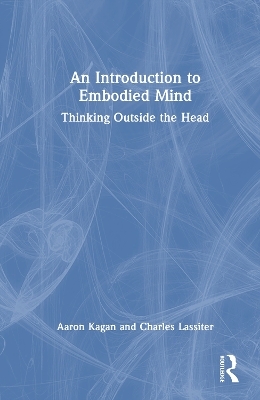
An Introduction to Embodied Mind
Routledge (Verlag)
978-1-032-41178-1 (ISBN)
- Noch nicht erschienen (ca. April 2026)
- Versandkostenfrei
- Auch auf Rechnung
- Artikel merken
An Introduction to Embodied Mind: Thinking Outside the Head offers readers a valuable gateway to understanding one of the most exciting ideas in philosophy and cognitive science: that minds are not confined to the brain but extend into the body and environment. Written in a clear, engaging style, the book guides readers through competing views of embodiment and shows how they matter for everyday life.
The book is divided into three parts. Part One begins with familiar ideas about mind–body separation and gradually leads readers toward embodied perspectives, distinguishing between “weak” and “strong” versions of embodiment. Part Two develops two influential approaches to embodied cognition and highlights their strengths as well as their challenges. Part Three explores how these theories make a difference in practice, with applications to free will, ethics, technology, and cultural life.
Each chapter includes accessible overviews, exercises in “Otto’s Workbook” that encourage active reflection, and “Sidequests” and “The More You Know” boxes that invite readers to dig deeper. Examples are drawn from popular culture, psychology, and everyday experience, making the material approachable for students and general readers alike.
With its blend of rigorous philosophy, practical exercises, and lively examples—as well as a helpful glossary—An Introduction to Embodied Mind: Thinking Outside the Head provides an engaging exploration of embodiment for anyone curious about how minds really work.
Aaron Kagan is a Staff User Experience Researcher at Google and the founder of GraspingAI, a consultancy that helps businesses strategize and implement generative AI technologies. He serves as Chair of the American Philosophical Association’s Committee on Non-Academic Careers, supporting graduate students and PhDs pursuing diverse career paths. Charles Lassiter is Professor of Philosophy at Gonzaga University. His areas of research include philosophy of mind and social epistemology, focusing on issues at the intersection of cognition and culture. He also collects and analyzes data about the academic philosophy job market.
Gratitude
Chapter 1: Introduction
Chapter 2: From aporia to philosophy
Chapter 3: The rise and fall of disembodiment
Chapter 4: The extended mind
Chapter 5: Interlude
Chapter 6: Interpretations of the extended mind
Chapter 7: Weak embodied cognition
Chapter 8: Objections to weak embodied cognition
Chapter 9: Strong embodiment
Chapter 10: Objections to strong embodiment
Chapter 11: Interlude: Exposition to application
Chapter 12: Free will, determinism, and embodiment
Chapter 13: Ethics and embodiment
Chapter 14: Technology and embodiment
Chapter 15: Future directions
Suggested reading
Glossary
Works cited
| Erscheint lt. Verlag | 22.4.2026 |
|---|---|
| Zusatzinfo | 4 Line drawings, black and white; 4 Halftones, black and white; 8 Illustrations, black and white |
| Verlagsort | London |
| Sprache | englisch |
| Maße | 152 x 229 mm |
| Gewicht | 453 g |
| Themenwelt | Geisteswissenschaften ► Philosophie |
| Geisteswissenschaften ► Psychologie ► Allgemeine Psychologie | |
| Geisteswissenschaften ► Psychologie ► Verhaltenstherapie | |
| ISBN-10 | 1-032-41178-3 / 1032411783 |
| ISBN-13 | 978-1-032-41178-1 / 9781032411781 |
| Zustand | Neuware |
| Informationen gemäß Produktsicherheitsverordnung (GPSR) | |
| Haben Sie eine Frage zum Produkt? |
aus dem Bereich