


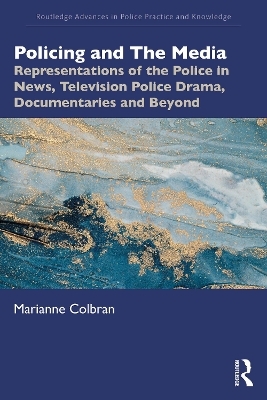
Policing and The Media
Representations of the Police in News, Television Police Drama, Documentaries and Beyond
Seiten
2026
Routledge (Verlag)
978-1-032-23536-3 (ISBN)
Routledge (Verlag)
978-1-032-23536-3 (ISBN)
- Noch nicht erschienen (ca. Mai 2026)
- Versandkostenfrei
- Auch auf Rechnung
- Artikel merken
This important new book looks for the first time at the stories the media tell about the police. It looks at the way in which the police have been represented historically across a variety of media. It breaks new ground by exploring the process and how a variety of factors, including police/media relations, shape these narratives.
What do you think of when you think of the police? Bobbies on the beat? Or perhaps bleaker images of police brutality such as the murder of George Floyd by a serving police officer?
For most people, the media are the main source of information about the police. For that reason, being represented positively in the media is an abiding concern for the police.
This important new book looks for the first time at the stories the media tell about the police. It looks at the way in which the police have been represented historically across a variety of media, including crime news, police dramas, documentaries, social media and podcasts. But it also breaks new ground by exploring the process as well as the product and how a variety of factors, including police/media relations, shape these narratives.
Some of the key themes explored are:
Impact of new digital technologies in reconfiguring relations between the police, the press and the public
Critical examination of ‘the thin blue line’ narrative
The problems of the maverick cop trope
Increasing police control over crime information
The stigmatisation of certain communities – in particular, Black, Brown, LGBTQ+ and Gypsy, Roma and Traveller citizens – particularly in crime news and reality shows
Examining whose stories remain untold in popular representations
Ramifications of these themes for public understanding
The book will be of key interest to Professional Policing students and researchers, as well as police professionals. It will also be essential reading for students and scholars of criminology, media studies, cultural studies, and all those interested in these intersections.
What do you think of when you think of the police? Bobbies on the beat? Or perhaps bleaker images of police brutality such as the murder of George Floyd by a serving police officer?
For most people, the media are the main source of information about the police. For that reason, being represented positively in the media is an abiding concern for the police.
This important new book looks for the first time at the stories the media tell about the police. It looks at the way in which the police have been represented historically across a variety of media, including crime news, police dramas, documentaries, social media and podcasts. But it also breaks new ground by exploring the process as well as the product and how a variety of factors, including police/media relations, shape these narratives.
Some of the key themes explored are:
Impact of new digital technologies in reconfiguring relations between the police, the press and the public
Critical examination of ‘the thin blue line’ narrative
The problems of the maverick cop trope
Increasing police control over crime information
The stigmatisation of certain communities – in particular, Black, Brown, LGBTQ+ and Gypsy, Roma and Traveller citizens – particularly in crime news and reality shows
Examining whose stories remain untold in popular representations
Ramifications of these themes for public understanding
The book will be of key interest to Professional Policing students and researchers, as well as police professionals. It will also be essential reading for students and scholars of criminology, media studies, cultural studies, and all those interested in these intersections.
Marianne Colbran is Honorary Fellow in Criminology at the University of Edinburgh and Visiting Research Fellow at LSE. She is also a Royal Literary Fund Fellow (2024-2026) and a former scriptwriter for The Bill.
1. Police and the media: setting the scene 2. How representations of the police in the news have changed over the last fifty years 3. Creating news stories: the impact of police and media relations on crime news 4. Policing and social media 5. Thief-takers and rule-breakers: the changing image of the TV cop 6. Why television police dramas never tell the ‘truth’ about policing 7. The police and “reality” television 8. The ‘thin blue line’ and other themes: the problems with media representations of policing
| Erscheint lt. Verlag | 1.5.2026 |
|---|---|
| Reihe/Serie | Routledge Advances in Police Practice and Knowledge |
| Verlagsort | London |
| Sprache | englisch |
| Maße | 156 x 234 mm |
| Gewicht | 453 g |
| Themenwelt | Geisteswissenschaften ► Geschichte |
| Recht / Steuern ► Strafrecht ► Kriminologie | |
| Sozialwissenschaften ► Soziologie | |
| ISBN-10 | 1-032-23536-5 / 1032235365 |
| ISBN-13 | 978-1-032-23536-3 / 9781032235363 |
| Zustand | Neuware |
| Informationen gemäß Produktsicherheitsverordnung (GPSR) | |
| Haben Sie eine Frage zum Produkt? |
Mehr entdecken
aus dem Bereich



aus dem Bereich
Mein Leben zwischen Kokain und Waffen
Buch | Softcover (2025)
Piper (Verlag)
CHF 24,90
zwei Essays
Buch | Softcover (2025)
Reclam, Philipp (Verlag)
CHF 9,80
der berühmte FBI-Profiler über die Fahndung nach Serienmördern und …
Buch | Softcover (2023)
riva (Verlag)
CHF 20,95


