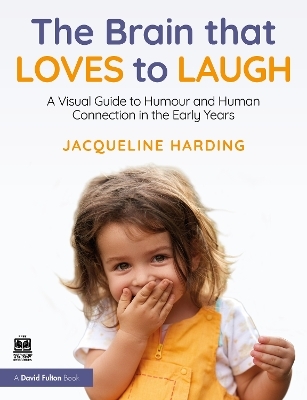
The Brain that Loves to Laugh
Routledge (Verlag)
978-1-032-95391-5 (ISBN)
- Noch nicht erschienen (ca. April 2026)
- Versandkostenfrei
- Auch auf Rechnung
- Artikel merken
This captivating visual book provides an accessible introduction to how laughter affects the holistic development and wellbeing of children from birth to five years. Written by a leading expert, it explores how the developing brain responds to laughter and love arguing for an approach to early years education and care that is based on the best scientific evidence and celebrates curiosity, laughter and self-chosen learning pathways.
Snapshots of real scenarios with babies and young children laughing and learning in real homes and settings is the starting point for this unique book. Supported by images and links to film clips on the accompanying website, these cameos drive the narrative and enable readers to link theory to practice with ease. Chapters focus on different ages and stages of development and include clear explanations of what is happening in the body and brain at each "stage," revealing the richness of the opportunities on offer and the adult’s role in facilitating it.
With opportunities to dig deeper, full-colour photographs, and a fully integrated companion website, The Brain that Loves to Laugh is essential reading for all early years students and practitioners and all those with an interest in neuroscience and child development.
Dr Jacqueline Harding is Director of Tomorrow's Child and a visiting research fellow at Middlesex University. She is an internationally acclaimed child development expert with experience as a BBC education editor, Headteacher, government consultant, and author of numerous books for and about children. Jacqueline also works in children’s TV production.
Part 1: The science of laughter. Really? 1. Juggling the theories 2. The look and sound of brains whriling around in hope, humour and human connection 3. Looking after little brains: Why hope, humour and human connection matters 4. Human connection: Getting in sync 5. The five 'C's of humour: Categories, contagion, content, curiosity and creativity Part 2: Health, Happiness and being human? 6. Humanity in progress 7. Human connection: Creating a culture of inclusivity 8. Being human is being real Part 3: Learning and laughter are happy companions: Perhaps humour is the brain's best kept secret? 9. Emotions and cognition are partners 10. The missing link of memorable moments 11. A creative leap: Hope strings eternal 12. How do you know that you know? 13. Time for change: Make way for Hope, Humour and Human connection! Part 4: Development 14. Birth to 12 months: Let the fun begin... 15. One to three years: Laughing all the way to learning 16. Three to five years: Playful pedagogy wins out 17. Five to seven years plus: Brains love to play Part 5: Real life 18. Joy: Just one of you 19. The Language of Hope: Essex case study 20. The Last Laugh: Summing up the book, research and findings
| Erscheint lt. Verlag | 29.4.2026 |
|---|---|
| Zusatzinfo | 40 Tables, black and white; 16 Line drawings, color; 128 Halftones, color; 144 Illustrations, color |
| Verlagsort | London |
| Sprache | englisch |
| Maße | 189 x 246 mm |
| Themenwelt | Geisteswissenschaften ► Psychologie ► Pädagogische Psychologie |
| Sozialwissenschaften ► Pädagogik ► Vorschulpädagogik | |
| ISBN-10 | 1-032-95391-8 / 1032953918 |
| ISBN-13 | 978-1-032-95391-5 / 9781032953915 |
| Zustand | Neuware |
| Informationen gemäß Produktsicherheitsverordnung (GPSR) | |
| Haben Sie eine Frage zum Produkt? |
aus dem Bereich