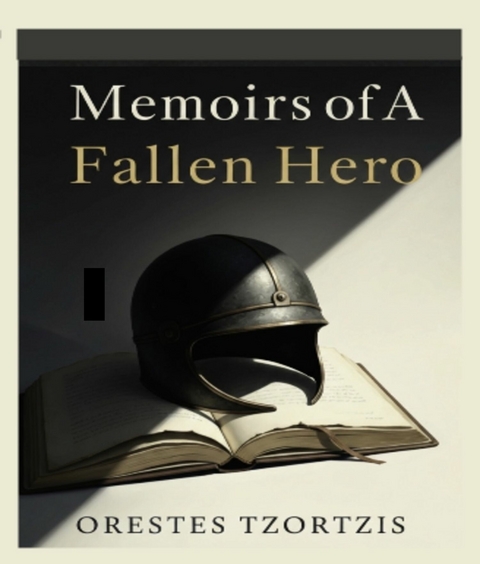
Memoirs of A Fallen Hero (eBook)
121 Seiten
Publishdrive (Verlag)
979-8-3496-4703-1 (ISBN)
Discover the profound journey of resilience and self-discovery in 'Memoirs of a Fallen Hero.' This contemplative narrative explores the bittersweet nature of heroism, where the protagonist grapples with the weight of expectations and the true cost of saving lives. As they navigate the complexities of personal growth and emotional intelligence, readers are invited to reflect on their own stories and the enduring values that shape our lives. Perfect for fans of contemporary fiction and those seeking inspiration in leadership and personal development, this book offers a compelling blend of introspection and adventure. Join the journey today and uncover the lessons that resonate across generations!
- 2
WHEN I WAS AEGIS
I
remember when the sky and I were one, our symbiosis so seamless you'd think we were born from the same star. In those days, I could feel every seam, every hidden current - the river's breath on my skin, the thermal columns dancing like fire ladders, the city's pulse beating in sync with my own.
I wasn't just flying; I was making deals with the invisible physics that ruled the world. Agreement, not domination, was our language. I stepped off a hundred-story roof, and the city exhaled a collective gasp. In that moment, the gasp caught me, held me suspended in air as if the world itself wanted to know my secrets.
Morning thermals were my daily ritual, a soft hand under my sternum, lifting me effortlessly as freedom coursed through my veins. The wind was a master violinist, each gust a precisely weighted note. Higher altitudes stung with a citrus-cold clarity, while the river's warmth rolled lazily off the west bank. I learned to approach the day like an ancient language, remembering the calculus of crosswinds, turns, and intention-turned-boundary-fields.
Those fields weren't walls; they were suggestions, agreements with the physical world. Gentle as a whisper, they coaxed raindrops to slide around me. Stronger, they were negotiations, heat and shock striking a limit I shaped with habit. When the fields locked, my bones hummed a frequency beyond human hearing, a deep, resonant ache - not pain, but a clean, terrifying clarity. Limit-testing had that effect; you always knew the exact coordinates of your existence when the wind tried to take you and failed.
Above the gridlines, the city became a tapestry of neat cables and pulsing veins. I could read its mood from the way steam escaped ventilation shafts and distress calls wove into the soundscape. Pride was an anchor I left with the paparazzi and microphones; in the air, there was only the work, and the cold, diamond gleam of doing it precisely right.
To stay sharp, I played games - threading needles between flagpoles, skimming the river so low my wake stitched lace for gulls, holding a single raindrop on the surface of a field. When the city slept, I traced forgotten constellations in alleyway puddles with my slow, silver reflection. The sky was my practice studio, and I needed to earn the use of it every day.
On patrol, the city's shapes taught my body a choreography older than ballet: dropping fast between monolithic towers, bleeding speed into a silent hover, translating momentum into a horizontal barrier. I trusted my senses so completely that I could feel a pane of glass pop twenty floors below and know instantly whether it was heat stress or a thrown hand. Sound rose in complex cords - subways thrumming late, police drones anxious, people being people. There were nights when the city was a vast, chaotic instrument, and I was the necessary tuning fork, striking the perfect frequency to stabilize the chord.
On foggy mornings, I carved pathways through the mist, watching my wake roll into evanescent walls. It never got old, drawing with pure physics. At sunset, the glass towers turned to slabs of impossible color, and I'd nod to my reflected self like a trusted colleague. "Hello, Aegis. Keep the sky honest." Then I'd dive, the pressure building, the world meeting invisible surfaces, deciding to bend.
The monument day began like any other early alert - a subtle pressure in the air, a thin siren sketching a line through the grid. I followed it, even then, in that prelude of ordinary sprint, I remember the bright, chemical surge in my chest - the joy of going, the surgical knowledge that I could cross a city in a held breath and arrive as the first domino tipped. Power loves to run, and mine ran toward trouble because I taught it to, and also because running felt like the absolute truth.
I recall rooftops yawning open as I passed, curious faces turning up, the part of me that tightened with the knowledge that I would soon be seen. The old pact: I would bring a perfect shape of safety, and they would bring a shape of awe. The sky above Zenith District was a strained canvas. Heat signatures blazed from the new tower's crown; the wind tasted metallic and acrid. Beneath me, traffic pinwheeled wrong.
I folded myself into a dive, pulled the fields close, not like a second skin, but like a second gravity, and felt the day change its mind about what it thought it was. That was the last time the sky and I were one, our symbiosis intact. From that moment on, things shifted, the agreement broke, and I was left with only memory and the ache of a thousand unlived lives.
The Calculus of the Crowd
We called it The Day the City Held Its Breath. And yeah, I guess that’s what it was, if you zoom out enough to cover the whole urban sprawl. In the aggregate, it was one shared, frozen moment of panic and hope, a collective gasp. But down in the gritty reality of the moment, right there in the eye of the thermal storm, it felt less like history and more like a thousand small, necessary decisions made very quickly by a body that did not yet realize it was fundamentally temporary.
I was finishing a miserable stack of compliance reports—the kind of paperwork that makes you wonder if it’s even worth saving a city if you have to spend the next week detailing the proprietary physics of the effort. The sun was doing that awful, blinding midday glare against the polished chromium of the old financial district. I remember the air conditioning in my office was struggling, making that high-pitched whine that tells you maintenance is overdue.
The alert arrived as a terse, operational string of words: thermal spike, Zenith Tower; containment failure; evacuate.
No polite preamble. No flashing lights, just the hard, sharp data screaming across the secure feed. Zenith. The city’s supposed clean power future, a massive lithium-ion battery array wrapped around the top ten floors of the tallest structure in the northern hemisphere. It was supposed to be revolutionary. Now it was just revolutionary in the sense that it was about to revolutionize the skyline into a smoking crater.
My shift in mentality was immediate, violent, and highly rehearsed. I slapped down the stylus. The paperwork—the bureaucratic weight of my existence—vanished. The world immediately simplified into vectors and thresholds. My suit deployed almost before my feet hit the floor, locking around me with a reassuring mechanical sigh. It wasn't armor, not really; it was a calibrated interface, designed to take the energy fields I generate and make them tangible, measurable, and above all, stable.
The drone footage was already live as I ascended. It showed the thirty-seventh floor looking like someone had taken a massive, invisible hammer to it. I arrived as the experimental safety glass on that floor blew outward and upward in glittering, musical chords.
It was beautiful, actually. The way the light caught those shards, turning something utterly destructive into a temporary, lethal snowfall.
Then the heat hit me.
It wasn't a warm puff, or even a wave. It was a physical assault. It hit not like a wave, but like a loud, absolute statement. It tasted like burning metal and ozone, and it felt like being shoved, hard, by an invisible hand. My environmental regulators immediately went into overdrive, struggling to keep my core temperature sane.
Inside the crown of the building, the massive battery array—the city’s supposed clean power future—thrummed itself into a catastrophic tantrum.
It was a runaway reaction, feeding itself faster than any safeguard could counter. Every cell stacking the heat, multiplying the internal pressure. The engineers knew the math: if it vented, the roof would instantly become a pyre, spreading molten metal and toxic fumes across the city grid. If it remained contained inside that beautiful, sealed structure, the entire tower would become an improvised grenade, taking half a dozen adjacent buildings with it when it finally went.
I didn't think heroically. That’s for the newsfeeds, the slow-motion, highly edited clips where I always look impossibly noble. I was thinking in physics, in geometry, and mostly in extremely stressful logistics.
The first sound I heard was the scream of the structure itself, the metal groaning like an ancient beast being flayed alive.
My primary objective wasn't to put the fire out—it was too late for that. My job was to buy time, to control the variables so the people trapped inside could find their way down and out. This required immediate, decisive intervention in the building’s atmosphere.
First directive: Carve a corridor.
I pushed my fields out, using the maximum capacity of my suit’s output. It felt like trying to push wet concrete uphill. I was essentially creating a sheath of highly compressed, rapidly cooled air—a frictionless tunnel—that plowed a path through the superheated, toxic air clogging the stairwells. This wasn't protection; it was respiration. I was buying precious, finite seconds for the stairwells to keep breathing, to let the trapped occupants keep breathing. Every inch of that tunnel cost me a staggering amount of processing power and caloric energy. I could feel the microscopic strain in my fields, the tiny, incessant effort to counteract the thermal weight.
As I ascended past the fortieth floor, the structure felt shaky, the air thin and metallic. I could see the glow through the few remaining fire doors.
Second directive: Contain the spill.
This was the terrifying part. A ruptured fuel line on the service roof,...
| Erscheint lt. Verlag | 13.11.2025 |
|---|---|
| Sprache | englisch |
| Themenwelt | Geisteswissenschaften ► Religion / Theologie ► Christentum |
| Schlagworte | Emotional Intelligence • heroism • Personal Growth • Resilience |
| ISBN-13 | 979-8-3496-4703-1 / 9798349647031 |
| Informationen gemäß Produktsicherheitsverordnung (GPSR) | |
| Haben Sie eine Frage zum Produkt? |
 EPUB (Ohne DRM)
Digital Rights Management: ohne DRM
Dieses eBook enthält kein DRM oder Kopierschutz. Eine Weitergabe an Dritte ist jedoch rechtlich nicht zulässig, weil Sie beim Kauf nur die Rechte an der persönlichen Nutzung erwerben.
Dateiformat: EPUB (Electronic Publication)
EPUB ist ein offener Standard für eBooks und eignet sich besonders zur Darstellung von Belletristik und Sachbüchern. Der Fließtext wird dynamisch an die Display- und Schriftgröße angepasst. Auch für mobile Lesegeräte ist EPUB daher gut geeignet.
Systemvoraussetzungen:
PC/Mac: Mit einem PC oder Mac können Sie dieses eBook lesen. Sie benötigen dafür die kostenlose Software Adobe Digital Editions.
eReader: Dieses eBook kann mit (fast) allen eBook-Readern gelesen werden. Mit dem amazon-Kindle ist es aber nicht kompatibel.
Smartphone/Tablet: Egal ob Apple oder Android, dieses eBook können Sie lesen. Sie benötigen dafür eine kostenlose App.
Geräteliste und zusätzliche Hinweise
Buying eBooks from abroad
For tax law reasons we can sell eBooks just within Germany and Switzerland. Regrettably we cannot fulfill eBook-orders from other countries.
aus dem Bereich