Zum Hauptinhalt springen
Nicht aus der Schweiz? Besuchen Sie lehmanns.de
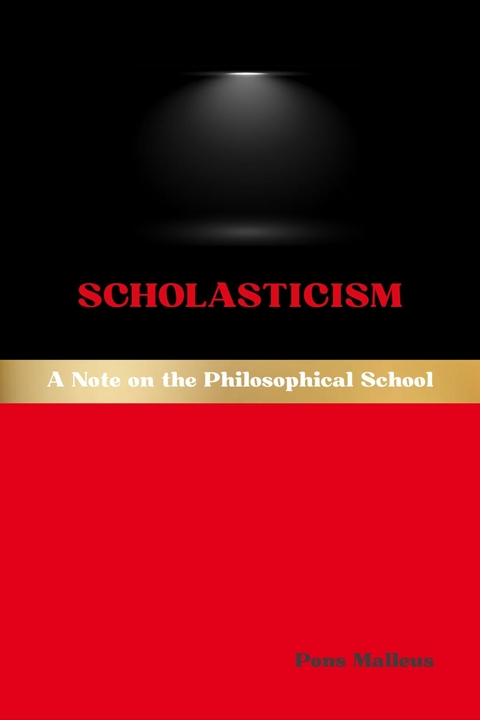
Scholasticism -  Pons Malleus

Scholasticism (eBook)

A Note on the Philosophical School

(Autor)

eBook Download: EPUB
2025 | 1. Auflage
108 Seiten
Publishdrive (Verlag)
978-0-00-110154-8 (ISBN)
Systemvoraussetzungen
5,99 inkl. MwSt
(CHF 5,85)
Der eBook-Verkauf erfolgt durch die Lehmanns Media GmbH (Berlin) zum Preis in Euro inkl. MwSt.
  • Download sofort lieferbar
  • Zahlungsarten anzeigen

This book is an invitation to journey into one of the most formidable and enduring intellectual traditions in Western philosophy: scholasticism. Emerging in the early Middle Ages and flourishing through the High and Late Medieval periods, scholasticism was not merely a method of academic discourse or a style of teaching-it was a profound attempt to reconcile faith with reason, theology with philosophy, and classical heritage with Christian doctrine. Though often caricatured as dry, overly technical, or rigidly dogmatic, scholastic thought represents a remarkable chapter in the history of human inquiry, one marked by intellectual rigor, spiritual aspiration, and an abiding belief in the power of reason to illuminate the truths of faith.


The roots of scholasticism are deeply embedded in the rediscovery and appropriation of ancient philosophical texts-most notably the works of Aristotle-through the lens of Christian theology. The scholastic masters, such as Anselm of Canterbury, Peter Abelard, Thomas Aquinas, Duns Scotus, and William of Ockham, sought to synthesize the insights of pagan antiquity with the teachings of the Bible and the Church Fathers. Their project was not an uncritical merger, but a dynamic engagement: where ancient philosophy seemed to challenge revealed doctrine, it was examined, interpreted, and often restructured to serve a higher theological vision.


This tradition unfolded primarily within the newly founded universities of medieval Europe-Paris, Oxford, Bologna-where dialectical reasoning, structured disputations, and systematic treatises became the tools of scholarly pursuit. At the heart of scholasticism lay a confidence that human reason, properly exercised, could explore the mysteries of existence, ethics, and God Himself. Far from stifling thought, this methodical and often meticulous approach to knowledge provided the groundwork for centuries of philosophical and theological development.


Today, in a world frequently marked by polarization between science and religion, faith and reason, the scholastic enterprise offers a compelling model of integration. It reminds us that the intellectual life can be both faithful and critical, reverent and analytical. In revisiting scholasticism, we do not merely enter a world of historical ideas; we encounter a tradition that continues to speak-sometimes obliquely, sometimes directly-to the deepest questions of human existence.


This book aims to provide both a historical overview and a philosophical analysis of scholasticism. It traces its origins in early medieval thought, explores its maturation in the works of key thinkers, and examines its lasting legacy in both Catholic and secular intellectual traditions. Along the way, it considers the method, themes, and internal debates that gave scholasticism its distinct character: the nature of universals, the existence and attributes of God, the interplay of will and intellect, the structure of moral action, and the limits of human understanding.


While this book is intended for both students and general readers with an interest in philosophy or theology, it is written with the conviction that scholasticism deserves renewed attention-not as a relic of a bygone era, but as a living conversation, one that challenges us to think more deeply and to believe more thoughtfully.


May this work serve as a guide, a companion, and perhaps even a provocation-to reflect, to question, and to engage with the great minds of the scholastic tradition, whose voices continue to echo through the corridors of intellectual history.

Historical Context
Early Medieval Intellectual Landscape:
The early medieval period in Europe was characterized by fragmented power structures and diverse cultural milieus, which laid the groundwork for the emergence of scholasticism. Following the gradual decline of the Roman Empire, various Germanic tribes established their dominance over different regions, leading to a decentralization of political authority. This fragmentation created a ripe environment for intellectual exploration and synthesis, as local rulers and ecclesiastical authorities often supported centers of learning to consolidate their influence.
The intersection of different cultures and traditions, including Greco-Roman, Celtic, Germanic, and Christian influences, fostered a complex web of intellectual exchange. Monastic and cathedral schools played a crucial role in preserving and transmitting classical knowledge, providing an environment for scholarly activities to flourish. The Benedictine monasteries, in particular, became sanctuaries for learning and literacy, where scribes meticulously copied ancient texts and scholars engaged in theological and philosophical discourse.
The interplay between royal patronage, religious institutions, and emerging urban centers further enriched the intellectual landscape of early medieval Europe. At the same time, the Carolingian Renaissance under the rule of Charlemagne saw a revival of classical learning and the promotion of educational reforms, laying the foundation for what would later evolve into scholastic thought. As these diverse influences converged, the synthesis of different intellectual traditions paved the way for the development of scholasticism, as scholars sought to reconcile faith with reason and engage in rigorous intellectual inquiry.
In essence, the early medieval intellectual landscape, with its decentralized power structures, cultural exchange, and thriving centers of learning, provided the fertile ground from which scholasticism would emerge. The convergence of diverse traditions and the pursuit of knowledge within this dynamic milieu set the stage for the profound philosophical and theological developments that would characterize the scholastic tradition.
The Role of Monastic and Cathedral Schools:
Monastic and cathedral schools played a pivotal role in the development and dissemination of scholastic thought during the medieval period. These institutions provided the intellectual and educational framework within which the foundations of Scholasticism were laid. Monastic schools, often associated with monasteries and convents, were instrumental in preserving and transmitting knowledge in an era plagued by political instability and frequent invasions. The monks and nuns not only safeguarded ancient texts but also engaged in scholarly pursuits, thereby sustaining intellectual inquiry. Additionally, these monastic communities offered a conducive environment for contemplation and learning, fostering the growth of scholastic ideals. Similarly, cathedral schools, usually affiliated with major churches and cathedrals, served as centers of learning and hubs of intellectual discourse. As key centers of education, they attracted scholars and students, facilitating the exchange of ideas and the cultivation of scholastic principles. Furthermore, the cathedral schools became influential in shaping the curriculum and pedagogy that would come to define scholastic methodology. In both the monastic and cathedral schools, the pursuit of knowledge was intertwined with religious devotion, laying the groundwork for the synthesis of faith and reason inherent in Scholasticism. Moreover, the patrons and benefactors of these institutions, including royalty and nobility, recognized the value of education and scholarship, endowing them with resources and support. This patronage fostered an environment conducive to scholastic development and provided opportunities for scholars to engage in rigorous intellectual pursuits. The monastic and cathedral schools thus functioned as crucibles for the emergence and spread of Scholasticism, nurturing a generation of thinkers who would shape the course of Western philosophical thought.
Transmission of Classical Knowledge to the West:
The transmission of classical knowledge to the West during the medieval period marked a pivotal era in the development of scholastic thought. It was a time when the Western world witnessed a resurgence of interest in the wisdom of antiquity, which had largely been preserved by Islamic scholars in the East. This period of intellectual reawakening, known as the 'Latin Translations of the 12th Century,' played a crucial role in shaping the foundations of scholasticism. The process of transmission was facilitated through the translation of numerous Greek and Arabic texts into Latin, providing Western scholars with access to works of ancient philosophers, mathematicians, and scientists. These translated texts encompassed a wide range of subjects, including philosophy, natural science, mathematics, astronomy, medicine, and more, thereby enriching the intellectual landscape of the Western world. The translation movement not only served to reintroduce the writings of Aristotle, Plato, Ptolemy, Euclid, and other classical thinkers to the Latin-speaking West but also introduced the Western audience to the profound insights of Islamic philosophers such as Avicenna and Averroes. This cross-cultural exchange of knowledge significantly broadened the scope of Western learning and laid the groundwork for the flourishing of scholastic thought. The incorporation of this wealth of ancient knowledge into the medieval curriculum provided scholars with a diverse array of philosophical, scientific, and theological resources to draw upon, fostering a climate of intense intellectual inquiry and debate. The influx of translated works revolutionized the educational landscape, not only within monastic and cathedral schools but also within nascent universities, nurturing an environment conducive to the rigorous examination and synthesis of diverse intellectual traditions. Furthermore, the assimilation of classical knowledge into the fabric of Western scholarship engendered a renewed zest for the pursuit of wisdom, spurring a profound transformation in the approach to education, logic, and systematic inquiry.
The Rise of Universities - Catalysts for Scholastic Thought:
The rise of universities in medieval Europe marked a significant turning point in the development and spread of scholastic thought. Emerging from cathedral schools and monastic institutions, the early universities - such as the University of Paris, Oxford, and Bologna - provided a fertile intellectual environment that fostered the growth of scholasticism. These universities became centers of learning, attracting scholars and students from diverse backgrounds and geographical regions. The establishment of structured curricula, academic regulations, and degrees transformed these educational institutions into hubs of intellectual exchange and debate.
At the heart of the university system was the pursuit of knowledge through dialectical inquiry and the systematic study of theology, philosophy, law, and medicine. This interdisciplinary approach enabled scholars to engage in lively discussions, question traditional beliefs, and explore new ideas. The development of academic disciplines and the organization of knowledge laid the groundwork for the integration of scholasticism into university education.
The university environment also catalyzed the translation and dissemination of classical works from Greek and Arabic sources, exposing scholars to the rich intellectual heritage of antiquity. The influx of texts by Aristotle, Plato, Ibn Sina, and Averroes profoundly influenced the trajectory of scholastic thought, providing a wealth of philosophical and scientific material for analysis and interpretation.
The institutional support and patronage offered by various ecclesiastical and secular authorities played a crucial role in fostering a conducive environment for scholastic inquiry within the universities. Endowments, scholarships, and the establishment of chairs endowed scholars with the resources and stability to pursue their studies and teachings, creating an ecosystem that nourished intellectual curiosity and scholarly pursuits.
In addition to the academic infrastructure, the burgeoning urban centers where universities were situated facilitated the cross-fertilization of ideas and the formation of intellectual communities. The vibrant social and cultural milieu of these cities allowed for the exchange of knowledge, collaboration among scholars, and the emergence of intellectual circles that transcended regional boundaries.
The rise of universities laid the foundation for enduring traditions of critical inquiry, rational discourse, and the synthesis of diverse intellectual currents, all of which were instrumental in shaping the course of scholastic thought and its impact on subsequent intellectual movements.
Influence of Islamic and Jewish Philosophers:
The influence of Islamic and Jewish philosophers on the development of scholastic thought during the medieval period cannot be overstated. It was through the translation movement and the preservation of classical works in the Arabic and Hebrew traditions that the writings of prominent Greek and Hellenistic philosophers, including Aristotle, Plato, and Plotinus, were transmitted to the Western world. The translation efforts initiated by Islamic and Jewish scholars greatly contributed to the revival of philosophical inquiry in Europe.
Islamic philosophers such as Al-Kindi, Al-Farabi, and Avicenna, also known as Ibn Sina, made significant...

Erscheint lt. Verlag 12.11.2025
Sprache englisch
Themenwelt Geisteswissenschaften Philosophie Metaphysik / Ontologie
ISBN-10 0-00-110154-4 / 0001101544
ISBN-13 978-0-00-110154-8 / 9780001101548
Informationen gemäß Produktsicherheitsverordnung (GPSR)
Haben Sie eine Frage zum Produkt?
EPUBEPUB (Adobe DRM)
Größe: 115 KB

Kopierschutz: Adobe-DRM
Adobe-DRM ist ein Kopierschutz, der das eBook vor Mißbrauch schützen soll. Dabei wird das eBook bereits beim Download auf Ihre persönliche Adobe-ID autorisiert. Lesen können Sie das eBook dann nur auf den Geräten, welche ebenfalls auf Ihre Adobe-ID registriert sind.
Details zum Adobe-DRM

Dateiformat: EPUB (Electronic Publication)
EPUB ist ein offener Standard für eBooks und eignet sich besonders zur Darstellung von Belle­tristik und Sach­büchern. Der Fließ­text wird dynamisch an die Display- und Schrift­größe ange­passt. Auch für mobile Lese­geräte ist EPUB daher gut geeignet.

Systemvoraussetzungen:
PC/Mac: Mit einem PC oder Mac können Sie dieses eBook lesen. Sie benötigen eine Adobe-ID und die Software Adobe Digital Editions (kostenlos). Von der Benutzung der OverDrive Media Console raten wir Ihnen ab. Erfahrungsgemäß treten hier gehäuft Probleme mit dem Adobe DRM auf.
eReader: Dieses eBook kann mit (fast) allen eBook-Readern gelesen werden. Mit dem amazon-Kindle ist es aber nicht kompatibel.
Smartphone/Tablet: Egal ob Apple oder Android, dieses eBook können Sie lesen. Sie benötigen eine Adobe-ID sowie eine kostenlose App.
Geräteliste und zusätzliche Hinweise

Buying eBooks from abroad
For tax law reasons we can sell eBooks just within Germany and Switzerland. Regrettably we cannot fulfill eBook-orders from other countries.

Mehr entdecken
aus dem Bereich
Offenbarung bei Kant als schematisch-narrative Darstellung …

von Sebastian Abel

eBook Download (2025)
De Gruyter (Verlag)
CHF 117,15