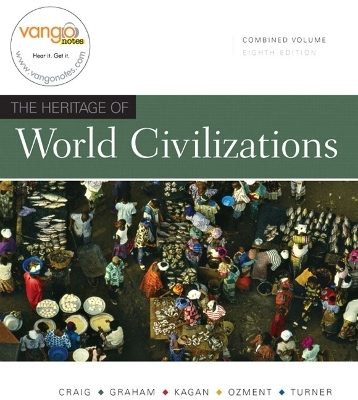
Heritage of World Civilizations, The, Combined Volume
Pearson
978-0-13-601905-3 (ISBN)
- Titel erscheint in neuer Auflage
- Artikel merken
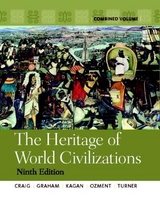
Written by leading scholars in their respective fields, Heritage of World Civilizations 8e, combines unusually strong and thorough coverage of the unique heritage of Asian, African, Islamic, Western, and American civilizations, while highlighting the role of the world's great religious and philosophical traditions.
PART I. THE COMING OF CIVILIZATION.
1. Birth of Civilization.
Early Humans and Their Culture
The Paleolithic Age
The Neolithic Age
The Bronze Age and the Birth of Civilization
Early Civilizations to about 1000 B.C.E.
Mesopotamian Civilization
Egyptian Civilization
Ancient Near Eastern Empires
The Hittites
The Mitannians
The Assyrians
The Second Assyrian Empire
The Neo-Babylonians
Early Indian Civilization
The Indus Civilization
The Vedic Aryan Civilization
Early Chinese Civilization
Neolithic Origins in the Yellow River Valley
Early Bronze Age: The Shang
Later Bronze Age: The Western Zhou
Iron Age: The Eastern Zhou
The Rise of Civilization in the Americas
Summary
Review Questions
Key Terms
2. The Four Great Revolutions in Thought and Religion.
Comparing the Four Great Revolutions
Philosophy in China
Confucianism
Daoism
Legalism
Religion in India
“Hindu” and “Indian”
Historical Background
The Upanishadic Worldview
Mahavira and the Jain Tradition
The Buddha’s “Middle Path”
The Religion of the Israelites
From Hebrew Nomads to the Israelite Nation
The Monotheistic Revolution
Greek Philosophy
Reason and the Scientific Spirit
Political and Moral Philosophy
Summary
Review Questions
Key Terms
* Religions of the World: Judaism *
PART II. EMPIRES AND CULTURES OF THE ANCIENT WORLD.
3. Greek and Hellenistic Civilization.
Bronze Age on Crete and on the Mainland to ca. 1150 B.C.E.
The Minoans
The Mycenaeans
Greek “Middle Age” to ca. 750 B.C.E.
Age of Homer
The Polis
Development of the Polis
The Hoplite Phalanx
Expansion of the Greek World
Greek Colonies
The Tyrants (ca. 700-500 B.C.E.)
Life in Archaic Greece
Society
Religion
Poetry
Major City-States
Sparta
Athens
The Persian Wars
Ionian Rebellion
The War in Greece
Classical Greece
The Delian League
The First Peloponnesian War
The Athenian Empire
Athenian Democracy
Women of Athens
The Great Peloponnesian War
Struggle for Greek Leadership
Fifth Century B.C.E
Fourth Century B.C.E
Emergence of the Hellenistic World
Macedonian Conquest
Alexander the Great and His Successors
Death of Alexander
Alexander’s Successors
Hellenistic Culture
Literature
Architecture and Sculpture
Mathematics and Science
Summary
Review Questions
Key Terms
4. Iran, India, and Inner Asia to 200 c.e.
IRANIAN LANDS
Ancient History
The Elamites
The Iranians
Ancient Iranian Religion
Zoroaster and the Zoroastrian Tradition
The First Persian Empire in the Iranian Plateau (550-330 B.C.E.)
The Achaemenids
The Achaemenid State
The Achaemenid Economy
INDIAAND SOUTH ASIA
The First Indian Empire (321-185 B.C.E.)
Political Background
The Mauryans
Consolidation of Indian Civilization (ca. 200 B.C.E-300 B.C.E.)
The Economic Base
High Culture
Religion and Society
INNER ASIA
Seleucids
Indo-Greeks
Steppe Peoples
Parthians
Sakas and Kushans
Summary
Review Questions
Key Terms
* Religions of the World: Hinduism *
5. Africa: Early History to 1000 c. e.
Issues of Interpretation, Sources, and Disciplines
The Question of Civilization
The Source Issues
History and Disciplinary Boundaries
Physical Description of the Continent
African Peoples
Africaand Early Human Culture
Diffusion of Languages and Peoples
“Race” and Physiological Variation
The Sahara and the Sudan to the Beginning of the Common Era
Early Saharan Cultures
Neolithic Sudanic Cultures
The Early Iron Age and the Nok Culture
Nilotic African and the Ethiopian Highlands
The Kingdom of Kush
The Napatan Empire
The Meroitic Empire
The Aksumite Empire
Isolation of Christian Ethiopia
The Western and Central Sudan
Agriculture, Trade, and the Rise of Urban Centers
Formation of Sudanic Kingdoms in the First Millennium
Central, Southern, and East Africa
Bantu Expansion and Diffusion
The Khosian and Twa Peoples
East Africa
Summary
Review Questions
Key Terms
6. Republican and Imperial Rome.
Prehistoric Italy
The Etruscans
Royal Rome
Government
Family
Clientage
Patricians and Plebeians
The Republic
Constitution
Conquest of Italy
Romeand Carthage
The Republic’s Conquest of the Hellenistic World
Civilization in the Early Roman Republic: Greek Influence
Religion
Education
Roman Imperialism
Aftermath of Conquest
The Gracchi
Marius and Sulla
War Against the Italian Allies (90-88 B.C.E.)
Sulla’s Dictatorship
Fall of the Republic
Pompey, Crassus, and Caesar
First Triumvirate
Dictatorship of Julius Caesar
Second Triumvirate and the Emergence of Octavian
The Augustan Principate
Administration
The Army and Defense
Religion and Morality
Civilization of the Ciceronian and the Augustan Ages
The Late Republic
Age of Augustus
Peace and Prosperity: Imperial Rome (14-180 C.E.)
Administration of the Empire
Culture of the Early Empire
Life in Imperial Rome: The Apartment House
Rise of Christianity
Jesus of Nazareth
Paul of Tarsus
Organization
Persecution of Christians
Emergence of Catholicism
Romeas a Center of the Early Church
The Crisis of the Third Century
Barbarian Invasions
Economic Difficulties
The Social Order
Civil Disorder
The Late Empire
The Fourth Century and Imperial Reorganization
Diocletian
Constantine
Triumph of Christianity
Arts and Letters in the Late Empire
Preservation of Classical Culture
Christian Writers
The Problem of the Decline and Fall of the Empire in the West
Summary
Review Questions
Key Terms
7. China’s First Empire 221 b.c.e.-589 c.e.
Qin Unification of China
Former Han Dynasty (206 B.C.E.-8 C.E.)
The Dynastic Cycle
Early Years of the Former Han Dynasty
Han Wudi
The Xiongnu
Government During the Former Han
The Silk Road
Decline and Usurpation
Later Han (25-220 C.E.) and Its Aftermath
First Century
Decline During the Second Century
Aftermath of Empire
Han Thought and Religion
Han Confucianism
History
Neo-Daoism
Buddhism
Summary
Review Questions
Key Terms
PART III. CONSOLIDATION AND INTERACTION OF WORLD CIVILIZATIONS.
8. Imperial China 589-1368.
Reestablishment of Empire: Sui (589-618) and T’ang (618-907) Dynasties
The Sui Dynasty
The Tang Dynasty
Transition to Late Imperial China: The Song Dynasty (960-1279)
Agricultural Revolution of the Song: From Serfs to Free Farmers
Commercial Revolution of the Sung
Government: From Aristocracy to Autocracy
Song Culture
Chinain the Mongol World Empire: The Yuan Dynasty (1279-1368)
Rise of the Mongol Empire
Mongol Rule in China
Foreign Contracts and Chinese Culture
Last Years of the Yuan
Summary
Review Questions
Key Terms
9. The Emergence of East Asia: Japan, Korea, and Vietnam
KOREA
Chinese Commanderies, 108 B.C.E.-313 C.E., and Korean States, 313-668 C.E.
VIETNAM
Vietnamin Southeast Asia
Vietnamese Origins
A Millennium of Chinese Rule: 111 B.C.E.-939 C.E.
A Small Independent Country
JAPAN
Japanese Origins and the Yayoi Revolution
Tomb Culture and the Yamato State, and Korea
Religion in Early Japan
Naraand Heian Japan
Court Government
Land and Taxes
Rise of the Samurai
Aristocratic Culture and Buddhism
Chinese Tradition in Japan
Birth of Japanese Literature
Naraand Heian Buddhism
Japan’s Early Feudal Age
The Kamakura Era
The Question of Feudalism
The Ashikaga Era
Women in Warrior Society
Agriculture, Commerce, and Medieval Guilds
Buddhism and Medieval Culture
Japanese Pietism: Pure Land and Nichiren Buddhism
Zen Buddhism
No Plays
Summary
Review Questions
Key Terms
* Religions of the World: Buddhism *
10. Iran and South Asia, 200 C.E.-1000C.E.
IRANIAN LANDS
The Parthians
The Sasanid Empire (224-651 C.E.)
Society and Economy
Religion
Later Sasanid Developments
THE INDIAN SUBCONTINENT.
Golden Age of the Guptas
Gupta Rule
Gupta Culture
The Development of “Classical” Traditions in Indian Civilization (ca. 300-1000 C.E.)
Society
Religion
Summary
Review Questions
Key Terms
11. The Formation of Islamic Civilization 622-1000.
Origins and Early Development
The Setting
Muhammad and the Qur’an
Women in Early Islamic Society
Early Islamic Conquests
Course of Conquest
Factors of Success
The New Islamic Order
The Caliphate
The Ulama
The Umma
The High Caliphate
The Abbasid State
Society
Decline
Islamic Culture in the Classical Era
Intellectual Traditions
Language and Literature
Art and Architecture
Summary
Review Questions
Key Terms
12. The Byzantine Empire and Western Europe to 1000.
The End of the Western Roman Empire
The Byzantine Empire
The Reign of Justinian
The Impact of Islam on the East and West
The Western Debt to Islam
The Developing Roman Church
Monastic Culture
The Doctrine of Papal Primacy
Division of Christendom
The Kingdom of the Franks
Merovingians and Carolingians: From Clovis to Charlemange
Reign of Charlemagne (768-814)
Breakup of the Carolingian Kindgdom
Feudal Society
Origins
Vassalage and the Fief
Fragmentation and Divided Loyalty
Summary
Review Questions
Key Terms
13. The Islamic World, 1000-1500.
THE ISLAMIC HEARTLANDS.
Religion and Society
Consolidation of Sunni Orthopraxy
Sufi Piety and Organization
Consolidation of Shi’ite Traditions
Regional Developments
Spain, North Africa, and the Western Mediterranean Islamic World
Egyptian and Eastern Mediterranean Islamic World
The Islamic East: Asia before the Mongol Conquests
The Spread of Islam Beyond the Heartlands
ISLAMIC INDIA AND SOUTHEAST ASIA.
The Spread of Islam to South Asia
Muslim-Hindu Encounter
Islamic States and Dynasties
Southeast Asia
Religious and Cultural Accommodation
Hindu and Other Indian Traditions
Summary
Review Questions
Key Terms
14. Ancient Civilizations of the Americas.
Problems in Reconstructing the History of Native American Civilization
Mesoamerica
The Formative Period and the Emergence of Mesoamerican Civilization
The Olmec
The Valley of Oaxaca and the Rise of Monte Alban
The Emergence of Writing and the Mesoamerican Calandar
The Classic Period in Mesoamerica
Teotihuacán
The Maya
The Post-Classic Period
The Toltecs
The Aztecs
Andean South America
The Preceramic and the Initial Period
Chavín de Huantar and the Early Horizon
The Early Intermediate Period
Nazca
Moche
The Middle Horizon Through the Late Intermediate Period
Tiwanaku and Huari
The Chimu Empire
The Inca Empire
Summary
Review Questions
Key Terms
15. Africa ca. 1000-1800.
North Africa and Egypt
The Spread of Islam South of the Sahara
Sahelian Empires of the Western and Central Sudan
Ghana
Mali
Songhai
Kanem and Kanem-Bornu
The Eastern Sudan
The Forestlands—Coastal West and Central Africa
West African Forest Kingdoms: The Example of Benin
European Arrivals on the Coastlands
Central Africa
East Africa
Swahili Culture and Commerce
The Portuguese and the Omanis of Zanzibar
Southern Africa
Southeastern Africa: “Great Zimbabwe”
The Portuguese in Southeastern Africa
South Africa: The Cape Colony
Summary
Review Questions
Key Terms
PART IV. THE WORLD IN TRANSITION.
16. Europe to the Early 1500s: Revival, Decline, and Renaissance.
Revival of the Empire, Church, and Towns
Otto I and the Revival of the Empire
The Reviving Catholic Church
The Crusades
Towns and Townspeople
Society
The Order of Life
Medieval Women
Growth of National Monarchies
Englandand France: Hastings (1066) to Bouvines (1214)
Francein the Thirteenth Century: Reign of Louis IX
The Hohenstaufen Empire (1152-1272)
Political and Social Breakdown
Hundred Years’ War
The Black Death
New Conflicts and Opportunities
Ecclesiastical Breakdown and the Revival: the Late Medieval Church
Boniface VIII and Philip the Fair
The Great Schism (1378-1417) and the Conciliar Movement to 1449
The Renaissance in Italy (1375-1527)
The Italian City-State: Social Conflict and Despotism
Humanism
Renaissance Art in and Beyond Italy
Italy’s Political Decline: The French Invasions (1494-1527)
Niccolò Machiavelli
Revival of Monarchy: Nation Building in the Fifteenth Century
Medieval Russia
France
Spain
England
Summary
Review Questions
Key Terms
17. Europe 1500-1650: Expansion, Reformation, and Religious Wars.
The Discovery of a New World
The Portuguese Chart the Course
The Spanish Voyages of Christopher Columbus
Impact on Europe and America
The Reformation
Religion and Society
Popular Movements and Criticism of the Church
Secular Control over Religious Life
The Northern Renaissance
Martin Luther and the German Reformation to 1525
Zwingli and the Swiss Reformation
Anabaptists and Radical Protestants
John Calvin and the Genevan Reformation
Political Consolidation of the Lutheran Reformation
The English Reformation to 1553
Catholic Reform and Counter-Reformation
The Reformation’s Achievements
Religion in Fifteenth-Century Life
Religion in Sixteenth-Century Life
Family Life in Early Modern Europe
The Wars of Religion
French Wars of Religion (1562-1598)
Imperial Spain and the Reign of Philip II (1556-1598)
Englandand Spain (1558-1603)
The Thirty Years War (1618-1648)
Superstition and Enlightenment: the Battle Within
Witch Hunts and Panic
Writers and Philosophers
Summary
Review Questions
Key Terms
* Religions of the World: Christianity *
18. Conquest and Exploitation: the Development of the Transatlantic Economy.
Periods of European Overseas Expansion
Mercantilist Theory of Economic Exploitation
Establishment of the Spanish Empire in America
Conquest of the Aztecs and the Incas
The Roman Catholic Church in Spanish America
Economics of Exploitation in the Spanish Empire
Varieties of Economic Activity
Commercial Regulation and the Flota System
Colonial Brazil
French and British colonies in North America
The Columbian Exchange: Disease, Animals, and Agriculture
Diseases Enter the Americas
Animals and Agriculture
Slavery in the Americas
The Background of Slavery
Establishment of Slavery
The Plantation Economy and Transatlantic Trade
Slavery on the Plantations
Africaand the Transatlantic Slave Trade
Slavery and Slaving in Africa
The African Side of the Transatlantic Trade
The Extent of the Slave Trade
Consequences of the Slave Trade for Africa
Summary
Review Questions
Key Terms
19. East Asia in the Late Traditional Era.
Late Imperial China.
Ming (1368-1644) and Qing (1644-1911) Dynasties
Land And People
China’s Third Commercial Revolution
Political System
Ming-Qing Foreign Relations
Ming-Qing Culture
Japan.
Warring States Era (1467-1600)
War of All Against All
Foot Soldier Revolution
Foreign Relations and Trade
Tokugawa Era (1600-1868)
Political Engineering and Economic Growth During the Seventeenth Century
Eighteenth and Early Nineteenth Centuries
Tokugawa Culture
Koreaand Vietnam.
Korea
Early History
Korea: The Choson Era
Vietnam
Early History
Late Traditional Vietnam
Summary
Review Questions
Key Terms
20. State-Building and Society in Early Modern Europe.
European Political Consolidation
Two Models of European Political Development
Toward Parliamentary Government in England
The “Glorious Revolution”
Rise of Absolute Monarchy in France: The World of Louis XIV
Years of Personal Rule
RussiaEnters the European Political Arena
Birth of the Romanov Dynasty
Peter the Great
The Habsburg Empire ad the Pragmatic Sanction
The Rise of Prussia
European Warfare: From Continental to World Conflict
The Wars of Louis XIV
The Eighteenth-Century Colonial Arena
War of Jenkins’s Ear
The War of the Austrian Succession (1740-1748)
The Seven Years’ War (1756-1763)
The Old Regime
Maintenance of Tradition
Hierarchy and Privilege
Aristocracy
The Land and Its Tillers
Peasants and Serfs
Family Structures and the Family Economy
The Family Economy
Women and the Family Economy
The Revolution in Agriculture
New Crops and New Methods
Population Expansion
The Eighteenth-Century Industrial Revolution: An Event in World History
Industrial Leadership of Great Britain
European Cities
Patterns of Preindustrial Urbanization
Urban Classes
The Jewish Population: Age of the Ghetto
Summary
Review Questions
Key Terms
21. The Last Great Islamic Empires 1500-1800.
The Ottoman Empire and the East Mediterranean World
Origins and Development of the Ottoman State Before 1600
The “Classical” Ottoman Order
After Süleyman: Challenges and Change
The Decline of Ottoman Military and Political Power
The Safavid Empire and the West Asian World
Origins
Shah Abbas I
Safavid Decline
Culture and Learning
The Mughals
Origins
Akbar’s Reign
The Last Great Mughals
Sikhs and Marathas
Political Decline
Religious Developments
Central Asia: Islamization in the Post-Timur Era
Uzbeks and Chaghatiays
Consequences of the Shi’ite Rift
Power Shifts in the Southern Oceans
Southern –Oceans Trade
Control of the Southern Seas
The Indies: Acheh
Summary
Review Questions
Key Terms
PART V. ENLIGHTENMENT AND REVOLUTION IN THE WEST.
22. The Age of European Enlightenment.
The Scientific Revolution
Nicolaus Copernicus Rejects and Earth-centered Universe
Tycho Brahe and Johannes Kepler
Galileo Galilei
Francis Bacon: The Empirical Method
Isaac Newton Discovers the Laws of Gravitation
Women in the World of the Scientific Revolution
John Locke
The Enlightenment
Voltaire
The Encyclopedia
The Enlightenment and Religion
Deism
Toleration
Islam in Enlightenment Thought
The Enlightenment and Society
Montesquieu and “The Spirit of the Laws”
Adam Smith on Economic Growth and Social Progress
Rousseau
Enlightened Critics of European Empire
Women in the Thought and Practice of the Enlightenment
Enlightened Absolutism
Joseph II of Austria
Catherine the Great of Russia
The Partition of Poland
Summary
Review Questions
Key Terms
23. Revolutions in the Transatlantic World.
Revolution in the British Colonies in North America
Resistance to the Imperial Search for Revenue
American Political Ideas
Crisis and Independence
Revolution in France
Revolutions of 1789
Reconstruction of France
A Second Revolution
The Reign of Terror and Its Aftermath
The Napoleonic Era
The Congress of Vienna and the European Settlement
Wars of Independence in Latin America
Eighteenth- Century Developments
First movements Toward Independence
San Martín in Río de la Plata
Simón Bolívar’s Liberation of Venezuela
Independencein New Spain
Brazilian Independence
Toward the Abolition of Slavery in the Transatlantic Economy
Summary
Review Questions
Key Terms
24. Political Consolidation in Nineteenth-Century Europe and North America 1815-1880.
The Emergence of Nationalism in Europe
Creating Nations
Meaning of Nationhood
Regions of Nationalistic Pressure in Europe
Early-Nineteenth-Century Political Liberalism
Politics
Economics
Relationship of Nationalism and Liberalism
Liberalism and Nationalism in Modern World History
Efforts to Liberalize Early-Nineteenth-Century European Political Structures
Russia: The Decembrist Revolt of 1825 and the Autocracy of Nicholas I
Revolution in France (1830)
The Great Reform bill in Britain (1832)
1848: Year of Revolutions in Europe
Testing the New American Republic
Toward Sectional Conflict
The Abolitionist Movement
The Canadian Experience
Road to Self-Government
Keeping a Distinctive Culture
Mid-century Political Consolidation in Europe
The Crimean War
Italian Unification
German Unification
The Franco-Prussian War and the German Empire
Unrest of Nationalities in Eastern Europe
Racial Theory and Anti-Semitism
Anti-Semitism and the Birth of Zionism
Review Questions
Summary
Key Terms
PART VI. INTO THE MODERN WORLD.
25. Northern Transatlantic Economy and Society 1815-1914.
European Factory Workers and Urban Artisans
Nineteenth-Century European Women
Women in the Early Industrial Revolution
Social Disabilities Confronted by All Women
New Employment Patterns for Women
Late-Nineteenth-Century Working-Class Women
The Rise of Political Feminism
Jewish Emancipation
Early Steps to Equal Citizenship
Broadened Opportunities
European Labor, Socialism, and Politics to World War I
The Working Class in the Late Nineteenth Century
Marxist Critique of the Industrial Order
Germany: Social Democrats and Revisionism
Great Britain: The Labour Party and Fabianism
Russia: Industrial Development and the Birth of Bolshevism
European Socialism in World History
North Americaand the New Industrial Economy
European Immigration to the United States
Unions: Organization of Labor
The Progressives
Social Reform
The Progressive Presidency
The Emergence of Modern European Thought
Darwin’s Theory of Natural Selection
The Revolution in Physics
Frederich Nietzsche and the Revolt Against Reason
The Birth of Psychoanalysis
Islam and Late-Nineteenth-Century European Thought
Summary
Review Questions
Key Terms
26. Latin America: From Independence to the 1940s.
IndependenceWithout Revolution
Immediate Consequences of Latin American Independence
Absence of Social Change
Control of the Land
Submissive Political Philosophies
Economy of Dependence
New Exploitation of Resources
Increased Foreign Ownership and Influence
Economic Crises and New Directions
Search for Political Stability
Three National Histories
Argentina
Mexico
Brazil
Summary
Review Questions
Key Terms
27. India, the Islamic Heartlands, and Africa: The Challenge of Modernity (1800-1945).
THE INDIAN EXPERIENCE
British Dominance and Colonial Rule
Building the Empire: The First Half of the Nineteenth Century
British-Indian Relations
From British Crown Raj to Independence
The Burden of Crown Rule
Indian Resistance
Hindu-Muslim Friction on the Road to Independence
THE ISLAMIC EXPERIENCE
Islamic Responses to Declining Power and Independence
Western Political Economic Encroachment
The Western Impact
Islamic Responses to Foreign Encroachment
Emulation of the West
Integration of Western and Islamic Ideas
Purification and Revival of Islam
Nationalism
THE AFRICAN EXPERIENCE
New States and Power Centers
Southern Africa
East and Central Africa
West Africa
Islamic Reform Movements
Increasing European Involvement: Exploration and Colonization
Explorers
Christian Missions
The Colonial “Scramble for Africa”
Patterns in European Colonial Rule and African Resistance
The Rise of African Nationalism
Summary
Review Questions
Key Terms
* Religions of the World: Islam *
28. MODERN EAST ASIA.
MODERN CHINA (1839-1949).
Close of Manchu Rule
The Opium War
Rebellions Against the Manchu
Self-Strengthening and Decline (1874-1895)
The Borderlands: The Northwest, Vietnam, and Korea
From Dynasty to Warlordism (1895-1926)
Cultural and Ideological Ferment: The May Fourth Movement
Nationalist China
Guomingdang Unification of China and the Nanjing Decade (1927-1937)
War and Revolution (1937-1949)
MODERN JAPAN (1853-1945).
Overthrow of the Tokugawa Bakufu (1853-1868)
Building the Meiji State (18168-1890)
Centralization of Power
Political Parties
The Constitution
Growth of a Modern Economy
First Phase: Model Industries
Second Phase: 1880s—1890s
Third Phase: 1905-1929
Fourth Phase: Depression and Recovery
The Politics of Imperial Japan (1890-1945)
From Confrontation to the Founding of the Seiyukai (1890-1900)
The Golden Years of Meiji
Rise of the Parties to Power
Militarism and War (1927-1945)
Japanese Militarism and German Nazism
Summary
Review Questions
Key Terms
PART VII. GLOBAL CONFLICT AND CHANGE.
29. IMPERIALISM AND WORLD WAR I.
Expansion of European Power and the “New Imperialism”
The New Imperialism
Motives for the New Imperialism: Economic Interpretation
The “Scramble for Africa”
Emergence of the German Empire
Formation of the Triple Alliance
Bismarck’s Leadership (1873-1890)
Forging the Triple Entente (1890-1907)
World War I
The Road to War (1908-1914)
Sarajevoand the Outbreak of War (June-August 1914)
Strategies and Stalemate (1914-1917)
The Russian Revolution
End of World War I
Military Resolution
Settlement at Paris
Evaluation of the Peace
Summary
Review Questions
Key Terms
30. DEPRESSION, EUROPEAN DICTATORS, AND THE AMERICAN NEW DEAL
After Versailles: Demand for Revision and Enforcement
Toward the Great Depression in Europe
Financial Tailspin
Problems in Agricultural Commodities
Depression and Government Policy
The Soviet Experiment
War Communism
The New Economic Policy
Stalin Versus Trotsky
Decision for Rapid Industrialization
The Purges
The Fascist Experiment in Italy
Rise of Mussolini
The Fascists in Power
Germen Democracy and Dictatorship
The Weimar Republic
Depression and Political Deadlock
Hitler Comes to Power
Hitler’s Consolidation of Power
The Police State
Women in Nazi Germany
The Great Depression and the New Deal in the United States
Economic Collapse
New Role for Government
Summary
Review Questions
Key Terms
31. WORLD WAR II
Again The Road to War (1933-1939)
Hitler’s Goals
Destruction of Versailles
ItalyAttacks Ethiopia
Remilitarization of the Rhineland
The Spanish Civil War
Austriaand Czechoslovakia
Munich
The Nazi-Soviet Pact
World War II (1939-1945)
German Conquest of Europe
Battleof Britain
German Attack on Russia
Hitler’s Europe
Racism and the Holocaust
The Road to Pearl Harbor
America’s Entry into the War
The Tide Turns
Defeat of Nazi Germany
Fall of Japanese Empire
The Cost of War
The Domestic Fronts
Germany: From Apparent Victory to Defeat
France: Defeat, Collaboration and Resistance
Great Britain: Organization for Victory
The Soviet Union: “The Great Patriotic War”
Preparations for Peace
The Atlantic Charter
Tehran
Yalta
Potsdam
Summary
Review Questions
Key Terms
32. The West Since World War II.
The Cold War Era
Initial Causes
Areas of Early Cold War Conflict
NATO and the Warsaw Pact
Crises of 1956
The Cold War Intensified
Détente and Afterward
European Society in the Second Half of the Twentieth Century
Toward Western European Unification
Students and Popular Music
The Movement of Peoples
The New Muslim Population
New Patterns in the Work and Expectations of Women
American Domestic Scene Since World War II
Truman and Eisenhower Administrations
Civil Rights
New Social Programs
The Vietnam War and Domestic Turmoil
The Watergate Scandal
The Triumph of Political Conservation
The Soviet Union to 1989
The Khrushchev Years
Brezhnev
Communism and Solidarity in Poland
Gorbachev Attempts to Redirect the Soviet Union
1989: Year of Revolutions in Eastern Europe
Solidarity Reemerges in Poland
HungaryMoves Toward Independence
The Breach of the Berlin Wall and German Reunification
The Velvet Revolution in Czechoslovakia
Violent Revolution in Romania
The Collapse of the Soviet Union
Renunciation of Communist Political Monopoly
The August 1991 Coup
The Yeltsin Years
The Collapse of Yugoslavia and the Civil War
Challenges to the Atlantic Alliance
Challenges to the International Security Front
Strains over Environmental Policy
Summary
Review Questions
Key Terms
33. EAST ASIA: THE RECENT DECADES
Japan
The Occupation
Parliamentary Politics
Economic Growth
Japanand the World
China
Soviet Period (1950-1960)
The Great Proletarian Cultural Revolution (1965-1976)
ChinaAfter Mao
Taiwan
Korea
A Japanese Colony
North and South
Civil War and U.S. Involvement
Recent Developments
Vietnam
The Colonial Backdrop
The Anticolonial War
The Vietnam War
War with Cambodia
Recent Developments
Summary
Review Questions
Key Terms
34. Posstcolonialism and Beyond: Latin America, Africa, Asia, and the Middle East.
Beyond the Postcolonial Era
Latin AmericaSince 1945
Revolutionary Challenges
Pursuit of Stability Under the Threat of Revolution
Continuity and Change in Recent Latin American History
Postcolonial Africa
The Transition to Independence
The African Future
Trade and Development
The Islamic Heartlands, from North Africa to Indonesia
Turkey
Iranand Its Islamic Revolution
Afghanistanand the Former Soviet Republics
India
Pakistanand Bangladesh
Indonesiaand Malaysia
The Postcolonial Middle East
Postcolonial Nations in the Middle East
The Arab-Israeli Conflict
Middle Eastern Oil
The Rise of Militant Islamism
Iraq and United States: Intervention and Occupation
Summary
Review Questions
Key Terms
| Erscheint lt. Verlag | 10.4.2008 |
|---|---|
| Sprache | englisch |
| Maße | 281 x 230 mm |
| Gewicht | 2916 g |
| Themenwelt | Geisteswissenschaften ► Geschichte ► Allgemeine Geschichte |
| ISBN-10 | 0-13-601905-6 / 0136019056 |
| ISBN-13 | 978-0-13-601905-3 / 9780136019053 |
| Zustand | Neuware |
| Informationen gemäß Produktsicherheitsverordnung (GPSR) | |
| Haben Sie eine Frage zum Produkt? |
aus dem Bereich