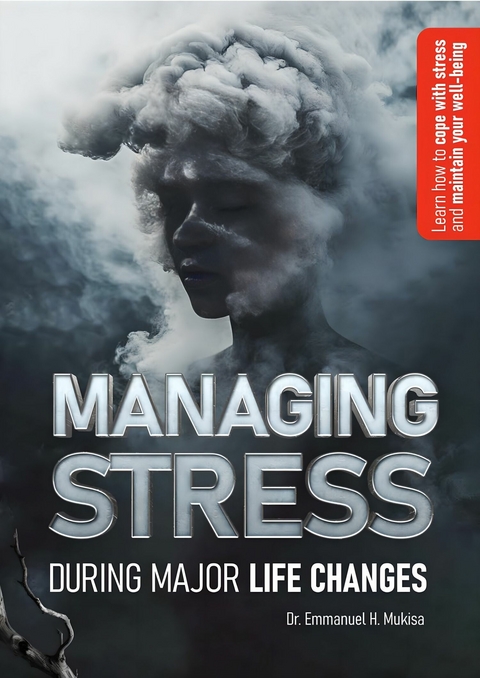
Managing Stress During Major Life Changes (eBook)
170 Seiten
Publishdrive (Verlag)
978-0-00-109834-3 (ISBN)
Major life changes can be overwhelming, but they also present opportunities for growth and transformation. Managing stress during major life changes is your guide to navigating transitions with resilience, mindfulness, and self-care.
This book provides practical strategies for managing stress during events like career changes, relocations, and relationship transitions. Learn how to build emotional resilience, lean on your support system, and stay positive in the face of uncertainty. With tips for balancing family, career, and personal life, as well as mindfulness techniques and creative outlets for stress relief, this guide empowers you to adapt to change and emerge stronger.
Whether you're facing a health crisis, retirement, or moving to a new city, managing stress during major life changes offers actionable insights to help you stay grounded, organized, and hopeful during life's most challenging moments.
Understanding Stress During Major Life Changes
Stress at times of major life changes is normal and a natural reaction to the realignment of routine, environment, or personal identity. Examples include moving to a new city, taking up a new job, or the dissolution of a relationship. The body's stress response is activated through uncertainty, new responsibilities, and fear of the unknown. Knowing this, however, will enable them to cope better with the emotional storm they are experiencing. The effect of stress differs, and people do not react the same; thus, there is no one size that fits all. Change is stressful, but it does not need to be a signal of failure. Everything new in respect of change acts on the brain like a threat. It sets off a flight-or-fight response because of this hyperarousal and may cause physical symptoms such as tension, headaches, or fatigue. While very helpful for survival, inversely, this dampens mental well-being by making it very hard to concentrate or take pleasure in life. Fortunately, the body does learn and adapt to change over time. There are a number of stress management methods, such as mindfulness and relaxation techniques, which will alleviate such physical effects. It is a consolation to know that in those overwhelming moments of one's life, stress is temporary.
Most people are not aware of the fact that major life changes greatly affect one's emotional well-being. Whether it is a case of one relocating to a new environment or losing a loved one, feelings of sadness, anxiety, and confusion are quite normal. All these events, because of their suddenness, leave people with feelings of vulnerability or helplessness. It is an emotional roller coaster, really wearying, but that should not get one to make himself forget that healing takes time. After all, emotions are not bad; they hint that something has been changed in one's life. And learning to accept such emotions might facilitate further growth and learning more.
The first step in dealing with the stress a great change may propagate is recognizing when such stress exists. Not acknowledging one's stress, thoughts, and denial of whether everything will turn out okay serves only to increase the suffering you are causing for yourself. So you have to permit yourself permission - not to be okay, be stressed, or overwhelmed - yet not with judgements. Self-compassion gives a license to accept, something very important in healing. This is also a time when self-care can greatly alleviate the adverse effects of stress. Some very simple things, such as eating well, exercising, and sleeping, are the main emotional resiliencies.
The most excellent coping mechanisms include routines-even routines that remain intact even in times of great transition. It gives structure and might offset chaos in a very real way that is created during times of change. While much of life is out of control, some stability with regular activities helps reduce anxiety. It may be a walk over daily, going to work, or eating a meal; routine can balance. A healthy routine can also ensure a sense of achievement, on which self-esteem survives. If life is unpredictable, a good routine is something to anchor oneself with for comfort.
Another coping strategy involves talking about stress with friends, family, or a therapist. Sometimes it is helpful to put words to your feelings and to get perspectives from others who have been in similar situations. Other times, sharing the burden alone may be a relief by reducing feelings of isolation. Social connections offer emotional support and may motivate coping behaviors effectively. Rather, it's in finding people supportive and understanding; toxic relationships heighten stress. Communication brings a sense of community and understanding that is invaluable.
One of the most brilliant methods to combat stress, particularly in times of change throughout a lifetime, involves exercise. Exercises enable the release of endorphins, which are those chemicals in the brain that heighten and improve mood. Whether it is running, yoga, or even a brisk walk, exercises help the body release tension. It diverts thought from overthinking into the present. The benefits of exercise are cumulative and even minor efforts have a salutary effect on mental clarity. A healthy body begets a healthy mind, which is better equipped to handle stress.
Deep breathing and meditation can also be very effective in reducing levels of stress. These activities are useful in stimulating the parasympathetic nervous system of the body. This generally relaxes the body. For example, the deep breathing exercises decrease the heart rate, hence lowering the blood pressure. This is relaxed further either by guided imagery or progressive muscle relaxation. Meditation may offer rest from constant thoughts, a time when one's mind can rest and reboot. When these practices are integrated with one's life, there can be great enhancement in the way one feels emotionally.
Other stress management in these changing times is by mindfulness. This is one that requires the presence but without judgment. Other than dwelling over what was in the future and maybe some uncertainties, mindfulness teaches you to be present. It curbs these effects of stress because it hinders your thoughts from blowing out of proportion; you can learn to let things be as they are so you may be okay with whatever happens to be the case. One can counter the challenges coming their way by composure and steadiness and may practice mindfulness for that. This result will remain there if continued as a habit.
Stress is lessened when one remains capable of retaining his or her sense of humour in the hour of adversity. Thereby, reducing the level of stress hormones by enhancing mood building hormones, humour enables viewing life lightly to manage adversities. It does not mean trivializing a problem or simply ignoring it. It means having fun in trifles. Time off spent over your favorite comedy channel, sharing laughter over a funny joke, or being around people who make you laugh is quite healing indeed. Laughter reminds that even in hardships, joy still exists.
It is necessary to set realistic expectations from oneself during a transitional period. The significant life changes that occur in one's life during this phase demands him or her to balance many roles or duties and sometimes it feels unbearable. At moments of stress perfection can be simply impossible. Realistic goals allow a move forward with no pressure caused by unattainable demands. Not everything has to be worked out immediately. Patience with yourself and flexibility in your expectations will also reduce feelings of inadequacy.
The other important factor of stress management, sleep, may be sacrificed in times of flux. For many people, stress causes sleeping difficulties, further creating or increasing emotional and physical disturbances. Developing good sleep habits or routines and making your bedroom a sleepy haven can go a long way in getting adequate rest. It is further useful not to take in any chemical stimulants before sleeping and, as a rule light from electronic appliances or devices to get a good night's sleep. The body replenishes while at rest and regenerates energy to combat fatigue. If he sleeps undisturbed and rested, then such a person would feel adequately empowered to face the rigors of life in the best possible way.
While stress is the normal response of the body to change, one should not let it conquer his or her life. There are many ways to manage and reduce the effects of stress on the mind and body. Remember, stress does not define your personality but rather is a response to temporary life circumstances. In time, the stress of life changes often lessens with adjustment. You do need to allow yourself time for adjustment. You are not alone in anything you go through, and you are capable of handling stress with proper tools and support.
One of the great outlets to process stress and emotional feelings a person is having during a time of transition is journaling. It will give insight to the person on how to work through thoughts and complex feelings. It could also be an opportunity for reflection on the progress one makes and personal growth. You get to track how your stress changes with time and have an insight into what works. Besides, all this could be a way of releasing the emotions not to bottle up. Lots of people find their peace and empowerment by writing.
Of importance is developing a support system during times of life transition-your family, your friends, or even professional support by a therapist or support group. Finding people who understand exactly what you're going through can make all the difference in how you cope. Advice, sharing ways of coping, or comforting during difficult times may be offered. Surrounding yourself with supportive people can create an environment of empathy and validation. It’s crucial to remember that seeking help is not a sign of weakness, but a step toward resilience.
Incorporating small, positive habits into your daily life can significantly reduce stress during major transitions. Actions such as practicing gratitude or stopping to smell the roses may refocus one away from stress onto more positive outlooks. It is a fact that positive thinking can actually affect perspective and provide an empowered approach toward one's circumstance. While there might be problems, one can consciously make decisions in finding the silver linings. Over time and consistency of these habits, one gains more emotional strength to deal with stress much easier. This is all about being intentional with nurturing positive vibes, even during the most hopeless moments.
Sometimes, the best thing you can do when major life changes are at your doorstep is to consult a...
| Erscheint lt. Verlag | 28.10.2025 |
|---|---|
| Sprache | englisch |
| Themenwelt | Geisteswissenschaften |
| ISBN-10 | 0-00-109834-9 / 0001098349 |
| ISBN-13 | 978-0-00-109834-3 / 9780001098343 |
| Informationen gemäß Produktsicherheitsverordnung (GPSR) | |
| Haben Sie eine Frage zum Produkt? |
 EPUB (Adobe DRM)
Größe: 1,3 MB
Kopierschutz: Adobe-DRM
Adobe-DRM ist ein Kopierschutz, der das eBook vor Mißbrauch schützen soll. Dabei wird das eBook bereits beim Download auf Ihre persönliche Adobe-ID autorisiert. Lesen können Sie das eBook dann nur auf den Geräten, welche ebenfalls auf Ihre Adobe-ID registriert sind.
Details zum Adobe-DRM
Dateiformat: EPUB (Electronic Publication)
EPUB ist ein offener Standard für eBooks und eignet sich besonders zur Darstellung von Belletristik und Sachbüchern. Der Fließtext wird dynamisch an die Display- und Schriftgröße angepasst. Auch für mobile Lesegeräte ist EPUB daher gut geeignet.
Systemvoraussetzungen:
PC/Mac: Mit einem PC oder Mac können Sie dieses eBook lesen. Sie benötigen eine
eReader: Dieses eBook kann mit (fast) allen eBook-Readern gelesen werden. Mit dem amazon-Kindle ist es aber nicht kompatibel.
Smartphone/Tablet: Egal ob Apple oder Android, dieses eBook können Sie lesen. Sie benötigen eine
Geräteliste und zusätzliche Hinweise
Buying eBooks from abroad
For tax law reasons we can sell eBooks just within Germany and Switzerland. Regrettably we cannot fulfill eBook-orders from other countries.
aus dem Bereich