Youth Deviance, Crime, and Justice (eBook)
497 Seiten
Wiley (Verlag)
978-1-394-25150-6 (ISBN)

A GROUNDBREAKING EXPLORATION OF YOUTH CRIME THROUGH NEUROSCIENCE, PSYCHOLOGY, AND CRIMINOLOGY
Why do some young people engage in deviant and criminal behaviour, while others do not?
What role do brain development, personality traits, and social influences play in youth crime?
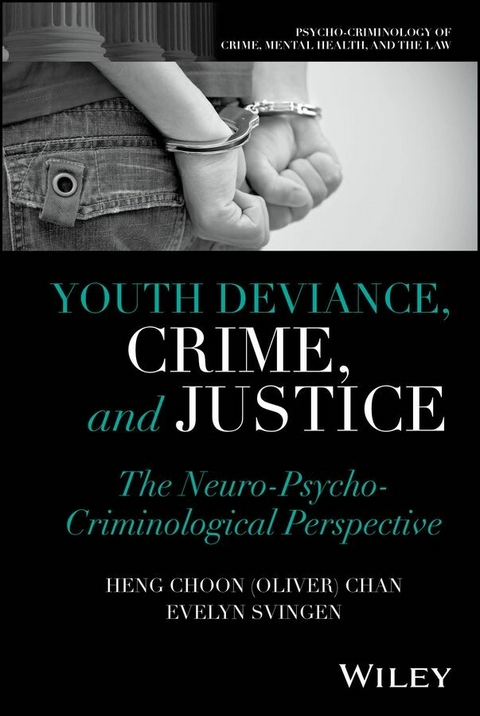
Youth Deviance, Crime, and Justice: The Neuro-Psycho-Criminological Perspective offers an innovative and comprehensive look at youth offending by integrating neuropsychology and criminology. With an interdisciplinary approach to understanding youth offending, this volume examines both the biological and social mechanisms that shape youth delinquency.
With contributions from leading scholars and practitioners from the US, the UK, the Netherlands, Canada, and Iran, this book presents cutting-edge research on topics such as cognitive neuroscience, moral intelligence, peer influences, and the neurobiological underpinnings of antisocial behaviour. Structured into two sections-Theory and Research, and Policy and Practice-it bridges the gap between scientific inquiry and practical applications, offering valuable insights for both researchers and professionals in the field.
Youth Deviance, Crime, and Justice: The Neuro-Psycho-Criminological Perspective is an essential resource for academics, students, and field practitioners, including neuroscientists, forensic psychologists, legal professionals, and policymakers. Whether used in courses on forensic psychology, neurocriminology, or juvenile justice, or as a reference for professionals working with at-risk youth, this text provides the latest research and best practices to inform effective interventions and policies.
HENG CHOON (OLIVER) CHAN is an Associate Professor of Criminology at the University of Birmingham, UK. A leading expert in psycho-criminology, his research focusses on sexual homicide, stalking, and Asian criminology. He has published over 100 peer-reviewed articles and book chapters and is the author of multiple books, including A Global Casebook of Sexual Homicide and Psycho-Criminological Approaches to Stalking Behaviour.
EVELYN SVINGEN is an Assistant Professor of Criminology at the University of Birmingham, UK, specialising in the biosocial mechanisms of crime and deviant behaviour. She is the author of Evolutionary Criminology and Cooperation: Retribution, Reciprocity, and Crime, in which she developed a new model of criminal behaviour based on evolutionary theory and neuropsychology.
A GROUNDBREAKING EXPLORATION OF YOUTH CRIME THROUGH NEUROSCIENCE, PSYCHOLOGY, AND CRIMINOLOGY Why do some young people engage in deviant and criminal behaviour, while others do not? What role do brain development, personality traits, and social influences play in youth crime? Youth Deviance, Crime, and Justice: The Neuro-Psycho-Criminological Perspective offers an innovative and comprehensive look at youth offending by integrating neuropsychology and criminology. With an interdisciplinary approach to understanding youth offending, this volume examines both the biological and social mechanisms that shape youth delinquency. With contributions from leading scholars and practitioners from the US, the UK, the Netherlands, Canada, and Iran, this book presents cutting-edge research on topics such as cognitive neuroscience, moral intelligence, peer influences, and the neurobiological underpinnings of antisocial behaviour. Structured into two sections Theory and Research, and Policy and Practice it bridges the gap between scientific inquiry and practical applications, offering valuable insights for both researchers and professionals in the field. Youth Deviance, Crime, and Justice: The Neuro-Psycho-Criminological Perspective is an essential resource for academics, students, and field practitioners, including neuroscientists, forensic psychologists, legal professionals, and policymakers. Whether used in courses on forensic psychology, neurocriminology, or juvenile justice, or as a reference for professionals working with at-risk youth, this text provides the latest research and best practices to inform effective interventions and policies.
Biography of the Contributors
Leena K. Augimeri, Ph.D., is a renowned award‐winning expert in child and youth mental health and crime prevention, with 40 years of experience in research, development, and implementation. She co‐founded the evidence‐based Stop Now And Plan (SNAP) program and the EARL risk/need assessment guide, both implemented internationally to improve outcomes for children, families, and communities. This scientist‐practitioner's work emphasizes evidence‐based early intervention practices focusing on emotion regulation, self‐control, risk identification and management. A trusted advisor on policy and legislation, she has chaired and participated in international study/focus groups and champions funding for critical programs that support vulnerable children and youth.
Thea Johsefine Austevik, M.Sc., works as a Research Assistant and Consultant at Smaragdi Consulting, part of an international team focused on implementing and training for structured professional judgment tools like EARL‐V3 and SAPROF‐CV. With a bachelor's degree in psychology from the Norwegian University of Science and Technology and a master's in forensic psychology from Maastricht University, Austevik has worked in clinical mental health and correctional settings. She specializes in risk factors related to childhood antisocial behavior, has published in this field, presented at an international conference, and led training/courses for over 200 professionals.
Kevin M. Beaver, Ph.D., is the Judith Rich Harris Professor of Criminology in the College of Criminology and Criminal Justice at Florida State University. His research focuses on the developmental origins to antisocial behaviors.
Colleen M. Berryessa, Ph.D., is an Associate Professor at the Rutgers University School of Criminal Justice. Her research, utilizing both qualitative and quantitative methods, considers how psychological processes, perceptions, attitudes, and social contexts affect the criminal justice system, particularly related to courts, sentencing, and forms of punishment broadly defined. Colleen received her Ph.D. in Criminology from the University of Pennsylvania. Before Penn, she graduated from Harvard University with a B.A. in Government and Mind, Brain, and Behavior, and she served as a CIRGE research fellow at Stanford University.
Matt DeLisi, Ph.D., is Distinguished Professor, Coordinator of Criminal Justice, and Faculty Affiliate of the Center for the Study of Violence at Iowa State University, USA. Professor DeLisi has over 500 scholarly publications on an array of topics in the social, behavioral, and forensic sciences. Professor DeLisi is the only scientist in the world who is Fellow of both the Academy of Criminal Justice Sciences and the Association for Psychological Science.
Yu Gao, Ph.D., is a Professor of Psychology at Brooklyn College and the Graduate Center of the City University of New York in the United States. Dr. Gao obtained her doctoral degree from University of Southern California and then worked at University of Pennsylvania as a postdoctoral fellow. Her research focuses on the neurobiological and psychosocial bases of antisocial behavior, using psychophysiological methods and longitudinal approaches. She has published over 90 peer‐reviewed journal articles and book chapters. Some of her recent work has appeared in Behavioral Sciences & the Law, Criminal Behavior and Mental Health, and Journal of Criminal Justice.
Bridget Joyner‐Carpanini, Ph.D., is an Assistant Professor in the Department of Criminal Justice, Criminology & Forensics at Seattle University. Her primary research interests include propensity‐based theories of crime and victimization, the intergenerational risk of psychiatric disorders, substance use prevention, and neuroeducation. Some of her recent work has appeared in the Journal of Developmental and Life‐Course Criminology, Crime & Delinquency, Evolutionary Psychology, and Criminal Justice and Behavior. She also sits as a board member for the American Society of Criminology Division of Biopsychosocial Criminology.
Laura Kelly, Ph.D., is Lecturer in Criminal Justice in the Department of Social Policy, Sociology and Criminology at the University of Birmingham, UK. Her research interests centre on work with children and young people, particularly in relation to juvenile crime and justice. Her work on juvenile crime prevention and juvenile justice has been published in the British Journal of Criminology, Critical Social Policy and Youth Justice. She is a member of the Academic Liaison Network of the Youth Justice Board for England and Wales and the National Association for Youth Justice.
Liat Kofler, Ph.D., earned her doctorate in Behavioral and Cognitive Neuroscience from the Graduate Center of the City University of New York. Her research examines social and biological factors linked to antisocial behavior and psychopathic traits. Her work has been published in Criminal Behaviour and Mental Health, Journal of Psychopathology and Behavioral Assessment, and Brain Sciences.
Michael Palmieri, Ph.D., is a senior research analyst with the Minnesota Department of Corrections. His research has focused on cognitive psychological factors in cybercrime and radicalization. Recently, it has focused on program evaluation and decision‐making in the prison disciplinary process.
Arian Petoft, Ph.D., is an Assistant Professor of Neurolaw at the Medical Ethics and Law Research Center, Shahid Beheshti University of Medical Sciences. He graduated from the University of Tehran and earned his post‐Ph.D. (2022) in Neurolaw at Shahid Beheshti University of Medical Sciences. It has been about 15 years since he was an expert researcher in Neurolaw at Shahid Beheshti University of Medical Sciences. He was also the guest researcher at the University of Speyer (Germany) with a fully funded fellowship. Petoft is the first theoretician of Neurolaw in Iran (at Tehran University of Medical Sciences, Department of Neurology, 2015).
Isabella Polito is a Ph.D. student at the Rutgers University School of Criminal Justice. Isabella received a B.A. in Criminology, Law, & Society and a B.A. in Psychological Science from the University of California, Irvine. Isabella's research focuses on how the justice system responds to offending and juvenile delinquency, particularly the psychological factors involved in decisions that contribute to inequities in the legal system.
Sepidehsadat Tabatabaei earned a master's degree in Criminal Law and Criminology from the University of Tehran (2023). During her studies, she collaborated with Dr. Arian Petoft and Professor Firouz Mahmoudi Janaki on research estimating children's criminal responsibility based on their moral intelligence. She has also taught moral intelligence to high school students in Iran over the past seven years and has published a student activity book along with a corresponding teacher's guide on this subject.
Carmen‐Silva Sergiou, Ph.D., is a postdoctoral researcher at the Department of Child and Adolescent Psychiatry and Psychosocial Care Youth, within the Youth at Risk researchteam of the Amsterdam University Medical Centre (AUMC) in the Netherlands. She is a forensic neuroscientist with a focus on using innovative methods such as neurmodulation and Virtual Reality to investigate aggression and emotion‐regulation in forensic populations. Currently, she is working on “Growing Up Together in Society (GUTS),” a longitudinal study to neurobiological development of high‐risk youth.
Neil Shortland, Ph.D., is an Associate Professor in Criminology and Justice Studies at the University of Massachusetts Lowell. He is the Director of the School of Criminology and Justice Studies, and the Misinformation Influence Neuroscience and Decision‐Making (MIND) Laboratory at the University of Massachusetts Lowell.
Areti Smaragdi, Ph.D., is a Director at Smaragdi Consulting and a Senior Research Consultant at the Child Development Institute. Her research focuses on biological and social sex differences in childhood antisocial behaviour and risk/protective factors of childhood crime. She has published over 50 articles and book chapters in this area. She is also a co‐author of the EARL‐V3 and SAPROF‐CV, two structured professional judgement manuals for the assessment and management of risk and protective factors, respectively, and leads implementation and training of these two instruments in Europe.
Neema Trivedi‐Bateman, Ph.D., is a Senior Lecturer in Criminology in the Department of Criminology, Sociology, and Social Policy at Loughborough University, UK. She is Co‐Principal Investigator of the SATNAV Project, and Principal Investigator of the SATNAV Compass Project. Her research focuses on youth crime decision‐making, morality and moral emotions, antisocial and prosocial behavioural attitudes and outcomes, and youth interventions. She has published peer‐reviewed journal articles and book chapters, some of which appear in Psychology, Crime, and Law, Journal of Interpersonal Violence, and Journal of Research on Adolescence. She is the Chair of the Cambridgeshire Out of Court Disposals Scrutiny Panel.
Sarah Woods, Ph.D., is the Director, Impact & Scaling in the Scaling, Research and Development Unit at Child Development Institute, a children's mental health...
| Erscheint lt. Verlag | 3.11.2025 |
|---|---|
| Reihe/Serie | Psycho-Criminology of Crime, Mental Health, and the Law |
| Sprache | englisch |
| Themenwelt | Geisteswissenschaften ► Psychologie |
| Schlagworte | Biosocial Criminology • juvenile delinquency neurocriminology • juvenile justice neuroscience • psychological criminology • youth crime forensic psychology • youth crime neuro-psycho-criminology • youth crime neuroscience • youth criminal behaviour |
| ISBN-10 | 1-394-25150-5 / 1394251505 |
| ISBN-13 | 978-1-394-25150-6 / 9781394251506 |
| Informationen gemäß Produktsicherheitsverordnung (GPSR) | |
| Haben Sie eine Frage zum Produkt? |
 EPUB (Adobe DRM)
Kopierschutz: Adobe-DRM
Adobe-DRM ist ein Kopierschutz, der das eBook vor Mißbrauch schützen soll. Dabei wird das eBook bereits beim Download auf Ihre persönliche Adobe-ID autorisiert. Lesen können Sie das eBook dann nur auf den Geräten, welche ebenfalls auf Ihre Adobe-ID registriert sind.
Details zum Adobe-DRM
Dateiformat: EPUB (Electronic Publication)
EPUB ist ein offener Standard für eBooks und eignet sich besonders zur Darstellung von Belletristik und Sachbüchern. Der Fließtext wird dynamisch an die Display- und Schriftgröße angepasst. Auch für mobile Lesegeräte ist EPUB daher gut geeignet.
Systemvoraussetzungen:
PC/Mac: Mit einem PC oder Mac können Sie dieses eBook lesen. Sie benötigen eine
eReader: Dieses eBook kann mit (fast) allen eBook-Readern gelesen werden. Mit dem amazon-Kindle ist es aber nicht kompatibel.
Smartphone/Tablet: Egal ob Apple oder Android, dieses eBook können Sie lesen. Sie benötigen eine
Geräteliste und zusätzliche Hinweise
Buying eBooks from abroad
For tax law reasons we can sell eBooks just within Germany and Switzerland. Regrettably we cannot fulfill eBook-orders from other countries.
aus dem Bereich