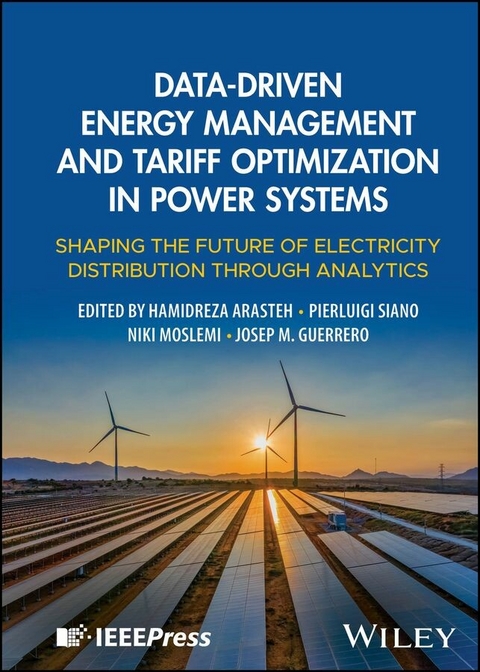
Data-Driven Energy Management and Tariff Optimization in Power Systems (eBook)
578 Seiten
Wiley-IEEE Press (Verlag)
978-1-394-29028-4 (ISBN)
Presents a comprehensive guide to transforming power systems through data
Data-Driven Energy Management and Tariff Optimization in Power Systems offers an authoritative examination of how data science is reshaping the energy landscape. As the electricity sector grapples with increasing complexity, this timely volume responds to a growing demand for adaptive strategies that enable accurate forecasting, intelligent tariff design, and optimized resource allocation, underpinned by advanced analytics and machine learning.
Drawing on global expertise and real-world case studies, the book bridges the theoretical and practical dimensions of energy systems management, providing deep insight into how data collected from smart meters, SCADA systems, and IoT devices can be mined for predictive modeling, demand response, and peak load management. The book's accessible structure and didactic approach make it suitable for a wide readership, while its breadth of topics ensures relevance across the spectrum of energy challenges.
Integrating rigorous analysis with application-oriented strategies, this book:
- Presents advanced techniques in machine learning, predictive modeling, and pattern recognition tailored to energy management and tariff design
- Provides accessible explanations of complex algorithms through a didactic and visual teaching style, including informative tables and illustrations
- Highlights tools for grid stability, demand forecasting, and peak load management using high-resolution energy data
- Addresses the integration of renewable energy sources into existing infrastructures through data-driven optimization
Designed for a broad audience, Data-Driven Energy Management and Tariff Optimization in Power Systems is ideal for upper-level undergraduate and graduate courses in energy management, power systems analytics, and smart grids as part of electrical engineering or energy policy programs. It is also an essential reference for power system engineers, energy analysts, researchers, and policymakers involved in grid planning and optimization.
Hamidreza Arasteh is an Assistant Professor in the Power Systems Operation and Planning Research Department at the Niroo Research Institute, Tehran, Iran, and a Research Assistant at the Center for Research on Microgrids (CROM), Huanjiang Laboratory, Zhuji, Shaoxing, Zhejiang, China. He specializes in energy management, smart grids, microgrids, and electricity markets, with numerous research contributions in energy management and the integration of data analytics into power system operations.
Pierluigi Siano is a Professor and Scientific Director of the Smart Grids and Smart Cities Laboratory at the University of Salerno, Italy. A Senior Member of IEEE, his research focuses on demand response, distributed energy resources, and power system planning. He serves on editorial boards for several prestigious journals in the field.
Niki Moslemi is Head of the Power Systems Operation and Planning Research Department at the Niroo Research Institute in Tehran, Iran. She brings decades of experience in power quality, load forecasting, system resiliency, and data-driven energy strategies. Her leadership and research span multiple high-impact projects within the energy sector.
Josep M. Guerrero is with Zhejiang University, Hangzhou, Zhejiang, China, a Director of the Center for Research on Microgrids (CROM), Huanjiang Laboratory, Zhuji, Shaoxing, China, and a Distinguished Senior Researcher at the Department of Electrical Engineering, University of Valladolid, Spain. His research interests include various aspects of microgrids, including power electronics and distributed energy resources.
Presents a comprehensive guide to transforming power systems through data Data-Driven Energy Management and Tariff Optimization in Power Systems offers an authoritative examination of how data science is reshaping the energy landscape. As the electricity sector grapples with increasing complexity, this timely volume responds to a growing demand for adaptive strategies that enable accurate forecasting, intelligent tariff design, and optimized resource allocation, underpinned by advanced analytics and machine learning. Drawing on global expertise and real-world case studies, the book bridges the theoretical and practical dimensions of energy systems management, providing deep insight into how data collected from smart meters, SCADA systems, and IoT devices can be mined for predictive modeling, demand response, and peak load management. The book s accessible structure and didactic approach make it suitable for a wide readership, while its breadth of topics ensures relevance across the spectrum of energy challenges. Integrating rigorous analysis with application-oriented strategies, this book: Presents advanced techniques in machine learning, predictive modeling, and pattern recognition tailored to energy management and tariff designProvides accessible explanations of complex algorithms through a didactic and visual teaching style, including informative tables and illustrationsHighlights tools for grid stability, demand forecasting, and peak load management using high-resolution energy dataAddresses the integration of renewable energy sources into existing infrastructures through data-driven optimization Designed for a broad audience, Data-Driven Energy Management and Tariff Optimization in Power Systems is ideal for upper-level undergraduate and graduate courses in energy management, power systems analytics, and smart grids as part of electrical engineering or energy policy programs. It is also an essential reference for power system engineers, energy analysts, researchers, and policymakers involved in grid planning and optimization.
1
Fundamentals of Power System Data and Analytics
Seyed Pouya Ramezanzadeh, Mohsen Parsa Moghaddam, and Reza Zamani
Faculty of Electrical and Computer Engineering, Tarbiat Modares University, Tehran, Iran
1.1 Introduction
Imagine a world where power systems can predict outages before they happen, optimize energy distribution in real time, and seamlessly integrate renewable energy sources. This image is no longer a distant dream but a rapidly approaching reality, thanks to the transformative power of data analytics. The convergence of digital technologies and power systems heralds a new era of data-based operation in the energy sector [1]. As traditional power grids evolve into interconnected, data-rich ecosystems, data analytics becomes increasingly critical.
Data analytics enables grid operators and market participants to glean actionable insights from vast volumes of data, empowering proactive grid management, demand response optimization, and risk mitigation strategies [2]. By leveraging advanced data analytics techniques, power systems can enhance reliability, optimize energy efficiency, and support the integration of renewable energy sources, paving the way for a sustainable energy future.
As adopting renewable energy sources grows, it introduces more significant variability into the electrical grid, complicating the balance between supply and demand [3]. Innovative solutions must be developed to manage this challenge and enhance system flexibility on both the supply and demand sides. One of the most promising strategies involves the integration of smart grids, supported by big data analytics, to strengthen the resilience and management of power systems [4]. Smart grids allow for more adaptive energy distribution by enabling two-way communication and power flow between consumers and utilities.
A vital element of this transformation is the widespread deployment of smart meters, which have been installed extensively in recent years. These devices monitor near-real-time energy usage at customer sites and relay this information back to utility companies [5]. This system supports a dynamic interaction between consumers and the grid, facilitating better energy management.
The shift toward intelligent grids has been partly driven by the deregulation of power systems, which has moved away from traditional, vertically integrated utility models [6, 7]. By decentralizing energy production and distribution, smart grids can more effectively respond to fluctuating energy demands, incorporating renewable energy into the system more efficiently.
Big data plays a crucial role in the operation of smart grids, particularly in processing the vast amounts of information generated by these systems [8]. Big data analytics applications include real-time monitoring and management of energy consumption, automatic billing systems, predictive forecasting for load and energy generation, and identifying faults or anomalies in the grid [9]. This data-driven approach improves the grid's capacity to respond to unpredictability and increases the overall efficiency of the energy system.
The characteristics of the data collected by intelligent grids align with the core attributes of big data: volume, velocity, and variety. Additionally, it introduces other critical “V” characteristics, such as veracity (accuracy of the data), visibility (transparency), and value (the actionable insights drawn from the data). However, these benefits come with significant challenges, particularly in the areas of security and privacy [10], which must be carefully managed to fully realize the potential of smart grid technologies [11].
This chapter explores the digital transformation of power systems, the structure of data-driven power systems, and the pivotal role of data-driven decision-making. It delves into state-of-the-art data analytics techniques explicitly tailored for power systems and presents real-world examples and case studies. Finally, it addresses this rapidly evolving field's challenges and future directions.
To understand the full potential of data analytics in power systems, it is essential to first explore the current landscape and the transformative changes underway in the power industry. The following section provides a comprehensive background on these topics.
1.2 Background
Digital trends have gradually changed traditional power systems over the last decade. Therefore, it is necessary to understand these digital trends and their impact on power systems. Figure 1.1 shows current trends in power systems and the expected results they will cause when the digital transformation enables the power industry to respond to digital trends.
The following sections discuss concepts, opportunities, and challenges of present and future power systems; transformation in the power industry; and drivers and barriers to such transformation.
1.2.1 Concept, Opportunities, and Challenges of Present and Future Power Systems
Traditionally composed of generation, transmission, and distribution networks, legacy power systems are designed to deliver electricity from power plants to end consumers reliably and efficiently [12]. Modernizing power systems opens new opportunities for an increased role of distributed sources, improved participation of stakeholders, and the integration of renewable energy sources, ultimately contributing to a more sustainable energy future [13]. Advanced data analytics can optimize power flow, reduce operational costs, and improve demand forecasting, making the grid more adaptable and resilient [14]. Meanwhile, these groundbreaking digital technologies expose power systems to new challenges.
Figure 1.1 Digital trends and their results in the power industry.
However, this transformation comes with challenges such as maintaining grid stability with intermittent renewable sources, ensuring cybersecurity, and managing the vast amounts of data generated by smart devices [15, 16]. Balancing the benefits of modernization with these challenges is critical for the future of power systems.
Figure 1.2 shows critical opportunities and challenges of future power systems. It is worth mentioning that some unknown opportunities and challenges will emerge in the operational phase of digital transformation.
1.2.2 Transformation in the Power Industry
The power industry is undergoing a significant transformation, driven by a convergence of technological advancements, environmental imperatives, regulatory changes, and evolving consumer expectations [17, 18]. This transformation is not merely a shift in operational practices but a profound rethinking of how energy is generated, distributed, and consumed and how different parts of the energy sector work together [19]. The philosophy behind this transformation centers on sustainability, resilience, and decentralization.
Figure 1.2 Opportunities and challenges of future power systems.
Digitalization revolutionizes the power industry by enabling real-time monitoring, predictive maintenance, and optimized energy management through advanced data analytics. Integrating digital communication technologies with the electrical grid has led to smart grids. Smart grids allow for more efficient and reliable electricity delivery, enhanced by the capability to dynamically respond to changes in demand and supply [2]. Digitalization of power systems relies on the process by which data is gathered, prepared, and used for decision-making.
Decentralization involves generating power closer to where it is used, reducing transmission losses, and enhancing grid resilience [20]. Distributed energy resources like solar panels and battery storage play a crucial role in this shift, allowing consumers to become prosumers who both produce and consume electricity. Historically, power systems were designed with a centralized generation model, where large power plants produced electricity, which was then transmitted over long distances to consumers. This model was efficient for many decades but is increasingly seen as inadequate in addressing the challenges of modern energy demands and environmental concerns. The new philosophy emphasizes a more distributed and dynamic approach, integrating renewable energy sources, enhancing grid flexibility, and prioritizing energy efficiency.
One of the primary drivers of transformation is the integration of renewable energy sources such as wind, solar, and hydropower. These sources are inherently variable and decentralized, requiring a shift from the traditional central control to a more flexible and adaptive grid management system [21]. For instance, the rise of solar power has led to millions of households and businesses installing photovoltaic panels, turning them from mere consumers into prosumers who both produce and consume electricity and data [22]. Data is the core of the transformation by which consumers can manage their participation behavior in energy markets, and utilities can establish new profit opportunities [23].
Advanced data analytics and smart grid technologies are crucial in managing the complexities introduced by renewable energy. Smart grids use sensors, advanced metering infrastructure, and data analytics to monitor and manage real-time energy flow. For example, predictive analytics can forecast energy demand and supply patterns, allowing grid operators to balance loads more...
| Erscheint lt. Verlag | 27.10.2025 |
|---|---|
| Sprache | englisch |
| Themenwelt | Geisteswissenschaften ► Geschichte |
| Technik ► Elektrotechnik / Energietechnik | |
| Schlagworte | Advanced Forecasting • Data Analysis • data-driven energy management • demand response • electricity tariff optimization • Power grid resilience • power system analytics • Power System Optimization • renewable energy integration • Smart Grids • sustainability |
| ISBN-10 | 1-394-29028-4 / 1394290284 |
| ISBN-13 | 978-1-394-29028-4 / 9781394290284 |
| Informationen gemäß Produktsicherheitsverordnung (GPSR) | |
| Haben Sie eine Frage zum Produkt? |
 EPUB (Adobe DRM)
Kopierschutz: Adobe-DRM
Adobe-DRM ist ein Kopierschutz, der das eBook vor Mißbrauch schützen soll. Dabei wird das eBook bereits beim Download auf Ihre persönliche Adobe-ID autorisiert. Lesen können Sie das eBook dann nur auf den Geräten, welche ebenfalls auf Ihre Adobe-ID registriert sind.
Details zum Adobe-DRM
Dateiformat: EPUB (Electronic Publication)
EPUB ist ein offener Standard für eBooks und eignet sich besonders zur Darstellung von Belletristik und Sachbüchern. Der Fließtext wird dynamisch an die Display- und Schriftgröße angepasst. Auch für mobile Lesegeräte ist EPUB daher gut geeignet.
Systemvoraussetzungen:
PC/Mac: Mit einem PC oder Mac können Sie dieses eBook lesen. Sie benötigen eine
eReader: Dieses eBook kann mit (fast) allen eBook-Readern gelesen werden. Mit dem amazon-Kindle ist es aber nicht kompatibel.
Smartphone/Tablet: Egal ob Apple oder Android, dieses eBook können Sie lesen. Sie benötigen eine
Geräteliste und zusätzliche Hinweise
Buying eBooks from abroad
For tax law reasons we can sell eBooks just within Germany and Switzerland. Regrettably we cannot fulfill eBook-orders from other countries.
aus dem Bereich