


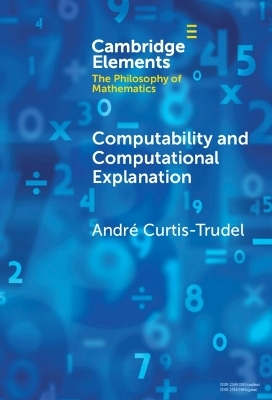
Computability and Computational Explanation
Seiten
2026
Cambridge University Press (Verlag)
978-1-009-55178-6 (ISBN)
Cambridge University Press (Verlag)
978-1-009-55178-6 (ISBN)
- Noch nicht erschienen (ca. Februar 2026)
- Versandkostenfrei
- Auch auf Rechnung
- Artikel merken
This Element introduces computability theory and its use in explaining empirical phenomena. Aimed at advanced undergraduates and graduates in philosophy, it presents key tools and results, surveys applications in computer and cognitive science, and outlines major philosophical debates around these explanatory projects.
This Element is an introduction to classical computability theory and scientific efforts to use computability-theoretic notions to explain empirical phenomena. It is written for advanced undergraduates and graduate students in philosophy, assuming no prior exposure to computability theory. Its goals are threefold: (1) to introduce some important theoretical tools and results from classical computability theory; (2) to survey some of the ways these have been used to support explanatory projects in computer and cognitive science; and (3) to outline a few of the more prominent philosophical debates surrounding these projects.
This Element is an introduction to classical computability theory and scientific efforts to use computability-theoretic notions to explain empirical phenomena. It is written for advanced undergraduates and graduate students in philosophy, assuming no prior exposure to computability theory. Its goals are threefold: (1) to introduce some important theoretical tools and results from classical computability theory; (2) to survey some of the ways these have been used to support explanatory projects in computer and cognitive science; and (3) to outline a few of the more prominent philosophical debates surrounding these projects.
1. Introduction; 2. Models of computation; 3. Basic results; 4. From computability theory to computational explanation; 5. Computational explanations of capacities; 6. Limitative explanations; 7. Conclusion; References.
| Erscheint lt. Verlag | 28.2.2026 |
|---|---|
| Reihe/Serie | Elements in the Philosophy of Mathematics |
| Zusatzinfo | Worked examples or Exercises |
| Verlagsort | Cambridge |
| Sprache | englisch |
| Themenwelt | Geisteswissenschaften ► Psychologie ► Allgemeine Psychologie |
| Geisteswissenschaften ► Psychologie ► Verhaltenstherapie | |
| Mathematik / Informatik ► Informatik ► Theorie / Studium | |
| Mathematik / Informatik ► Mathematik | |
| ISBN-10 | 1-009-55178-7 / 1009551787 |
| ISBN-13 | 978-1-009-55178-6 / 9781009551786 |
| Zustand | Neuware |
| Informationen gemäß Produktsicherheitsverordnung (GPSR) | |
| Haben Sie eine Frage zum Produkt? |
Mehr entdecken
aus dem Bereich


aus dem Bereich
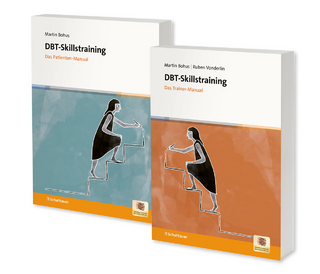
Paket bestehend aus »Das Patienten-Manual« und »Das Trainer-Manual«
Buch | Softcover (2025)
Schattauer (Verlag)
CHF 125,95


