


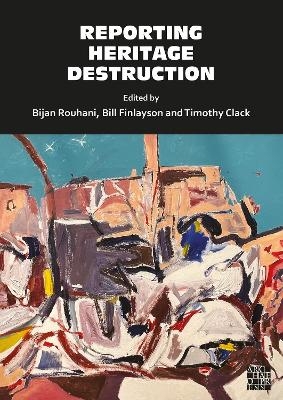
Reporting Heritage Destruction
Archaeopress Archaeology (Verlag)
978-1-80583-038-2 (ISBN)
The contributions in this volume, an output of the University of Oxford’s Endangered Cultural Heritage of the Global South (ECHGS) Hub, speak to some fundamental questions about the reporting of heritage destruction: who is reporting, what is being reported and how, and what are the implications of such reporting? Given that cultural heritage can serve as both a trigger and a casualty of conflict, the relentless flow of reporting from news outlets and social media and user-generated content has consequences. The complex and evolving relationships between communities, media, human rights issues and heritage can also serve to endanger and safeguard identities in the present as well as the tangible and intangible legacies of the past. This volume explores these topics through a diversity of perspectives, including from Africa, Asia, and the Middle East. The collection culminates with the ‘Oxford Recommendations’, an ethical reporting framework recommended for use by journalists and others confronted by such issues.
Dr Bijan Rouhani is a Researcher on the EAMENA Project at Oxford University. Dr Bill Finlayson is Director of the EAMENA Project at Oxford University. Dr Tim Clack is Associate Professor at the School of Archaeology an School of Anthropology at Oxford University.
List of Contributors
Introduction: Can Reporting Heritage Destruction Be a Double-Edged-Sword? – Bijan Rouhani, Bill Finlayson and Timothy Clack
SECTION I. WHO OWNS AND VALUES CULTURAL HERITAGE?
Chapter 1. Heritage Without People: On the Search for New Forms of History Written by the People – Ammar Azzouz
Chapter 2. What Role for International Institutions in Promoting People-Led Heritage? – Elly Harrowell and Aparna Tandon
Chapter 3. The Perils of Endangerment: Reflections on Mapping Africa’s Endangered Archaeological Sites and Monuments – Paul J. Lane, Stefania Merlo, and the MAEASaM Project Team Members
Chapter 4. Intentional Heritage Destruction: Feminist Perspectives on Gender, Voice, and Norms – Eleanor Childs
Chapter 5. Underwater Cultural Heritage: A Weapon for Political Deception and Psychological Operations – Elena Perez-Alvaro
Chapter 6. The Role of Iraq’s Post-Conflict Legal Systems in the Conservation of Cultural Heritage: Protecting or Endangering? – Kristen Barrett-Casey
SECTION II. CULTURAL HERITAGE AS A HUMAN RIGHT
Chapter 7. A Human Rights Approach to the Protection of Cultural Heritage – Karima Bennoune
Chapter 8. Heritage and Genocide: The Role of Cultural Property Protection in the Prevention of Crimes Against Humanity – Jessica L. Wagner
Chapter 9. Rohingya Narratives Beyond Victimhood: Responses to Reporting on Heritage Destruction – Saqib Sheikh and Carolyn Morris
Chapter 10. Destructive Nostalgia: Whose Heritage? A Critical Review of Urbicide and the Politics of Cultural Erasure – Ashish Makanadar
Chapter 11. Reporting Heritage Destruction or Reclaiming the Collective Asset? An Experience of Shiraz – Mona Azarnoush
Chapter 12. From the Frontlines to the Headlines or Headlines to the Frontlines? Some Observations on the Implications of Media Reporting of the Destruction of Cultural Heritage in War – Timothy Clack
SECTION III. MEDIA REPORTING AND HERITAGE DESTRUCTION
Chapter 13. Cultural Destruction as a Weapon of War – Sebastian Usher
Chapter 14. Sowing Salt and Cultivating Fear: Examining Patterns in Reporting Cultural Heritage Destruction from Ancient Times to the Digital Age – Bijan Rouhani
Chapter 15. State vs. Non-State Led Media: A Comparative Study of Reporting Cultural Heritage Destruction in Egypt – Mohamed W. Fareed
Chapter 16. Cultural Heritage in the Iran-Iraq War (1980-1988): The Unreported Legacy of a Protracted War – Bijan Rouhani and Bill Finlayson
Chapter 17. Cultural Heritage Intelligence and Human Security: Exercise HORIZON STRIKE – Mark Dunkley
Chapter 18. #Hashtaggingheritage: An Exploration of South Asian Social Media Landscapes and Heritage – Afifa Khan, Mou Sarmah, Vaneshree Vidyarthi, Rebecca Roberts and Cameron A. Petrie
Chapter 19. From Darkness to Dawn: Cultural Heritage Restoration in Tigray, Ethiopia’s Conflict Zone – Alula Tesfay Asfha
Chapter 20. Endangered Cultural Heritage in Northern Nigeria Amidst Terrorism: Myths, Mistakes, and Misunderstanding – Favour Chukwuemeka Uroko
Chapter 21. Heritage Destruction and its Preservation as a Legitimising Tool in The Russian Media – Thomas Richard
OXFORD RECOMMENDATIONS ON REPORTING HERITAGE DESTRUCTION
Oxford Recommendations on Reporting Heritage Destruction
| Erscheinungsdatum | 11.11.2025 |
|---|---|
| Zusatzinfo | Colour figures throughout |
| Verlagsort | Oxford |
| Sprache | englisch |
| Maße | 205 x 290 mm |
| Gewicht | 1199 g |
| Themenwelt | Geisteswissenschaften ► Archäologie |
| ISBN-10 | 1-80583-038-4 / 1805830384 |
| ISBN-13 | 978-1-80583-038-2 / 9781805830382 |
| Zustand | Neuware |
| Informationen gemäß Produktsicherheitsverordnung (GPSR) | |
| Haben Sie eine Frage zum Produkt? |
aus dem Bereich


