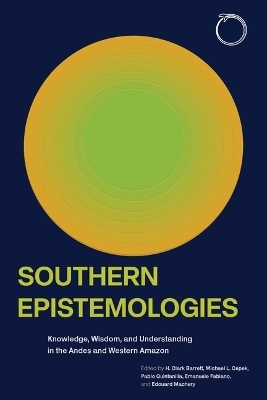
Southern Epistemologies
Hau (Verlag)
978-1-914363-50-4 (ISBN)
- Noch nicht erschienen (ca. Mai 2026)
- Versandkostenfrei
- Auch auf Rechnung
- Artikel merken
What does it mean to know, and how is knowledge practiced? How can Indigenous perspectives challenge conventional concepts of knowledge in the Global North? Drawing on Indigenous epistemologies from the Andes and Western Amazon, Southern Epistemologies investigates how knowledge, wisdom, and understanding are shaped by local cultures, languages, bodies, and environments.
Bringing together linguists, philosophers, anthropologists, and Indigenous knowledge holders, the volume examines the dynamic interactions between culture, language, and place, showing how the unique linguistic histories and worldviews of Andean and Amazonian societies inform distinct ways of knowing. By interpreting these perspectives on their own terms, the book offers fresh insights into the plurality and diversity of human knowledge.
As the first volume specifically focused on Indigenous South American epistemologies, Southern Epistemologies foregrounds Indigenous knowledge systems and science while fostering dialogue with academic traditions. By opening new interdisciplinary and cross-cultural conversations, this groundbreaking volume challenges conventional notions of knowledge and illuminates how engagement with Indigenous perspectives can expand and enrich our understanding of what it truly means to know.
H. Clark Barrett is a professor of anthropology at UCLA. Michael L. Cepek is a professor of anthropology at the University of Texas at San Antonio and president of the Cofán Survival Fund, a US-based nonprofit supporting the land rights, healthcare, and education of Ecuador’s Indigenous Cofán Nation. He has worked with the Cofán for more than three decades. Pablo Quintanilla is a full professor of philosophy at Pontificia Universidad Católica del Perú and a senior research associate in the Department of the African Centre for Epistemology & Philosophy of Science (ACEPS) at the University of Johannesburg, South Africa. Emanuele Fabiano is a postdoctoral researcher at the Center for Social Studies at the University of Coimbra in Portugal and a researcher at Pontifical Catholic University of Peru. Edouard Machery is a distinguished professor of history and philosophy of science at the University of Pittsburgh, where he also directs the Center for Philosophy of Science.
Chapter 1. Indigenous Epistemologies and Their OthersH. Clark BarrettChapter 2. Perceptions, Relations, and Possessions: The Expansive Body as the Foundation of Cofán Shamanic EpistemologyMichael L. Cepek and Cesario LucitanteChapter 3. Representations of Shamanic Power in Siona Dream NarrativesJean LangdonChapter 4. Substantiating Kinship as Knowing Relation among Urban Uitoto DesplazadosAmy Leia McLachlanChapter 5. Shifting the Linguistic Geography: When Ideologies of Language Collide with Histories of Language Contact in the AltiplanoSandhya Krittika NarayananChapter 6. Linguistic Evidence for Body Parts as the Locus of Learning in MatsesDavid W. FleckChapter 7. How Language Influences Cognition: The Case of the Quechua Evidentiality SystemPablo QuintanillaChapter 8. A Postcognitivist Approach to the Emotional Experience of Language in Native Andean Speakers with Spanish as a Second TongueMaría Inés SilenziChapter 9. On the Ontological Diversity of Language in Indigenous South AmericaJan David HauckChapter 10. The Uncertain Virtues of Incomplete Knowledge: Two Case StudiesH. Clark BarrettChapter 11. Knowledge in the Upper Amazon: Indigenous Voices from Urarina, Shuar, and Shiwiar CommunitiesMedardo Arahuate Manizari, Jorge Caringkia, Jervacio Gualinga Chuji, Mariano TsetsekipSanti, Joshua Homan, Alejandro Erut, and Emanuele FabianoChapter 12. Postface: Language and Culture: The Plot Thickens…Laura Rival
| Erscheint lt. Verlag | 28.5.2026 |
|---|---|
| Zusatzinfo | 1 halftone |
| Verlagsort | IL |
| Sprache | englisch |
| Maße | 152 x 229 mm |
| Gewicht | 454 g |
| Themenwelt | Geisteswissenschaften ► Archäologie |
| Geisteswissenschaften ► Philosophie ► Erkenntnistheorie / Wissenschaftstheorie | |
| Sozialwissenschaften ► Ethnologie | |
| Sozialwissenschaften ► Soziologie | |
| ISBN-10 | 1-914363-50-7 / 1914363507 |
| ISBN-13 | 978-1-914363-50-4 / 9781914363504 |
| Zustand | Neuware |
| Informationen gemäß Produktsicherheitsverordnung (GPSR) | |
| Haben Sie eine Frage zum Produkt? |
aus dem Bereich