


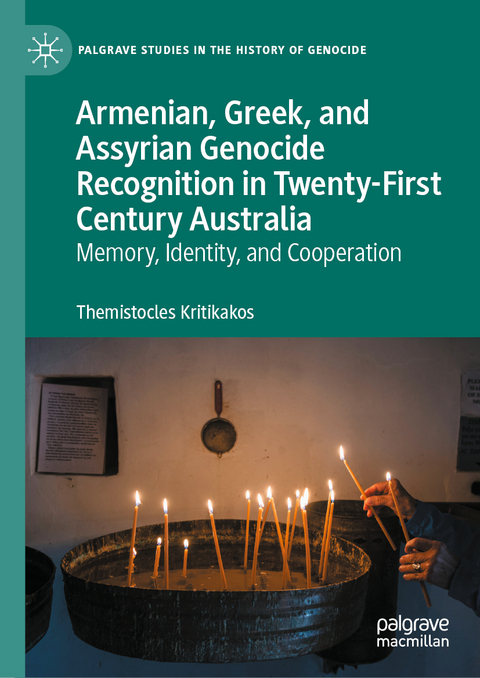
Armenian, Greek, and Assyrian Genocide Recognition in Twenty-First Century Australia
Springer International Publishing (Verlag)
978-3-032-08499-6 (ISBN)
- Noch nicht erschienen - erscheint am 07.02.2026
- Versandkostenfrei
- Auch auf Rechnung
- Artikel merken
While the Armenian Genocide has received significant international recognition, the related experiences of Greeks and Assyrians are largely unknown and overlooked. In an original contribution to genocide studies, Themistocles Kritikakos examines the enduring legacies of the Armenian, Greek, and Assyrian genocides in the late Ottoman Empire (1914 1923). This book presents the first comprehensive comparative analysis of their efforts to achieve genocide recognition in Australia, advancing our understanding of the Ottoman genocidal campaign and its long-term consequences.
Australians witnessed and reported the atrocities and suffering, and provided humanitarian support to survivors between 1915 and 1930. Yet Australian national narratives of reconciliation with Turkey around the Gallipoli Campaign (1915) are in persistent tension with the recognition efforts.
Drawing from oral interviews with descendants of survivors and research in memory and genocide studies, the book explores the intergenerational effects of silence and memories of violence and displacement within families and communities in the diaspora. It examines commemorative practices, sites of memory, and intercommunal coalition-building.
Kritikakos sheds new light on how individuals, families, and communities process and negotiate traumatic experiences across time and place. The study demonstrates how communities that once remembered traumatic pasts separately have developed shared narratives through new forms of remembrance, strengthening their pursuit of recognition.
Themistocles Kritikakos holds a PhD in History from the University of Melbourne, Australia, where he is currently employed and has previously held teaching, research, and administrative positions. He is also an independent researcher and freelance writer.
1 Introduction.- 2 The Late Ottoman Genocides: Historical Context, Academic Discourse, and Legacy.- 3 The Tapestry of Trauma: Silence, Hints, and Storytelling in the Greek and Assyrian Experiences.- 4 Transforming Memories: The Intersection of Commemoration, Differences, and Monuments.- 5 Intercommunal Cooperation: Establishing a Shared Experience and Genocide Recognition.- 6 From Humanitarianism to Recognition: Australia and the Politics of Memory.- 7 Conclusion.
| Erscheinungsdatum | 29.11.2025 |
|---|---|
| Reihe/Serie | Palgrave Studies in the History of Genocide |
| Zusatzinfo | XV, 318 p. 5 illus. |
| Verlagsort | Cham |
| Sprache | englisch |
| Maße | 148 x 210 mm |
| Themenwelt | Geisteswissenschaften ► Geschichte ► Regional- / Ländergeschichte |
| Schlagworte | Armenian Genocide • Gallipoli • Genocide Studies • Ottoman Empire • Remembrance |
| ISBN-10 | 3-032-08499-7 / 3032084997 |
| ISBN-13 | 978-3-032-08499-6 / 9783032084996 |
| Zustand | Neuware |
| Informationen gemäß Produktsicherheitsverordnung (GPSR) | |
| Haben Sie eine Frage zum Produkt? |
aus dem Bereich


