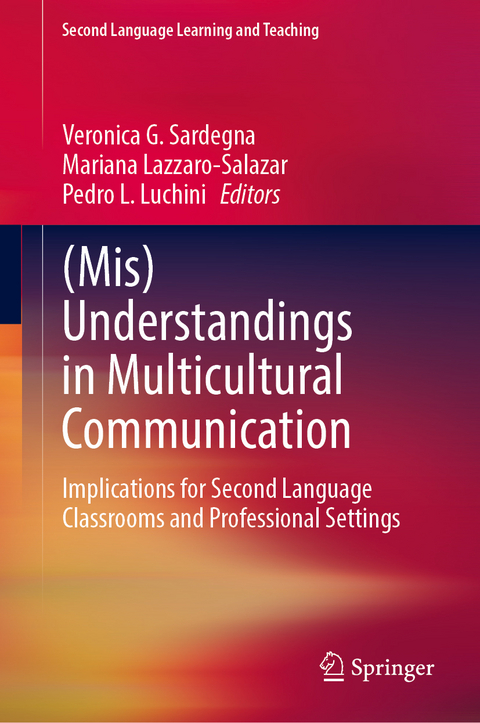
(Mis)Understandings in Multicultural Communication
Springer International Publishing (Verlag)
978-3-032-08142-1 (ISBN)
- Noch nicht erschienen - erscheint am 23.02.2026
- Versandkostenfrei
- Auch auf Rechnung
- Artikel merken
This book explores how multicultural speakers interact in monolingual, bilingual, and telecollaborative contexts in order to establish evidence-based recommendations for best practices in second/foreign language classrooms and professional settings. The book features leading experts sharing valuable insights and cutting-edge research analyses of talk in interaction. It consists of six parts. Part 1 describes its main purpose, goals, focus, intended audience, and structure. Part 2 investigates how culturally and linguistically diverse speakers position themselves to achieve shared understandings, manage communication challenges, and negotiate cultural differences and misunderstandings during intercultural discussions in monolingual, bilingual, and multilingual classroom and workplace settings. Part 3 analyzes how pronunciation, identity construction, and intercultural awareness converge in diverse educational and sociolinguistic contexts and contribute to an increased appreciation of other cultures and worldviews. Part 4 offers a multidimensional understanding of how meaning is reframed across cultural and linguistic boundaries through textual communication practices, including the use of metaphors, queer translation, and literary discourse analysis. Part 5 evaluates best practices for teaching and assessing in person and online intercultural learning through study abroad programs, digitally mediated cultural exchanges, and telecollaborative projects. Part 6 brings together the accumulated evidence to suggest four main multicultural communication practices and propose 100 research questions for further inquiry. Due to its focus on theory, research, and practice, this book appeals to a mixed audience of applied linguists, researchers, translators, teachers, and other professionals with varying expertise in intercultural and multicultural communication skills development and a wide range of scholarly and teaching interests and perspectives.
Veronica G. Sardegna is the Director of the ESL and Pathways Programs at La Roche University and an Adjunct Faculty at Duquesne University, PA, U.S. She is also an ESL Specialist for the U.S. Department of State English Language Programs and a member of Cuestiones del Lenguaje international research group, Universidad Nacional de Mar del Plata, Argentina. She has researched and published extensively on topics related to English pronunciation, academic writing, instructional technology, and intercultural learning. She co-edited Theoretical and practical developments in English speech assessment, research, and training: Studies in honour of Ewa Waniek-Klimczak (2022, Springer) and English pronunciation teaching: Theory, practice and research findings (2023, Multilingual Matters).
Mariana Lazzaro-Salazar works at the Research Centre for Advanced Studies of UCM (Universidad Católica del Maule), Chile. She is an associate researcher at the Language in the Workplace Project (Victoria University of Wellington, New Zealand), a member of the UCM Editorial Advisory Committee, director of the journal UCM, member of the Academic Committee of the Doctoral Program in Education, cluster leader for Research and Impact Initiative on Communication in Healthcare (HKU-RIICH) at the University of Hong Kong, PhD advisor at the University of Leuven, and member of Cuestiones del Lenguaje international research group.
Pedro L. Luchini
PART 1: Introduction.- 1. Introduction (by editors).- 2. Key Concepts and Theoretical Frameworks (Veronica G. Sardegna, Mariana Lazzaro-Salazar, & Pedro Luchini).- PART 2: Positioning Negotiations During Multicultural Discussions.- 3. Language Teachers Pathways Towards a Shared Intercultural Stance via Telecollaboration (by Veronica G. Sardegna, Shilpa Parnami, &Vera Dugartsyrenova).- 4. I can't Allow them to Step on me : Analysing Migrant Doctors Coaching Leadership Style in Managing Challenging Professional Situations (by Mariana Lazzaro-Salazar & Eva-Maria Graf).- 5. Transculturing in Healthcare Settings: The Case of Genetic Counselling in Hong Kong (by Olga Zayts-Spence).- PART 3: Multilingual Speakers Identity Formation and Negotiations.- 6. Brazilian Students Attitudes Towards Model Varieties of English: Understanding Multicultural Learner Identity Through L2 Sounds (by Ubiratã Kickhöfel Alves, Ronaldo Lima Jr., & Arthur Dexheimer Trein).- 7. A Multi-layered Approach to Discourse Analysis: Interweaving Systemic Functional Linguistics with Intercultural Studies (by Anna Cristina Chiusano & Pedro Luchini).- 8. Prosody, Identity, and Acculturation: Uncovering Challenges in Improving Argentinean University Students English Oral Performance (by Bettiana Andrea Blázquez & Valeria Fernanda Arana).- 9. The Effects of Multi-Cultural Identity on Linguistic Teaching Styles in a U.K. Primary School Classroom (by Joanne McDowell).- 10. Biculturalism in (Inter)action in Aotearoa New Zealand (by Meredith Marra, Janet Holmes, & Bernadette Vine).- PART 4: Communication Practices in Multicultural Discussions.- 11. Self-repair Practices in Intercultural Conversations (by Crystal Kusey).- 12. A Cross-Cultural Perspective on the Roles and Functions of Pain and Depression Metaphors in Autobiographical Narratives on Chilean and Thai Social Media (by Mariana Pascual & Pattama Patpong).- 13. Prismaticand Queer Translation as Inter/Multicultural Practices: The Role of the Translator as a Meaning-Mediator and Creator (by Luciana Beroiz).- 14. One Language, Many Norms: The Complexity of Relational Practice in Diverse Workplaces (by Bernadette Vine, Janet Holmes, & Meredith Marra).- PART 5. Teaching and Assessing Intercultural Learning.- 15. Best Practices for Assessing Intercultural Learning Through Reflection Essays (by Veronica G. Sardegna, Eliana Berardo, & Carolina Salazar).- 16. Intercultural Online Exchanges as a Multilayered and Dynamic Activity System: Lessons from a Bilingual Discussion Forum between Hindi and English Language Learners (by Shilpa Parnami).- PART 6: Conclusion.- 17. Lessons Learned and Directions for Practice and Research (by editors).
| Erscheinungsdatum | 29.11.2025 |
|---|---|
| Reihe/Serie | Second Language Learning and Teaching |
| Zusatzinfo | XVI, 307 p. 42 illus., 34 illus. in color. |
| Verlagsort | Cham |
| Sprache | englisch |
| Maße | 155 x 235 mm |
| Themenwelt | Schulbuch / Wörterbuch ► Wörterbuch / Fremdsprachen |
| Geisteswissenschaften ► Sprach- / Literaturwissenschaft ► Sprachwissenschaft | |
| Sozialwissenschaften ► Pädagogik ► Schulpädagogik / Grundschule | |
| Schlagworte | Challenges in multicultural discussions and settings • Interactions in multicultural workplace settings • Intercultural Communicative Competence • Intercultural learning via telecollaboration • Multicultural communication in online settings • Multicultural communication practices in the workplace • Multicultural communicative competence • Multicultural Learning |
| ISBN-10 | 3-032-08142-4 / 3032081424 |
| ISBN-13 | 978-3-032-08142-1 / 9783032081421 |
| Zustand | Neuware |
| Informationen gemäß Produktsicherheitsverordnung (GPSR) | |
| Haben Sie eine Frage zum Produkt? |
aus dem Bereich