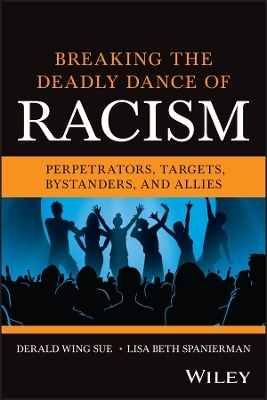
Breaking the Deadly Dance of Racism
John Wiley & Sons Inc (Verlag)
978-1-394-31090-6 (ISBN)
- Noch nicht erschienen (ca. Mai 2026)
- Versandkostenfrei
- Auch auf Rechnung
- Artikel merken
Preface xi
PART ONE: INTRODUCTION
CHAPTER ONE The Dance of Racism: Perpetrators, Targets, Bystanders, and White Allies 3
Challenge, Change, and Transformation: The Racial Revolution 5
The Rise of Whiteness and White Supremacy 6
Addressing Racism 9
Critical Consciousness 10
Self-Reckoning 16
Anti-Racism (Words and Deeds) 19
The Dance of Racism 25
The Dance Metaphor 25
Final Words 28
References 29
PART TWO: THE DANCERS
CHAPTER TWO Barriers to Perpetrator Awareness and Reparative Action 37
Overcoming Perpetrator Unawareness 39
Cognitive Barriers 40
Affective/Emotional Barriers 50
Behavioral Barriers 58
When Perpetrators Are Called Out 61
Strategies For Perpetrators To Break The Deadly Dance Of Racism 63
Conclusion 66
References 66
CHAPTER THREE Target Survival and Resilience: Overcoming Racism 73
The Prevalence of Racism Experienced by Targets: Who Are People of Color? 74
Discrimination Against African Americans 75
Discrimination Against Asian Americans 77
Discrimination Against Latinx (Hispanic) Americans 79
Discrimination Against Native Americans 81
Discrimination Against American Arab, Middle Eastern, and North African (AMENA) 83
Impact of Racism on People of Color 85
Microaggressive Harm to People of Color 86
Macroaggressive Harm to People of Color 87
The Consequences of Racial Trauma 89
Target Survival and Coping 93
Consciousness Raising 94
Self-Care Coping 95
Empowering for Action 98
References 100
CHAPTER FOUR Barriers to White Bystander Awareness and Anti-Racist Action 107
Forces Shaping Bystander Inaction or Action 108
The Bystander Effect: Silence and Inaction 109
Diffusion of Responsibility 110
Social Proof 111
Evaluation Apprehension 112
Costs/Benefits Explanation 113
Similarities and Relationships 114
The Racialization of Bystander Interventions 118
Conformity and Obedience to Authority 119
Isolation, Group Loyalty, Power, Secrecy, and Racism: Societal Implications 124
Everyday Racism and Microaggressions: Impact on Bystanders 128
Conclusions 136
References 137
CHAPTER FIVE Barriers to Ally Awareness: A Call for Courage 143
Aspirational Characteristics of White Allies 144
Demonstrate a Nuanced Understanding of Structural Racism and White Privilege 144
Enact a Continual Process of Self-Reflection About Their Positionality and Privilege 145
Experience a Sense of Responsibility to Use Their Racial Privilege to Facilitate Equity 145
Engage in Actions to Disrupt Individual and Structural Racism in Their Own Communities 146
Participate in Coalitions and Work in Solidarity with POC 146
Encounter Resistance, Prepare for Backlash, and Shore Up Resources to Persist 146
Potential Hazards of White Allyship: Reinforcing the Status Quo 147
Engaging in Superficial and Performative Gestures 147
Acting Paternalistically 148
Overidentifying with People of Color 149
Performative Allyship as a Starting Point? 150
Motivations for Ally Work 151
Childhood and Family Background 152
Critical Incidents or Turning Points 153
POC Perspectives of White Racial Justice Allies 154
White Allies Are Few and Far Between (Structural Barriers to Becoming an Ally) 156
The Emotional Labor of Allyship 158
Hesitancy to Act: White Ally Paralysis 160
Response Uncertainty 160
Fear of Punitive Consequences 161
Summary and Synthesis: The Hazards of White Racial Justice Allyship 162
How to Be an Effective White Ally: Strategies to Break the Dance 165
Educate Yourself 165
Engage in Continual Reflexivity and Personal Growth 166
Work in White Communities 166
Develop Meaningful Relationships with POC 167
Amplify POC Voices, Listen, and Decenter Whiteness 168
Move Beyond Intention to Action 168
Develop Self-Care
Strategies to Persist 169
Visualizing Sustained and Accountable White Allyship 170
Conclusion 171
References 171
PART THREE: SOCIAL, SYSTEMIC, AND CULTURAL INFLUENCES THAT FACILITATE RACISM
CHAPTER SIX The Deadly Dance of Racism: Symbiotic Roles, Scripts, and Ground Rules 181
Unintended Consequences of Silence and Inaction 183
False Consensus Effect 184
Social/Bias Contagion Effect 186
The Role Relationships in the Dance of Racism 189
Communication and Intervention Styles 191
Sincerity, Authenticity, and Trust 193
Cultural Scripts and Ground Rules in the Dance of Racism 197
Cultural Narratives (Storytelling) and Racial Scripts 198
Protecting Racism: Ground Rules for Racial Interactions 202
Conclusion 207
References 208
CHAPTER SEVEN Overcoming Cultural, Systemic, and Institutional Racism 215
Cultural Racism and White Supremacy 216
Whiteness and White Racial Superiority 217
Systemic, Structural, and Institutional Racism 219
Microaggressions and Macroaggressions: Distinctions and Focus 220
Microaggressions and Macroaggressions: The Myth of Meritocracy 224
Microaggressions and Macroaggressions: Standard Operating
Procedures (SOPs) 225
The Interlocking Relationship of Racism 226
Institutional and Cultural Change 228
Disarming Institutional Racism: General Guidelines 229
Cultural Racism and Societal Change: General Lessons 234
Conclusions—Looking Ahead 237
References 238
PART FOUR: ANTI-BIAS STRATEGIES AND ACTIONS TO CHALLENGE INDIVIDUAL, INSTITUTIONAL, AND CULTURAL RACISM
CHAPTER EIGHT Microintervention Strategies to Disrupt, Diminish, and Dismantle Racism: Arming Targets, Bystanders, and White Allies 245
Microinterventions: What Are They? 247
Microinterventions 248
Strategies and Tactics to Combat Individual Microaggressions 253
Strategic Goal #1: Making the “Invisible” Visible 255
Strategic Goal #2: Disarm the Microaggression 264
Strategic Goal #3: Educate the Perpetrator 268
Strategic Goal #4: Seeking Outside Support and Validation 273
Conclusion 277
References 277
CHAPTER NINE Microintervention Strategies to Disrupt, Diminish, and Dismantle Systemic Racism (Macroaggressions): Arming Targets, Bystanders, and White Allies 281
The Current Political Climate and the Rise of Overt Racism 282
Systemic Racism and Macroaggressions: Threat, Intimidation, and Silencing of Dissent 283
Civil Courage: Resistance and Social Change 286
Strategies and Tactics to Combat Macroaggressions (Systemic Racism) 288
Strategic Goal #1: Making Macroaggressions Visible 289
Strategic Goal # 2: Challenging Macroaggressions through Education 294
Strategic Goal # 3: Challenging and Disarming Macroaggressions 297
Strategic Goal #4: Seeking External Support in Fighting Macroaggressions 304
References 308
CHAPTER TEN Racial Socialization and the Microprotections that Shape Antiracist Development 315
Applying Racial Microprotections: A Framework for Prevention 317
Learning Race: How Children Are Taught to Reproduce Social Hierarchies 318
Developmental Pathways for Understanding Race 318
The Myths that Undermine Antiracist Socialization 319
The Myth of Racial Colorblindness 319
The Myth of Exposure as Enough 320
The Myth That Talking About Race Causes Bias 320
Moving Beyond the Myths 320
The Science of Racial Socialization 321
Youth of Color: A Rich Tradition of Ethnic-Racial Socialization 322
White Racial Socialization: What We Know 323
The Urgency of Intentional WRS 324
Enacting Racial Microprotections: Foundational Practices for Antiracist Socialization 325
Foundational Practice 1: Be Purposeful—Commit to Your Own Racial Learning 326
Foundational Practice 2: Break the Silence—Don’t Avoid Race Talk 330
Foundational Practice 3: Make Race Talk Normative—Incorporate It Naturally 331
Foundational Practice 4: Practice and Role-Play—Build Racial Dialogue Fluency 333
Foundational Practice 5: Anticipate and Prepare—Script Responses to Common Racial Incidents 335
Foundational Practice 6: Take the Lead—Instigate Everyday Race Lessons 337
Foundational Practice 7: Recover from Mistakes—Model Imperfection and Growth 339
Foundational Practice 8: Validate and Reinforce—Reward Antiracist Actions 340
Summary 342
Systems-Level Opportunities: Extending Racial Microprotections Beyond the Home 343
Schools 343
Community Institutions 345
Media and Technology 345
Peer Networks and Youth Spaces 346
Conclusion: Reimagining the Future of Racial Socialization 347
References 347
Index 000
| Erscheint lt. Verlag | 31.5.2026 |
|---|---|
| Verlagsort | New York |
| Sprache | englisch |
| Themenwelt | Geisteswissenschaften ► Psychologie |
| Medizin / Pharmazie ► Medizinische Fachgebiete ► Psychiatrie / Psychotherapie | |
| ISBN-10 | 1-394-31090-0 / 1394310900 |
| ISBN-13 | 978-1-394-31090-6 / 9781394310906 |
| Zustand | Neuware |
| Informationen gemäß Produktsicherheitsverordnung (GPSR) | |
| Haben Sie eine Frage zum Produkt? |
aus dem Bereich