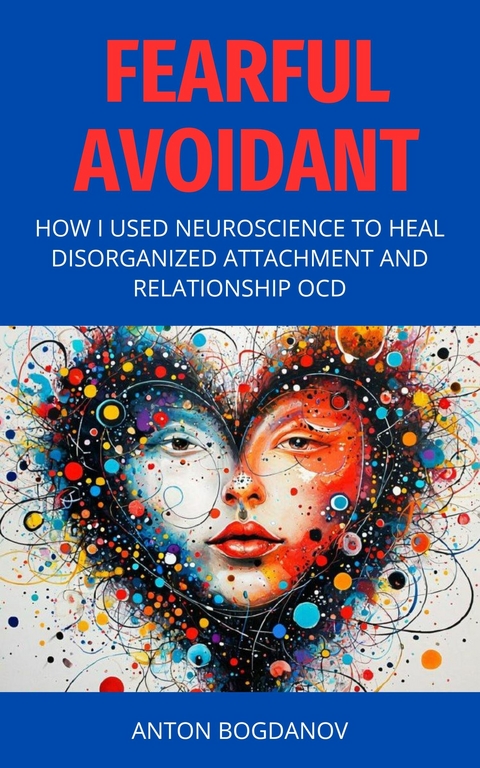
Fearful Avoidant (eBook)
235 Seiten
Publishdrive (Verlag)
979-8-89860-105-8 (ISBN)
STOP FIXING SYMPTOMS. REWIRE THE MACHINE.
The Neuroscience-Based Owner's Manual for Fearful Avoidants
If you're trapped in the hell of Fearful-Avoidant (Disorganized) attachment - where love and closeness trigger panic, intimacy and connection fuel constant doubts and breakup urges, and your brain sabotages relationships like a corrupted operating system - this book is your debug tool. No more drowning in anxiety, obsessive loops, or feeling 'broken.' I survived that war. Let me help you find the way out.
This isn't another pop psychology book, a self-help workbook that asks you to follow fifty exercises without explaining why they work, or a long textbook by an Ivy League professor. I'm a former tech marketing executive from a Fortune 500 company whose life and a successful 30-year career imploded when my Disorganized (Fearful-Avoidant) attachment erupted into gruelling Relationship OCD at midlife.
For two years since January 2022, I lived in hell as I worked to crack the code of my condition. Using my experience in technology marketing and behavioral psychology (and two years of intensive neuroscience and trauma psychology research), while battling constant anxiety and panic attacks, I decoded the patterns that trapped me and created a neuroscience-based roadmap to break free from it - without therapy.
I have studied and distilled recurrent themes and complementary ideas from almost a hundred books by world-leading experts on Brain Neurochemistry, Neurobiology of Stress and Anxiety, Psychological Trauma, Complex PTSD, Attachment Theory, Obsessive Compulsive Disorder (OCD), Exposure Therapy, Mindfulness, Acceptance and Commitment Therapy (ACT), and many other topics.
You don't need to waste years searching for answers about your contradictory feelings, intrusive thoughts and puzzling behavior. I basically 'opened the hood' of Disorganized Attachment and Relationship OCD and demystified them to the level of common diseases.
Healing is possible, even if it requires learning and patience.
PERSONAL STORY OF USING NEUROSCIENCE TO GET OUT OF PAIN:
- Real Experience of Self-Education and Self-Therapy: combines latest cutting-edge neuroscience with evidence-based healing interventions.
- Actionable: Only practical neuroplasticity-based strategies that helped heal my severe attachment trauma and relationship anxiety.
- Save Years: I distilled 10,000+ hours of research, extracting common themes and complementary ideas by some of the world's best authors in a condensed manual.
CONCISE, IN-DEPTH ROADMAP, WHERE YOU'LL DISCOVER:
- The Neuroscience/Attachment Link: How childhood attachment trauma fuels Relationship Anxiety/OCD.
- The 7-Stage Neuro-Protocol: Science-backed steps to disarm threat responses and build security.
- Why Traditional Therapy Fails Fearful Avoidants: The missing neuroscience interventions most therapists overlook.
- Extensive Curated Further Reading List: Only the most impactful and well-reviewed resources.
STOP TREATING YOURSELF LIKE A MYSTERY. UNDERSTAND YOUR BRAIN. REWIRE IT.
STOP FIXING SYMPTOMS. REWIRE THE MACHINE.The Neuroscience-Based Owner s Manual for Fearful AvoidantsIf you re trapped in the hell of Fearful-Avoidant (Disorganized) attachment where love and closeness trigger panic, intimacy and connection fuel constant doubts and breakup urges, and your brain sabotages relationships like a corrupted operating system this book is your debug tool. No more drowning in anxiety, obsessive loops, or feeling "e;broken."e; I survived that war. Let me help you find the way out.This isn t another pop psychology book, a self-help workbook that asks you to follow fifty exercises without explaining why they work, or a long textbook by an Ivy League professor. I m a former tech marketing executive from a Fortune 500 company whose life and a successful 30-year career imploded when my Disorganized (Fearful-Avoidant) attachment erupted into gruelling Relationship OCD at midlife.For two years since January 2022, I lived in hell as I worked to crack the code of my condition. Using my experience in technology marketing and behavioral psychology (and two years of intensive neuroscience and trauma psychology research), while battling constant anxiety and panic attacks, I decoded the patterns that trapped me and created a neuroscience-based roadmap to break free from it without therapy.I have studied and distilled recurrent themes and complementary ideas from almost a hundred books by world-leading experts on Brain Neurochemistry, Neurobiology of Stress and Anxiety, Psychological Trauma, Complex PTSD, Attachment Theory, Obsessive Compulsive Disorder (OCD), Exposure Therapy, Mindfulness, Acceptance and Commitment Therapy (ACT), and many other topics. You don t need to waste years searching for answers about your contradictory feelings, intrusive thoughts and puzzling behavior. I basically opened the hood of Disorganized Attachment and Relationship OCD and demystified them to the level of common diseases.Healing is possible, even if it requires learning and patience.PERSONAL STORY OF USING NEUROSCIENCE TO GET OUT OF PAIN:- Real Experience of Self-Education and Self-Therapy: combines latest cutting-edge neuroscience with evidence-based healing interventions.- Actionable: Only practical neuroplasticity-based strategies that helped heal my severe attachment trauma and relationship anxiety.- Save Years: I distilled 10,000+ hours of research, extracting common themes and complementary ideas by some of the world's best authors in a condensed manual.CONCISE, IN-DEPTH ROADMAP, WHERE YOU LL DISCOVER:- The Neuroscience/Attachment Link: How childhood attachment trauma fuels Relationship Anxiety/OCD.- The 7-Stage Neuro-Protocol: Science-backed steps to disarm threat responses and build security.- Why Traditional Therapy Fails Fearful Avoidants: The missing neuroscience interventions most therapists overlook.- Extensive Curated Further Reading List: Only the most impactful and well-reviewed resources.STOP TREATING YOURSELF LIKE A MYSTERY. UNDERSTAND YOUR BRAIN. REWIRE IT.
| Erscheint lt. Verlag | 23.7.2025 |
|---|---|
| Sprache | englisch |
| Themenwelt | Geisteswissenschaften ► Psychologie |
| Schlagworte | disorganized attachment recovery • fearful avoidant healing • neuroscience attachment repair • relationship anxiety workbook • relationship ocd self help • rewire anxious brain book • secure relationship roadmap |
| ISBN-13 | 979-8-89860-105-8 / 9798898601058 |
| Informationen gemäß Produktsicherheitsverordnung (GPSR) | |
| Haben Sie eine Frage zum Produkt? |
 EPUB (Ohne DRM)
Digital Rights Management: ohne DRM
Dieses eBook enthält kein DRM oder Kopierschutz. Eine Weitergabe an Dritte ist jedoch rechtlich nicht zulässig, weil Sie beim Kauf nur die Rechte an der persönlichen Nutzung erwerben.
Dateiformat: EPUB (Electronic Publication)
EPUB ist ein offener Standard für eBooks und eignet sich besonders zur Darstellung von Belletristik und Sachbüchern. Der Fließtext wird dynamisch an die Display- und Schriftgröße angepasst. Auch für mobile Lesegeräte ist EPUB daher gut geeignet.
Systemvoraussetzungen:
PC/Mac: Mit einem PC oder Mac können Sie dieses eBook lesen. Sie benötigen dafür die kostenlose Software Adobe Digital Editions.
eReader: Dieses eBook kann mit (fast) allen eBook-Readern gelesen werden. Mit dem amazon-Kindle ist es aber nicht kompatibel.
Smartphone/Tablet: Egal ob Apple oder Android, dieses eBook können Sie lesen. Sie benötigen dafür eine kostenlose App.
Geräteliste und zusätzliche Hinweise
Buying eBooks from abroad
For tax law reasons we can sell eBooks just within Germany and Switzerland. Regrettably we cannot fulfill eBook-orders from other countries.
aus dem Bereich