


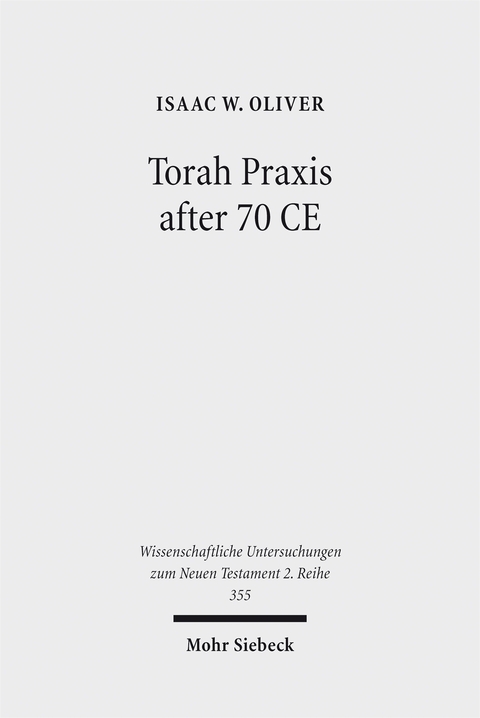
Torah Praxis after 70 CE
Reading Matthew and Luke-Acts as Jewish Texts
2013
Mohr Siebeck (Hersteller)
9783161528408 (ISBN)
Mohr Siebeck (Hersteller)
9783161528408 (ISBN)
Vielen halten das Matthäusevangelium für einen der "jüdischsten" Texte des Neuen Testaments. Das lukanische Doppelwerk wurde auf der anderen Seite traditionell als ein sehr "griechischer" und heidenchristlicher Text gesehen. Isaac W. Oliver hinterfragt diese Gegenüberstellung, indem er Matthäus und das lukanische Doppelwerk nicht nur vor ihrem jüdischen "Hintergrund", sondern auch als früh-jüdische Literatur liest.
Vielen halten das Matthäusevangelium für einen der "jüdischsten" Texte des Neuen Testaments. Das lukanische Doppelwerk wurde auf der anderen Seite traditionell als ein sehr "griechischer" und heidenchristlicher Text gesehen. Isaac W. Oliver hinterfragt diese Gegenüberstellung, indem er Matthäus und das lukanische Doppelwerk nicht nur vor ihrem jüdischen "Hintergrund", sondern auch als früh-jüdische Literatur liest. Er untersucht in jeder Schrift die Tora-Praxis und vor allem ihre rituellen Aspekte. Indem er ihren Standpunkt zu drei zentralen Punkten der jüdischen Identität - Sabbat, Kaschrut und Beschneidung - feststellt, legt Oliver dar, dass sowohl Matthäus als auch Lukas die Aufrechterhaltung der Toraobservanz innerhalb der Jesus-Bewegung unterstützen, obgleich sie sich darin unterscheiden, welche mosaischen Gebote jüdischen und heidnischen Anhängern Jesu obliegen. Es stellt sich heraus, dass Lukas ebenso "jüdisch" wie sein "Cousin" Matthäus ist, was seine Zustimmung zur mosaischen Tora anbelangt. Many consider the gospel of Matthew to be one of the most "Jewish" texts of the New Testament. Luke-Acts, on the other hand, has traditionally been viewed as a very "Greek" and Gentile-Christian text. Isaac W. Oliver challenges this dichotomy, reading Matthew and Luke-Acts not only against their Jewish "background" but as early Jewish literature. He explores the question of Torah praxis, especially its ritual aspects, in each writing. By assessing their attitude toward three central markers of Jewish identity - Sabbath, kashrut, and circumcision - Oliver argues that both Matthew and Luke affirm the perpetuation of Torah observance within the Jesus movement, albeit by differentiating which Mosaic commandments are incumbent upon Jewish and Gentile followers of Jesus. Luke proves to be just as "Jewish" as his cousin Matthew in so far as his affirmation of the Mosaic Torah is concerned. The evidence in both Matthew and Luke-Acts suggests that Jewish practices such as the Sabbath and even circumcision continued to enjoy a prominent status in the Jesus movement even after 70 CE, and that Jewish followers of Jesus played an important and integral role in the formation of the ekklesia well throughout the latter third of the first century CE.
Vielen halten das Matthäusevangelium für einen der "jüdischsten" Texte des Neuen Testaments. Das lukanische Doppelwerk wurde auf der anderen Seite traditionell als ein sehr "griechischer" und heidenchristlicher Text gesehen. Isaac W. Oliver hinterfragt diese Gegenüberstellung, indem er Matthäus und das lukanische Doppelwerk nicht nur vor ihrem jüdischen "Hintergrund", sondern auch als früh-jüdische Literatur liest. Er untersucht in jeder Schrift die Tora-Praxis und vor allem ihre rituellen Aspekte. Indem er ihren Standpunkt zu drei zentralen Punkten der jüdischen Identität - Sabbat, Kaschrut und Beschneidung - feststellt, legt Oliver dar, dass sowohl Matthäus als auch Lukas die Aufrechterhaltung der Toraobservanz innerhalb der Jesus-Bewegung unterstützen, obgleich sie sich darin unterscheiden, welche mosaischen Gebote jüdischen und heidnischen Anhängern Jesu obliegen. Es stellt sich heraus, dass Lukas ebenso "jüdisch" wie sein "Cousin" Matthäus ist, was seine Zustimmung zur mosaischen Tora anbelangt. Many consider the gospel of Matthew to be one of the most "Jewish" texts of the New Testament. Luke-Acts, on the other hand, has traditionally been viewed as a very "Greek" and Gentile-Christian text. Isaac W. Oliver challenges this dichotomy, reading Matthew and Luke-Acts not only against their Jewish "background" but as early Jewish literature. He explores the question of Torah praxis, especially its ritual aspects, in each writing. By assessing their attitude toward three central markers of Jewish identity - Sabbath, kashrut, and circumcision - Oliver argues that both Matthew and Luke affirm the perpetuation of Torah observance within the Jesus movement, albeit by differentiating which Mosaic commandments are incumbent upon Jewish and Gentile followers of Jesus. Luke proves to be just as "Jewish" as his cousin Matthew in so far as his affirmation of the Mosaic Torah is concerned. The evidence in both Matthew and Luke-Acts suggests that Jewish practices such as the Sabbath and even circumcision continued to enjoy a prominent status in the Jesus movement even after 70 CE, and that Jewish followers of Jesus played an important and integral role in the formation of the ekklesia well throughout the latter third of the first century CE.
Born 1980; 2012 PhD in Near Eastern Studies; currently assistant professor at the Department of Philosophy and Religious Studies of Bradley University (Illinois, USA).
| Erscheint lt. Verlag | 16.12.2013 |
|---|---|
| Reihe/Serie | Wissenschaftliche Untersuchungen zum Neuen Testament 2. Reihe |
| Verlagsort | Tübingen |
| Sprache | englisch |
| Themenwelt | Religion / Theologie ► Christentum ► Bibelausgaben / Bibelkommentare |
| Geisteswissenschaften ► Religion / Theologie ► Judentum | |
| Schlagworte | Halakah • Jewish Identity • Law • Second Temple |
| ISBN-13 | 9783161528408 / 9783161528408 |
| Zustand | Neuware |
| Informationen gemäß Produktsicherheitsverordnung (GPSR) | |
| Haben Sie eine Frage zum Produkt? |
Mehr entdecken
aus dem Bereich
aus dem Bereich
Die Begründung von Lebensformen angesichts gesellschaftlicher …
Online Resource (2025)
Mohr Siebeck (Hersteller)
CHF 39,95


