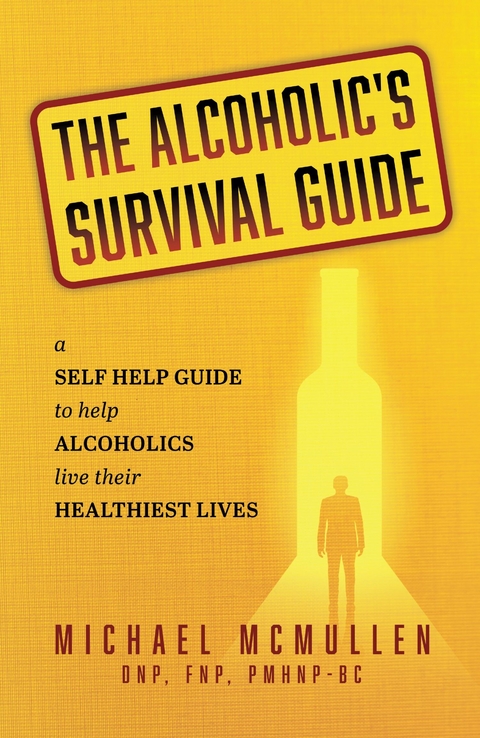
Alcoholic's Survival Guide (eBook)
260 Seiten
Bookbaby (Verlag)
979-8-3178-1483-0 (ISBN)
Dr. Michael McMullen DNP, FNP, PMHNP-BC is the owner of Lawrence County Mental Health and Wellness and has been providing mental health and substance abuse treatment to western Pennsylvania since 2016. Dr. McMullen is certified with SAMHSA and the ANCC. Dr. McMullen and his practice have remained one of the highest rated mental health practices in the tri county area in Pennsylvania.
The Alcoholic's Survival Guide provides quality nutritional and fitness guidelines, well established prescription medications along with vitamins and minerals to aid the body during drinking. This guide gives instant access to DUI Laws and Penalties of all 50 states and U.S. Territories. If an individual or family member is questioning whether or not they suffer with Alcoholism there are several trusted screening tools available. There is an abundance of information on how Alcoholism effects the body, organ systems, and behavioral health. If an individual or family member is seeking help or treatment there are several organizations provided to assist in recovery.
Chapter 3
Alcohol Use Disorder Screening Tools
1. CAGE Questionnaire
Purpose: This is a quick test to check if someone has an alcohol problem.
Structure: It asks four simple yes/no questions:
C: Have you ever felt you should cut down on your drinking?
A: Have people annoyed you by criticizing your drinking?
G: Have you ever felt bad or guilty about your drinking?
E: Have you ever had a drink first thing in the morning to feel better (eye-opener)?
Scoring: If you answer “yes” to two or more questions, it suggests you might have an alcohol problem.
Strengths: Quick and easy to use.
2. AUDIT (Alcohol Use Disorders Identification Test)
Purpose: This test is used to check if someone’s drinking is risky or causing problems.
The AUDIT (Alcohol Use Disorders Identification Test) consists of 10 questions that are designed to help identify individuals who may have alcohol use problems. These questions cover three main areas: alcohol consumption, alcohol dependence, and alcohol-related harm. Below are the questions and how they are typically worded:
1. How often do you have a drink containing alcohol?
a) Never
b) Monthly or less
c) 2-4 times a month
d) 2-3 times a week
e) 4 or more times a week
2. How many drinks do you have on a typical day when you are drinking?
a) 1 or 2
b) 3 or 4
c) 5 or 6
d) 7 to 9
e) 10 or more
3. How often do you have six or more drinks on one occasion?
a) Never
b) Less than monthly
c) Monthly
d) Weekly
e) Daily, or almost daily
4. How often during the last year have you found that you were not able to stop drinking once you have started?
a) Never
b) Less than monthly
c) Monthly
d) Weekly
e) Daily, or almost daily
5. How often during the last year have you failed to do what was normally expected of you because of drinking?
a) Never
b) Less than monthly
c) Monthly
d) Weekly
e) Daily, or almost daily
6. How often have you needed a first drink in the morning to get yourself going after a heavy drinking session?
a) Never
b) Less than monthly
c) Monthly
d) Weekly
e) Daily, or almost daily
7. How often during the last year have you had a feeling of guilt or remorse after drinking?
a) Never
b) Less than monthly
c) Monthly
d) Weekly
e) Daily, or almost daily
8. How often during the last year have you been unable to remember what happened the night before because of your drinking?
a) Never
b) Less than monthly
c) Monthly
d) Weekly
e) Daily, or almost daily
9. Have you or someone else been injured as a result of your drinking?
a) No
b) Yes, but not in the last year
c) Yes, during the last year
10. Has a relative, friend, doctor, or other health care worker been concerned about your drinking or suggested you cut down?
a) No
b) Yes, but not in the last year
c) Yes, during the last year
Scoring:
Questions 1 to 3 focus on alcohol consumption.
Each answer has a score from 0 to 4, with higher scores indicating more frequent or excessive alcohol consumption.
Questions 4 to 6 focus on alcohol dependence. Again, the scoring is from 0 to 4, with higher scores indicating more signs of dependence.
Questions 7 to 10 focus on the negative consequences of drinking. These are also scored from 0 to 4, with higher scores indicating more harm from drinking.
Total Score:
A score of 8 or more suggests a need for further evaluation, as it may indicate hazardous or harmful drinking, or even alcohol dependence. Higher scores (16-19 or 20+) usually suggest a more severe problem.
The AUDIT is a widely used and validated tool that helps healthcare providers identify individuals who may benefit from intervention or treatment related to alcohol use.
Scoring:
0-7: Low risk
8-15: Drinking too much
16-19: Harmful drinking
20+: Likely alcohol dependence
Strengths: It gives a clear idea of how risky your drinking is.
T-ACE Questionnaire
(Tolerance, Annoyance, Cut down, Eye-opener)
Purpose: This is a short test to check for alcohol problems, especially for women or people in outpatient care.
Structure: It asks four questions:
T: How many drinks does it take for you to feel high?
A: Have people criticized your drinking?
C: Have you ever felt you should cut down on your drinking?
E: Have you ever had a drink in the morning to feel better (eye-opener)?
Scoring: A score of 2 or higher suggests you might have an alcohol problem.
Strengths: Short and easy to answer.
Michigan Alcohol Screening Test (MAST)
MAST is one of the most widely used tools to screen for alcohol use problems, particularly to identify alcohol dependence. The MAST consists of 22 questions that assess various aspects of alcohol use, including behavior, health problems, and personal life impacts.
Purpose: This test looks for both obvious and hidden signs of alcohol or drug problems.
Structure: It asks questions that can catch alcohol problems that people might not admit to.
Scoring: A higher score means a higher chance of alcohol dependence.
Strengths: Detailed and accurate.
Below are the questions typically found in the MAST.
1. Do you drink alcohol?
a) Yes
b) No
2. Have you ever felt you should cut down on your drinking?
a) Yes
b) No
3. Have people annoyed you by criticizing your drinking?
a) Yes
b) No
4. Have you ever felt bad or guilty about your drinking?
a) Yes
b) No
5. Have you ever had a drink in the morning to steady your nerves or get rid of a hangover?
a) Yes
b) No
6. Has your drinking ever caused you trouble at home?
a) Yes
b) No
7. Have you ever missed work or school because of drinking?
a) Yes
b) No
8. Has drinking ever made you late for work or school?
a) Yes
b) No
9. Has your drinking ever caused you problems with the law?
a) Yes
b) No
10. Have you ever been hospitalized due to drinking?
a) Yes
b) No
11. Have you ever been arrested or jailed for drinking-related incidents?
a) Yes
b) No
12. Have you ever had problems with your relationships because of your drinking?
a) Yes
b) No
13. Do you ever use alcohol to escape from personal problems?
a) Yes
b) No
14. Have you ever lost friends due to your drinking?
a) Yes
b) No
15. Do you drink more than you intended to?
a) Yes
b) No
16. Have you ever tried to...
| Erscheint lt. Verlag | 14.8.2025 |
|---|---|
| Sprache | englisch |
| Themenwelt | Geisteswissenschaften ► Psychologie ► Sucht / Drogen |
| ISBN-13 | 979-8-3178-1483-0 / 9798317814830 |
| Informationen gemäß Produktsicherheitsverordnung (GPSR) | |
| Haben Sie eine Frage zum Produkt? |
 EPUB (Ohne DRM)
Größe: 5,2 MB
Digital Rights Management: ohne DRM
Dieses eBook enthält kein DRM oder Kopierschutz. Eine Weitergabe an Dritte ist jedoch rechtlich nicht zulässig, weil Sie beim Kauf nur die Rechte an der persönlichen Nutzung erwerben.
Dateiformat: EPUB (Electronic Publication)
EPUB ist ein offener Standard für eBooks und eignet sich besonders zur Darstellung von Belletristik und Sachbüchern. Der Fließtext wird dynamisch an die Display- und Schriftgröße angepasst. Auch für mobile Lesegeräte ist EPUB daher gut geeignet.
Systemvoraussetzungen:
PC/Mac: Mit einem PC oder Mac können Sie dieses eBook lesen. Sie benötigen dafür die kostenlose Software Adobe Digital Editions.
eReader: Dieses eBook kann mit (fast) allen eBook-Readern gelesen werden. Mit dem amazon-Kindle ist es aber nicht kompatibel.
Smartphone/Tablet: Egal ob Apple oder Android, dieses eBook können Sie lesen. Sie benötigen dafür eine kostenlose App.
Geräteliste und zusätzliche Hinweise
Buying eBooks from abroad
For tax law reasons we can sell eBooks just within Germany and Switzerland. Regrettably we cannot fulfill eBook-orders from other countries.
aus dem Bereich