


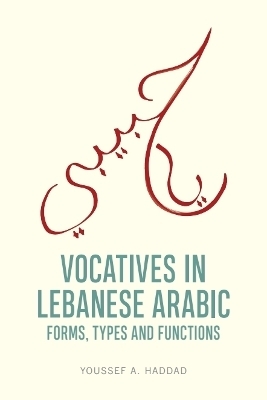
Vocatives in Lebanese Arabic
Edinburgh University Press (Verlag)
9781399547659 (ISBN)
- Noch nicht erschienen (ca. April 2026)
- Versandkostenfrei
- Auch auf Rechnung
- Artikel merken
Analysing data from a variety of sources including movies, plays and talk shows, this book provides a detailed description of the forms and types of vocatives in Lebanese Arabic and offers an in-depth exploration of their social functions and pragmatic significance. It underscores the significance of the use of attested data to the structural analyses of vocatives, as well as other linguistic elements and shows that a data-driven approach to structural analysis provides a more complete picture.
The book examines vocatives not just as markers of address but as tools for negotiating relationships and managing interpersonal dynamics. Part I categorizes vocatives by their linguistic forms—ranging from pronouns to complex phrases—and delineates their types, such as honorifics, kinship terms, and terms of abuse. Part II delves into the interpersonal pragmatics of vocatives, analysing how they shape social interactions, reinforce or challenge identities, and influence relational outcomes.
This approach to vocatives in Lebanese Arabic provides fascinating insight into how language reflects cultural norms and social hierarchies, contributing to the fields of Arabic linguistics, pragmatics, and sociolinguistics.
Youssef A. Haddad is Professor of Arabic Language and Linguistics at Georgetown University in Qatar. His research focuses on syntax, pragmatics, and their interface. He has published extensively on Arabic linguistics, as well as the linguistics of other languages. His publications include the books The Sociopragmatics of Attitude Datives in Levantine Arabic (Edinburgh University Press, 2018) and Control into Conjunctive Participle Clauses: The Case of Assamese (Mouton de Gruyter, 2011). He has also co-edited two volumes of Perspectives on Arabic Linguistics (John Benjamins, 2016, 2019) and authored the textbook Introduction to Arabic Linguistics (Wiley Blackwell, 2023).
Acknowledgements
Abbreviations and Symbols
List of Illustrations
1: Vocatives in Action
1.1 What Are Vocatives?
1.2 Purpose and Significance
1.3 Data Source
1.4 Remarks about the Glosses and Translation
1.5 The Structure of the Book
Part I. Vocatives: Forms and Types
2: Vocatives in Lebanese Arabic: Forms
2.1 Introduction
2.2 Pronouns as Vocatives
2.3 Quantifiers as Vocatives
2.4 Nouns as Vocatives
2.5 Adjective Phrases as Vocatives
2.6 Verb Phrases as Vocatives
2.7 Prepositional Phrases as Vocatives
2.8 Complementiser Phrases as Vocatives
2.9 Vocative Particles in Lebanese Arabic
2.9.1 The Vocative Particle jaː
2.9.1.1 Prohibited jaː
2.9.1.2 Required jaː
2.9.1.3 Optional jaː
2.9.2 The Vocative Particle wliː/wleː/wlaː
2.9.3 The Vocative Particles ka- and waː
2.10 Conclusion
3: Vocatives in Lebanese Arabic: Types
3.1 Introduction
3.2 Names as Vocatives
3.2.1 First Names
3.2.2 Teknonyms
3.2.3 Hypocoristics
3.2.4 Last Names and Full Names
3.2.5 Names of Associated Entities
3.3 Honorifics as Vocatives
3.4 Kinship Terms as Vocatives
3.5 Endearments and Familiarisers as Vocatives
3.6 Terms of Abuse as Vocatives
3.7 Conclusion
4: Exclamatory Vocatives and Non-Vocative Vocatives in Lebanese Arabic
4.1 Introduction
4.2 Exclamatory Vocatives
4.2.1 Exclamatory Vocatives in Lebanese Arabic
4.2.2 Exclamatory Vocatives in Other Languages
4.3 Non-Vocative Vocatives
4.4 Conclusion
Part II. Vocatives: Social Functions
5: Vocatives and Rapport Management: An Overview
5.1 Introduction
5.2 And the Witness Will Address This Court as ‘Judge’ or ‘Your Honour.’
5.3 Vocatives and Rapport Management
5.3.1 Interactional Goals
5.3.2 Face Sensitivities
5.3.3 Social Expectancies
5.3.4 Summary and Loose Ends
5.4 The Courtroom Scene and Rapport Management
5.5 Conclusion
6: Names and Vocative Particles: What Are They Good For?
6.1 Introduction
6.2 What’s in a Name?
6.3 The Social Functions of Vocative Particles in Lebanese Arabic
6.3.1 The Vocative Particle jaː
6.3.2 The Vocative Particle wliː/wleː/wlaː
6.3.3 The Vocative Particle ka-
6.4 Conclusion
7: Lebanese Arabic Vocatives: What They Can Do for You!
7.1 Introduction
7.2 Vocatives as Reassurance for an Addressee in Distress
7.3 Vocatives as Upgraders of Responses to Addressee Self-Threatening Acts
7.4 Vocatives as Mitigators of Speaker-Initiated Relationship-Threatening Acts
7.5 Conclusion
8: Lebanese Arabic Vocatives: What They Can Do to You
8.1 Introduction
8.2 Vocatives and Active Retaliatory Aggression
8.3 Vocatives and Passive Retaliatory Aggression
8.4 Vocatives and Bullying
8.5 Conclusion
9: Lebanese Arabic Vocatives: What’s in Them for Me?
9.1 Introduction
9.2 Vocatives, Self-Presentation and Self-Preservation
.92.1 Self-Presentation
9.2.2 Self-Preservation
9.3 Vocatives and Alignment Solicitation
9.3.1 Securing a Favour
9.3.2 Recruiting an Ally
9.3.3 Seeking Understanding
9.3.4 Soliciting Topic Validation
9.4 Vocatives and Exercising Authority
9.5 Conclusion
10: Vocatives: Optionality, Multifunctionality and Interactionally Constructed Identities
10.1 Introduction
10.2 Vocatives and Optionality
10.2.1 Vocatives as Optional
10.2.2 Vocatives as Necessary
10.2.3 Vocatives as Unexpected
10.3 The Multifunctionality of Vocatives
10.4 Vocatives and the Emergent Nature of Identity
10.5 Conclusion
11: Where Do We Go Now?
11.1 Final Thoughts
11.2 Future Research
References
| Erscheint lt. Verlag | 30.4.2026 |
|---|---|
| Zusatzinfo | 8 B&W images |
| Verlagsort | Edinburgh |
| Sprache | englisch |
| Maße | 156 x 234 mm |
| Themenwelt | Geisteswissenschaften ► Sprach- / Literaturwissenschaft ► Sprachwissenschaft |
| ISBN-13 | 9781399547659 / 9781399547659 |
| Zustand | Neuware |
| Informationen gemäß Produktsicherheitsverordnung (GPSR) | |
| Haben Sie eine Frage zum Produkt? |
aus dem Bereich


