


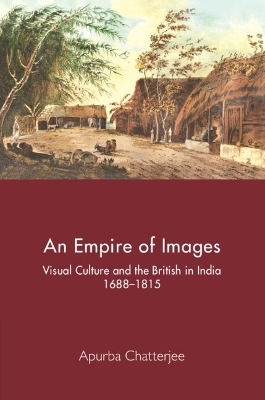
An Empire of Images
Visual Culture and the British in India, 1688–1815
Seiten
2025
Cambridge University Press (Verlag)
978-1-009-56721-3 (ISBN)
Cambridge University Press (Verlag)
978-1-009-56721-3 (ISBN)
This book demonstrates eighteenth-century Britons' imperial self-image and political culture of legitimation in South Asia through art by the British and Indians. By making the case for a colonial visual archive, intersecting with EIC and private written archives, we can perceive the outlines of the expansive domination that emerged later.
How did Britons come to see themselves as fit to govern India? An Empire of Images focuses on the visual arts as central to the making of political legitimacy during the long eighteenth century. Through images by both British and Indian artists, this book explores how peoples, landscapes, flora, and fauna in India became part of an imperial self-image. Torn between open triumphalism and anxious contingency, British artists and patrons sought to dissect India's mysteries and justify East India Company rule under the Crown. Meanwhile, Indian artists interpreted the realities of British hegemony in terms of both their native cultural resources and modes introduced by the colonizer. Tracing an emerging imperial ideology on canvas and in prints, as well as the pages of official archives and personal papers, this book offers new insights into reconfigurations of power in a period of European expansion in Asia. As Chatterjee argues, early colonial India became a site for contestation around British visual ascendancy, which must complicate our own understandings of honour, guilt, knowledge, and belonging.
How did Britons come to see themselves as fit to govern India? An Empire of Images focuses on the visual arts as central to the making of political legitimacy during the long eighteenth century. Through images by both British and Indian artists, this book explores how peoples, landscapes, flora, and fauna in India became part of an imperial self-image. Torn between open triumphalism and anxious contingency, British artists and patrons sought to dissect India's mysteries and justify East India Company rule under the Crown. Meanwhile, Indian artists interpreted the realities of British hegemony in terms of both their native cultural resources and modes introduced by the colonizer. Tracing an emerging imperial ideology on canvas and in prints, as well as the pages of official archives and personal papers, this book offers new insights into reconfigurations of power in a period of European expansion in Asia. As Chatterjee argues, early colonial India became a site for contestation around British visual ascendancy, which must complicate our own understandings of honour, guilt, knowledge, and belonging.
Dr. Apurba Chatterjee is a Visiting Fellow in History at The University of Reading and Research Officer at Kingston University London. Her research examines visual culture in the British Empire, focusing on its ideological aspects.
List of Figures; Acknowledgements; Abbreviations; Introduction; 1. Imaging 'Empire' before 'Empire'; 2. A Design of Authority; 3. Places and Spaces of Power; 4. Commanding Nature; Conclusion; Bibliography; Index
| Erscheinungsdatum | 08.10.2025 |
|---|---|
| Zusatzinfo | Worked examples or Exercises |
| Verlagsort | Cambridge |
| Sprache | englisch |
| Gewicht | 664 g |
| Themenwelt | Geschichte ► Allgemeine Geschichte ► Neuzeit (bis 1918) |
| Geisteswissenschaften ► Geschichte ► Regional- / Ländergeschichte | |
| Geschichte ► Teilgebiete der Geschichte ► Wirtschaftsgeschichte | |
| ISBN-10 | 1-009-56721-7 / 1009567217 |
| ISBN-13 | 978-1-009-56721-3 / 9781009567213 |
| Zustand | Neuware |
| Informationen gemäß Produktsicherheitsverordnung (GPSR) | |
| Haben Sie eine Frage zum Produkt? |
Mehr entdecken
aus dem Bereich


aus dem Bereich
Geschichte einer wilden Handlung
Buch | Hardcover (2024)
C.H.Beck (Verlag)
CHF 47,60


