


Barbarians as the Religious Other in the Late Roman World
Seiten
2026
Edinburgh University Press (Verlag)
978-1-3995-1444-6 (ISBN)
Edinburgh University Press (Verlag)
978-1-3995-1444-6 (ISBN)
- Noch nicht erschienen (ca. Juni 2026)
- Versandkostenfrei
- Auch auf Rechnung
- Artikel merken
In a world of religious rivalries and state collapse, how did the looming spectre of the barbarian show what it meant to be Roman in Late Antiquity?
Two major transformations of Late Antiquity redefined what it meant to be Roman: the Christianisation of imperial power and the collapse of the Western Roman state. This book examines how Prudentius, Athanasius, Augustine and other Roman and post-Roman writers used the figure of the ‘barbarian’ to articulate these shifting religious, political, and cultural boundaries. Religious identity — especially the divide between Nicene orthodoxy and so-called ‘heretical’ forms such as Homoian Christianity — became a key marker of Romanness. Barbarians such as Goths and Vandals were not only portrayed as ethnic outsiders but also as ‘pagans’ or ‘heretics’, threatening both the Church and Roman civilisation itself. While heresy was often equated with barbarism, Roman elites also downplayed these differences when politically convenient, using religious language to both legitimise and delegitimise power. Through thematic and regional case studies, Kahlos shows how religion, ethnicity and imperial traditions were entangled in the construction of Roman identity – and how ‘barbarians’ were used to define, defend or reshape it.
Two major transformations of Late Antiquity redefined what it meant to be Roman: the Christianisation of imperial power and the collapse of the Western Roman state. This book examines how Prudentius, Athanasius, Augustine and other Roman and post-Roman writers used the figure of the ‘barbarian’ to articulate these shifting religious, political, and cultural boundaries. Religious identity — especially the divide between Nicene orthodoxy and so-called ‘heretical’ forms such as Homoian Christianity — became a key marker of Romanness. Barbarians such as Goths and Vandals were not only portrayed as ethnic outsiders but also as ‘pagans’ or ‘heretics’, threatening both the Church and Roman civilisation itself. While heresy was often equated with barbarism, Roman elites also downplayed these differences when politically convenient, using religious language to both legitimise and delegitimise power. Through thematic and regional case studies, Kahlos shows how religion, ethnicity and imperial traditions were entangled in the construction of Roman identity – and how ‘barbarians’ were used to define, defend or reshape it.
Maijastina Kahlos holds the title of Docent at the University of Helsinki and is a Principal Researcher at the University of Lisbon
Acknowledgements
Abbreviations
Introduction
Part I
1. Christian Romans and Pagan Barbarians?
2. The Taming of Barbarians
3. Unity and Heresy: Barbarian Imagery in Intra-Christian Rivalries
4. Barbarian Warlords and their Religious Choices
Part II
5. Encounters and Social Realities: Visigoths in Gaul
6. Encounters and Social Realities: Vandals in Africa
7. Encounters and Social Realities: Ostrogoths in Italy
Part III
8. Suspicions and Traitors: Barbarising the Rival
9. The Providential Use of Barbarians
10. Eschatology and the Forces of Chaos: Gigantomachia, Gog and Magog
Conclusion
Editions and translations
Bibliography
| Erscheint lt. Verlag | 9.6.2026 |
|---|---|
| Reihe/Serie | Edinburgh Studies in Religion in Antiquity |
| Verlagsort | Edinburgh |
| Sprache | englisch |
| Maße | 156 x 234 mm |
| Themenwelt | Geschichte ► Allgemeine Geschichte ► Altertum / Antike |
| ISBN-10 | 1-3995-1444-X / 139951444X |
| ISBN-13 | 978-1-3995-1444-6 / 9781399514446 |
| Zustand | Neuware |
| Informationen gemäß Produktsicherheitsverordnung (GPSR) | |
| Haben Sie eine Frage zum Produkt? |
Mehr entdecken
aus dem Bereich


aus dem Bereich
ohne den ganzen langweiligen Kram
Buch | Hardcover (2025)
C.H.Beck (Verlag)
CHF 36,40
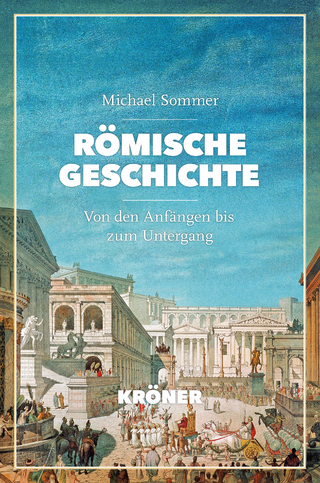
von den Anfängen bis zum Untergang
Buch | Hardcover (2025)
Alfred Kröner Verlag
CHF 48,95
von den Anfängen bis zur Gegenwart
Buch | Softcover (2025)
C.H.Beck (Verlag)
CHF 16,80


