


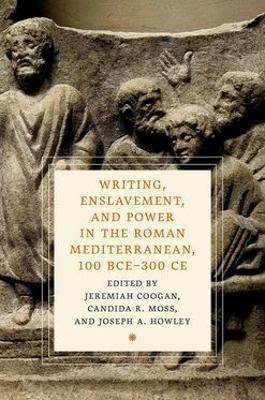
Writing, Enslavement, and Power in the Roman Mediterranean, 100 BCE–300 CE
Seiten
2026
Oxford University Press Inc (Verlag)
978-0-19-776996-6 (ISBN)
Oxford University Press Inc (Verlag)
978-0-19-776996-6 (ISBN)
- Lieferbar (Termin unbekannt)
- Versandkostenfrei
- Auch auf Rechnung
- Artikel merken
This volume assembles twenty-two scholars from the fields of classics and early Christian studies to interrogate the intersections between writing and enslavement around the Roman Mediterranean. Drawing upon methods developed in scholarship on book history and Atlantic slavery, the authors demonstrate the myriad ways in which the material and intellectual contributions of enslaved literary workers were vital to the composition, editing, copying, circulation, reading, and preservation of Roman texts.
This thematically organized volume exposes the ways that power dynamics denigrate and erase enslaved contributors, as well as how language barriers, gender difference, and disability created dependence on enslaved workers. The central role of enslaved workers in practical work like bookkeeping, education, and divination is explored, in addition to the unseen labor of enslaved collators, note-keepers, editors, and curators. Enslaved workers were a constitutive part of the Roman knowledge economy; their roles in allowing others to read and write, in producing ancient literature, and in staffing the bureaucratic structures of the Roman empire were profound. Roman literature, technology, and knowledge depended on the labor and expertise of enslaved literate workers, and these chapters argue that they influenced just about every aspect of Roman life.
This thematically organized volume exposes the ways that power dynamics denigrate and erase enslaved contributors, as well as how language barriers, gender difference, and disability created dependence on enslaved workers. The central role of enslaved workers in practical work like bookkeeping, education, and divination is explored, in addition to the unseen labor of enslaved collators, note-keepers, editors, and curators. Enslaved workers were a constitutive part of the Roman knowledge economy; their roles in allowing others to read and write, in producing ancient literature, and in staffing the bureaucratic structures of the Roman empire were profound. Roman literature, technology, and knowledge depended on the labor and expertise of enslaved literate workers, and these chapters argue that they influenced just about every aspect of Roman life.
Jeremiah Coogan is Assistant Professor of New Testament and Early Christianity at the Jesuit School of Theology of Santa Clara University. Candida R. Moss is Edward Cadbury Professor of Theology at the University of Birmingham. Joseph A. Howley is Associate Professor of Classics at Columbia University.
1: Introduction
Writing Power/lessness
2: Introduction: A/Despotos
3: Despotics
4: Gender
5: Disability
6: Language and Ethnicity
Doing Things with Writing
7: Introduction: Banausia
8: Grammar
9: Numeracy
10: Divination
11: Justice
Doing Things to Writing
12: Introduction: Curatio
13: Notes
14: Maintenance
15: Editing
16: Collection
Writing Aesthetics
17: Introduction: Kalos
18: Rhetorics
19: Letters
20: Brevity
21: Afterword: Untimeliness
| Erscheinungsdatum | 19.09.2025 |
|---|---|
| Reihe/Serie | Cultures of Reading in the Ancient Mediterranean |
| Verlagsort | New York |
| Sprache | englisch |
| Maße | 168 x 241 mm |
| Gewicht | 612 g |
| Themenwelt | Geschichte ► Allgemeine Geschichte ► Vor- und Frühgeschichte |
| Geschichte ► Teilgebiete der Geschichte ► Religionsgeschichte | |
| ISBN-10 | 0-19-776996-9 / 0197769969 |
| ISBN-13 | 978-0-19-776996-6 / 9780197769966 |
| Zustand | Neuware |
| Informationen gemäß Produktsicherheitsverordnung (GPSR) | |
| Haben Sie eine Frage zum Produkt? |
Mehr entdecken
aus dem Bereich


aus dem Bereich
Konzepte – Methoden – Theorien
Buch | Softcover (2024)
UTB (Verlag)
CHF 55,85
auf den Spuren der frühen Zivilisationen
Buch | Hardcover (2023)
C.H.Beck (Verlag)
CHF 27,95


