


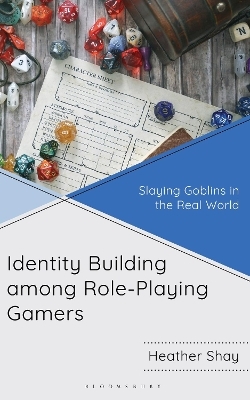
Identity Building among Role-Playing Gamers
Slaying Goblins in the Real World
Seiten
2026
Rowman & Littlefield (Verlag)
978-1-6669-6352-6 (ISBN)
Rowman & Littlefield (Verlag)
978-1-6669-6352-6 (ISBN)
- Lieferbar (Termin unbekannt)
- Versandkostenfrei
- Auch auf Rechnung
- Artikel merken
Delving into table-top role-playing game culture, Heather Shay shows how playing these games confers social and psychological benefits for participants.
Drawing on 19 months of participant-observation and 20 in-depth interviews with players, Heather Shay demonstrates that gamers derive significant social and psychological benefits from table-top role-playing games—not least in that players often feel the hobby makes them better people.
Playing these games allow players to depict themselves as good, moral actors through their in-game actions as well as by making the game enjoyable for their fellow players in real life. Table-top role-playing games also serve a psychological function by allowing participants to take imaginary risks with their characters, which in turn make them feel more alive than their everyday experiences allow them to. As they pretend to be fictional characters in fictional worlds, players use these games to create identities that make their lives more meaningful.
Drawing on 19 months of participant-observation and 20 in-depth interviews with players, Heather Shay demonstrates that gamers derive significant social and psychological benefits from table-top role-playing games—not least in that players often feel the hobby makes them better people.
Playing these games allow players to depict themselves as good, moral actors through their in-game actions as well as by making the game enjoyable for their fellow players in real life. Table-top role-playing games also serve a psychological function by allowing participants to take imaginary risks with their characters, which in turn make them feel more alive than their everyday experiences allow them to. As they pretend to be fictional characters in fictional worlds, players use these games to create identities that make their lives more meaningful.
Heather Shay is assistant professor of sociology at South Carolina State University.
Table of Contents
Acknowledgments
Introduction
Chapter 1: Becoming a Good Gamer
Chapter 2: Valorizing Non-Competitive Gamers
Chapter 3: Celebrating Intelligent & Creative Gamers
Chapter 4: Not Becoming a Good Gamer
Chapter 5: Edgework without the Edge
Chapter 6: Rewards for Playing on the Edge
Chapter 7: Playing Without the Edge
Chapter 8: Fictive Heroism
Chapter 9: How to Make a Hero
Chapter 10: Feeling Like a Hero
Conclusion
Appendix
References
Index
About the Author
| Erscheinungsdatum | 16.10.2025 |
|---|---|
| Sprache | englisch |
| Maße | 152 x 229 mm |
| Themenwelt | Geisteswissenschaften ► Psychologie ► Sozialpsychologie |
| Sozialwissenschaften ► Soziologie ► Mikrosoziologie | |
| ISBN-10 | 1-6669-6352-6 / 1666963526 |
| ISBN-13 | 978-1-6669-6352-6 / 9781666963526 |
| Zustand | Neuware |
| Informationen gemäß Produktsicherheitsverordnung (GPSR) | |
| Haben Sie eine Frage zum Produkt? |
Mehr entdecken
aus dem Bereich


aus dem Bereich
ein Praxismanual zur Unterstützung von Menschen in herausfordernden …
Buch | Hardcover (2023)
Springer Fachmedien Wiesbaden GmbH (Verlag)
CHF 69,95
Buch | Softcover (2025)
Psychiatrie Verlag
CHF 30,80


