



The Decline of Hell
Seventeenth-Century Discussions of Eternal Torment
Seiten
2025
Routledge (Verlag)
978-1-041-15714-4 (ISBN)
Routledge (Verlag)
978-1-041-15714-4 (ISBN)
In the third century C.E. the heretical Greek Father, Origen, proposed a scheme for the eventual salvation of humankind. But no more overt attacks on the eternity of hell appeared until the 17th century. This book, originally published in 1985, explores the reasons for the long survival of the doctrine and for its hold beginning to weaken
In the third century C.E. the heretical Greek Father, Origen, proposed a scheme for the eventual salvation of humankind. But no more overt attacks on the eternity of hell appeared until the seventeenth century. This book, originally published in 1985, explores the reasons for the long survival of the doctrine and for its hold beginning to weaken about 300 years ago. The chief reason for its breakdown, the author suggests, was a gradual change in the attitude to other people’s suffering, and, connected with this, a weakening of the principle of vindictive justice, and an evolution of the attributes of God, in whom Love slowly gained ground over Justice. The thinkers discussed range from members of heretical sects, such as the Socinians or the English and German Philadelphians, through several groups of English Platonists, including Henry More and Peter Sterry, to figures such as Pierre Bayle and Leibniz.
In the third century C.E. the heretical Greek Father, Origen, proposed a scheme for the eventual salvation of humankind. But no more overt attacks on the eternity of hell appeared until the seventeenth century. This book, originally published in 1985, explores the reasons for the long survival of the doctrine and for its hold beginning to weaken about 300 years ago. The chief reason for its breakdown, the author suggests, was a gradual change in the attitude to other people’s suffering, and, connected with this, a weakening of the principle of vindictive justice, and an evolution of the attributes of God, in whom Love slowly gained ground over Justice. The thinkers discussed range from members of heretical sects, such as the Socinians or the English and German Philadelphians, through several groups of English Platonists, including Henry More and Peter Sterry, to figures such as Pierre Bayle and Leibniz.
D. P. Walker (1914–1985) was an English historian and author of several notable works on the Occult.
1.Introduction 2. Strengths of the Doctrine of Hell 3. Weaknesses of the Doctrine of Hel 4. The Merciful Doctors 5. Socinians 6. English Arians 7. English Platonists 1: Sterry and White 8. English Platonists 2: Henry More and Some Friends 9. English Platonists 3: Thomas Burnet 10. English Platonists 4: Shaftesbury 11. Pierre Bayle and Some Friends 12. Theodicy: Malebranche and Leibniz 13. English Philadelphians 1: Mrs Lead 14. German Philadelphians: The Petersens 15. English Philadelphians 2: Roach and the Camisards.
| Erscheinungsdatum | 04.11.2025 |
|---|---|
| Reihe/Serie | Routledge Revivals |
| Verlagsort | London |
| Sprache | englisch |
| Maße | 138 x 216 mm |
| Gewicht | 680 g |
| Themenwelt | Geschichte ► Allgemeine Geschichte ► Neuzeit (bis 1918) |
| Religion / Theologie ► Christentum ► Kirchengeschichte | |
| ISBN-10 | 1-041-15714-2 / 1041157142 |
| ISBN-13 | 978-1-041-15714-4 / 9781041157144 |
| Zustand | Neuware |
| Informationen gemäß Produktsicherheitsverordnung (GPSR) | |
| Haben Sie eine Frage zum Produkt? |
Mehr entdecken
aus dem Bereich


aus dem Bereich
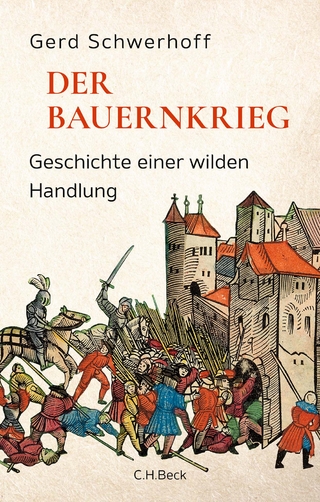
Geschichte einer wilden Handlung
Buch | Hardcover (2024)
C.H.Beck (Verlag)
CHF 47,60


