Zum Hauptinhalt springen
Nicht aus der Schweiz? Besuchen Sie lehmanns.de
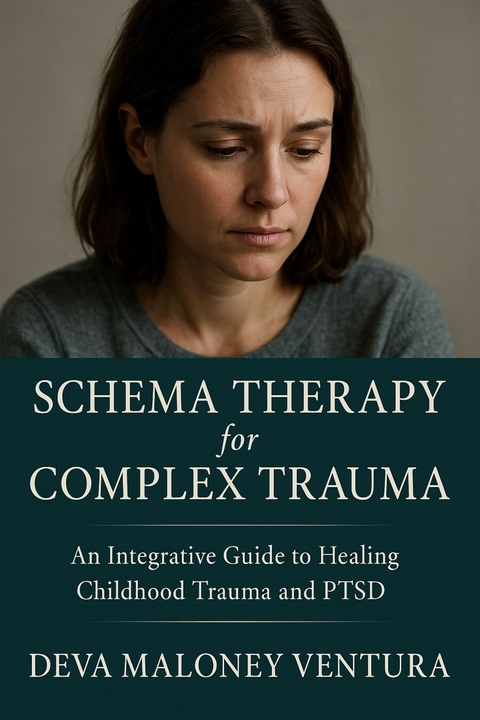
Schema Therapy for Complex Trauma -  Deva Maloney Ventura

Schema Therapy for Complex Trauma (eBook)

An Integrative Guide to Healing Childhood Trauma and PTSD
eBook Download: EPUB
2025 | 1. Auflage
325 Seiten
Isohan Publishing (Verlag)
978-0-00-090274-0 (ISBN)
Systemvoraussetzungen
8,25 inkl. MwSt
(CHF 7,95)
Der eBook-Verkauf erfolgt durch die Lehmanns Media GmbH (Berlin) zum Preis in Euro inkl. MwSt.
  • Download sofort lieferbar
  • Zahlungsarten anzeigen

                            Schema Therapy for Complex Trauma


Transform Deep-Rooted Trauma Patterns and Reclaim Your Authentic Life


Complex trauma doesn't just create symptoms-it shapes your entire identity, relationships, and worldview. Traditional therapy approaches often fall short when addressing the deep patterns that childhood experiences create. This comprehensive guide introduces schema therapy, a revolutionary framework specifically designed to heal the core beliefs and coping strategies that keep you trapped in cycles of pain.


Discover How Childhood Experiences Create Lasting Patterns


Learn to identify the five schema domains that influence every aspect of adult functioning: disconnection and rejection, impaired autonomy, unhealthy boundaries, people-pleasing patterns, and perfectionist control. Through detailed case studies and real-world examples, understand how early experiences create beliefs about safety, worth, and relationships that persist long after childhood ends.


Master Proven Techniques for Deep Pattern Change


This practical manual provides step-by-step guidance for implementing schema therapy techniques including cognitive restructuring, experiential healing methods, behavioral pattern-breaking, and healthy relationship building. Each chapter includes professional protocols, self-help exercises, and assessment tools designed to create lasting transformation rather than temporary symptom relief.


Heal Through Multiple Therapeutic Approaches


Explore how schema therapy integrates with EMDR, somatic therapies, and other trauma treatments to address the full impact of complex trauma on mind, body, and spirit. Learn about group therapy benefits, cultural considerations for diverse populations, and specialized approaches for military veterans, LGBTQ+ individuals, and survivors of institutional abuse.


Build a Life Beyond Survival Mode


Move beyond managing trauma responses to creating authentic relationships, meaningful work, and genuine life satisfaction. Develop your healthy adult mode-the integrated self that can respond to challenges with wisdom and self-compassion rather than automatic reactions based on childhood survival patterns.


Features comprehensive coverage of:


The five schema domains and eighteen specific patterns


Child modes, coping modes, and dysfunctional parent voices


Professional treatment protocols and safety guidelines


Cultural adaptations for diverse populations


Integration with other evidence-based therapies


Long-term recovery planning and relapse prevention


Building post-traumatic growth and authentic living


This evidence-based approach offers hope for individuals who have tried multiple therapies without lasting results. Schema therapy addresses not just what happened to you, but how those experiences shaped who you became-and how you can consciously choose who you want to be moving forward.


Perfect for trauma survivors, mental health professionals, and anyone seeking to understand how childhood experiences continue influencing adult life.

Chapter 1: What is Complex Trauma
Maria sits in my office, describing a life that seems successful from the outside—a thriving career, close friendships, and a loving partner. Yet beneath this surface stability lies a constant undercurrent of emotional chaos that she's battled since childhood. Simple disagreements with her partner trigger overwhelming fear of abandonment. Success at work feels hollow because her internal voice insists she's fooling everyone. Moments of happiness get interrupted by guilt and the expectation that something terrible will inevitably happen.
Maria's experience illustrates complex trauma—not the result of a single terrible event, but the accumulated impact of repeated childhood experiences that shaped her fundamental understanding of herself, others, and the world. Unlike the dramatic imagery often associated with trauma, complex trauma frequently develops in seemingly ordinary families where emotional needs go unmet, boundaries remain unclear, or caregivers struggle with their own unresolved pain.
Defining Complex Trauma vs Single-Incident PTSD
Traditional PTSD diagnosis focuses on responses to specific traumatic events—combat exposure, natural disasters, accidents, or violent crimes. These experiences, while devastating, typically occur against a backdrop of previous psychological stability. The person remembers life before trauma and often maintains a core sense of self that trauma temporarily disrupted.
Complex trauma operates differently. It develops when traumatic experiences occur repeatedly during critical developmental periods, typically in childhood. Instead of disrupting an established sense of self, complex trauma shapes identity formation itself. Children experiencing ongoing abuse, neglect, or household dysfunction don't develop trauma symptoms—they develop around trauma, creating personalities organized around survival in dangerous or unpredictable environments.
The clinical research supports this distinction. Studies by van der Kolk and colleagues demonstrate that adults with childhood trauma histories show different brain activation patterns, hormone regulation, and stress responses compared to those with adult-onset trauma (3). These differences reflect developmental adaptations to chronic threat rather than temporary disruptions to normal functioning.
Consider Michael's story. At age forty-two, he sought therapy for work-related stress. During assessment, he revealed a childhood marked by an alcoholic father's unpredictable rages and a mother who alternated between emotional unavailability and overwhelming anxiety. Michael never experienced what most would consider severe abuse, yet he developed a hypervigilant personality, chronic feelings of inadequacy, and relationship patterns characterized by emotional distancing.
Michael's presentation doesn't fit traditional PTSD criteria because no single event caused his difficulties. Instead, thousands of small experiences—walking on eggshells, managing parents' emotions, receiving inconsistent care—created lasting patterns that affect every aspect of his adult life.
The Developmental Trauma Spectrum
Complex trauma exists on a spectrum, ranging from obvious abuse and neglect to more subtle forms of developmental disruption. This spectrum helps us understand why some individuals develop serious mental health issues despite appearing to have "normal" childhoods, while others show remarkable resilience despite severe adversity.
Severe End of Spectrum: Physical or sexual abuse, severe neglect, witnessing domestic violence, having caregivers with active addiction or serious mental illness. These experiences create obvious trauma symptoms and typically receive clinical attention.
Moderate Spectrum: Emotional abuse, inconsistent caregiving, parentification (children caring for parents), family secrets, frequent moves or disruptions. These experiences may not be recognized as traumatic but create significant developmental impact.
Subtle End of Spectrum: Emotional unavailability, perfectionist expectations, lack of emotional attunement, dismissive responses to child's needs. These experiences often go unrecognized but can create lasting patterns of self-doubt and relationship difficulties.
Understanding this spectrum helps explain why trauma responses vary so widely. Two children experiencing similar abuse may develop completely different coping strategies based on factors like temperament, available support, and other life circumstances. Similarly, children experiencing less obvious trauma may develop significant symptoms if they're particularly sensitive or lack protective factors.
Neurobiological Impact of Repeated Childhood Trauma
The developing brain adapts to environmental demands, creating neural pathways optimized for survival in specific circumstances. Children experiencing repeated trauma develop brains wired for threat detection, emotional dysregulation, and survival-focused decision making.
Research by Teicher and colleagues shows that childhood trauma affects brain structure in measurable ways (4). The amygdala—responsible for threat detection—becomes hyperactive, while the prefrontal cortex—responsible for emotional regulation and executive functioning—shows decreased activation. The hippocampus, crucial for memory formation and integration, often shows structural changes that affect how traumatic memories get processed and stored.
These brain changes aren't permanent damage—they represent adaptive responses to dangerous environments. However, they create challenges when individuals try to function in safer adult environments. The brain that helped a child survive an unpredictable home may create difficulties in stable adult relationships.
The hormonal system also adapts to chronic stress. The hypothalamic-pituitary-adrenal (HPA) axis, which regulates stress responses, often becomes dysregulated. Some trauma survivors develop chronic hyperarousal—constantly scanning for threats and reacting intensely to minor stressors. Others develop hypoarousal—emotional numbing and disconnection that provided protection during childhood but creates relationship difficulties in adulthood.
Case Study: Sarah's Story - Recognizing Complex Trauma Patterns
Sarah first sought therapy at age twenty-eight for depression and anxiety, but her symptoms didn't respond to standard treatments. Antidepressants provided minimal relief, and cognitive-behavioral therapy helped temporarily before old patterns returned. Previous therapists focused on her symptoms—the panic attacks, depressive episodes, and relationship difficulties—without recognizing the underlying complex trauma patterns.
Sarah grew up in a middle-class family that appeared functional from the outside. Her father worked long hours at a demanding job, while her mother managed the household and cared for Sarah and her younger brother. To neighbors and extended family, they seemed like a normal, successful family.
Behind closed doors, life felt chaotic and unpredictable. Sarah's father struggled with undiagnosed depression and explosive anger. He would arrive home exhausted and irritable, and minor incidents—spilled milk, loud television, normal childhood behavior—could trigger screaming outbursts. Sarah learned to monitor his mood constantly, becoming hypervigilant to subtle signs of his emotional state.
Her mother, overwhelmed by her husband's emotional volatility and her own anxiety, became emotionally unavailable. She went through the motions of caregiving—preparing meals, helping with homework, managing schedules—but rarely engaged emotionally with her children. When Sarah tried to share feelings or concerns, her mother would minimize them or redirect attention to practical matters.
Sarah's brother coped by becoming the family entertainer, using humor and charm to defuse tension. Sarah developed a different strategy—she became the responsible one, managing household tasks and anticipating family needs. This role earned her parents' approval but required suppressing her own emotional needs.
By adolescence, Sarah had developed several trauma-related patterns that would persist into adulthood:
  • Hypervigilance: Constantly monitoring others' emotional states and trying to prevent conflict
  • Emotional suppression: Minimizing her own feelings and needs to maintain family stability
  • Perfectionism: Believing that mistakes would result in rejection or abandonment
  • Caretaking: Feeling responsible for others' emotions and well-being
  • Identity confusion: Having little sense of her authentic self beyond her family role
These patterns served protective functions during childhood but created significant difficulties in adult relationships and self-care. Sarah struggled with intimate relationships because she couldn't stop monitoring her partner's moods or suppressing her own needs. Career success felt hollow because she constantly feared being "found out" as inadequate. Friendships remained superficial because Sarah focused on giving support rather than receiving it.
Traditional therapy approaches missed these underlying patterns because they focused on surface symptoms rather than the developmental adaptations that created them. Sarah's depression and anxiety were symptoms of much deeper disruptions to her sense of self and capacity for healthy relationships.
How Complex Trauma Differs from Other...

Erscheint lt. Verlag 19.6.2025
Sprache englisch
Themenwelt Geisteswissenschaften
ISBN-10 0-00-090274-8 / 0000902748
ISBN-13 978-0-00-090274-0 / 9780000902740
Informationen gemäß Produktsicherheitsverordnung (GPSR)
Haben Sie eine Frage zum Produkt?
EPUBEPUB (Adobe DRM)
Größe: 629 KB

Kopierschutz: Adobe-DRM
Adobe-DRM ist ein Kopierschutz, der das eBook vor Mißbrauch schützen soll. Dabei wird das eBook bereits beim Download auf Ihre persönliche Adobe-ID autorisiert. Lesen können Sie das eBook dann nur auf den Geräten, welche ebenfalls auf Ihre Adobe-ID registriert sind.
Details zum Adobe-DRM

Dateiformat: EPUB (Electronic Publication)
EPUB ist ein offener Standard für eBooks und eignet sich besonders zur Darstellung von Belle­tristik und Sach­büchern. Der Fließ­text wird dynamisch an die Display- und Schrift­größe ange­passt. Auch für mobile Lese­geräte ist EPUB daher gut geeignet.

Systemvoraussetzungen:
PC/Mac: Mit einem PC oder Mac können Sie dieses eBook lesen. Sie benötigen eine Adobe-ID und die Software Adobe Digital Editions (kostenlos). Von der Benutzung der OverDrive Media Console raten wir Ihnen ab. Erfahrungsgemäß treten hier gehäuft Probleme mit dem Adobe DRM auf.
eReader: Dieses eBook kann mit (fast) allen eBook-Readern gelesen werden. Mit dem amazon-Kindle ist es aber nicht kompatibel.
Smartphone/Tablet: Egal ob Apple oder Android, dieses eBook können Sie lesen. Sie benötigen eine Adobe-ID sowie eine kostenlose App.
Geräteliste und zusätzliche Hinweise

Buying eBooks from abroad
For tax law reasons we can sell eBooks just within Germany and Switzerland. Regrettably we cannot fulfill eBook-orders from other countries.

Mehr entdecken
aus dem Bereich
Strategien und Hilfen für die Alltagsbewältigung

von Roberto D' Amelio; Wolfgang Retz …

eBook Download (2024)
Kohlhammer Verlag
CHF 25,35