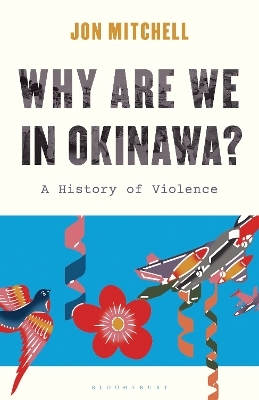
Why are we in Okinawa?
Rowman & Littlefield (Verlag)
978-1-5381-8839-2 (ISBN)
- Noch nicht erschienen (ca. April 2026)
- Versandkostenfrei
- Auch auf Rechnung
- Artikel merken
Once the thriving Ryukyu Kingdom, an independent state which grew rich from maritime trade between China, Japan, and southeast Asia, the islands were annexed by Japan in the late-nineteenth century – then sacrificed in 1945 to delay an Allied assault on the mainland. After the war, Okinawa was abandoned to US colonial rule for 27 years, during which residents were denied civil, labour, and democratic rights. Responding to these injustices, Okinawans engaged in widespread non-violent resistance which paralleled the African American civil rights movement unfurling at the same time in the United States. Okinawan protests grew so strong that, in 1972, they forced the return of the islands to Japanese control. But despite residents' wishes, the US military presence remained largely unchanged, accompanied by crimes, accidents and damage to the environment.
Today, there are 31 US bases in Okinawa, which has a land mass half the size of Rhode Island, and Okinawans are the poorest people in Japan. In recent years, China has exacerbated tensions in the region, questioning Japan's control of Okinawa and dispatching ships to the disputed Senkaku Islands. Many Okinawans are angry at being pawns in the play of greater powers – whether Japan, the United States or China. Resistance continues to permeate Okinawan society, from mass protests and marches, to music, comedy and art. Okinawa offers a model of democratic participation and civic engagement for the rest of Japan and beyond.
Jon Mitchell is an award-winning investigative journalist based in Japan. An expert in the US Freedom of Information Act (FOIA), his scoops are often on TV news in Japan and featured in reports for the US Congress. Mitchell's first English book, Poisoning the Pacific: The US Military's Secret Dumping of Plutonium, Chemical Weapons, and Agent Orange (2021), was a winner in the Society of Environmental Journalists' annual awards. In 2023, he received Japan’s most prestigious journalism prize, the Ishibashi Tanzan Memorial Journalism Award for public service.
Introduction
1 The Ryukyu Kingdom: A Bridge of Nations
2 Disposal, Discrimination and Diaspora
3 The Storm of Iron
4 Forgotten Island
5 Showcases of Democracy
6 The Vietnam War in Okinawa
7 Reversion
8 Broken Promises
9 Relieving the Burden
10 “All Okinawa” vs. Japan and the United States
11 Islands of Peace
Coda: So, why are we really in Okinawa?
Notes
Bibliography
Acknowledgements
| Erscheint lt. Verlag | 2.4.2026 |
|---|---|
| Reihe/Serie | Asian Voices |
| Mitarbeit |
Herausgeber (Serie): Mark Selden |
| Vorwort | Hideki Yoshikawa |
| Zusatzinfo | 15 b&w images, 2 maps |
| Sprache | englisch |
| Maße | 152 x 229 mm |
| Themenwelt | Geschichte ► Allgemeine Geschichte ► 1918 bis 1945 |
| Geisteswissenschaften ► Geschichte ► Regional- / Ländergeschichte | |
| Geschichte ► Teilgebiete der Geschichte ► Militärgeschichte | |
| ISBN-10 | 1-5381-8839-2 / 1538188392 |
| ISBN-13 | 978-1-5381-8839-2 / 9781538188392 |
| Zustand | Neuware |
| Informationen gemäß Produktsicherheitsverordnung (GPSR) | |
| Haben Sie eine Frage zum Produkt? |
aus dem Bereich