


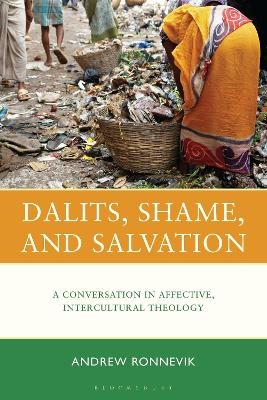
Dalits, Shame, and Salvation
A Conversation in Affective, Intercultural Theology
Seiten
2026
Lexington Books/Fortress Academic (Verlag)
978-1-9787-1776-3 (ISBN)
Lexington Books/Fortress Academic (Verlag)
978-1-9787-1776-3 (ISBN)
Elaborates a Christian theology of shame and salvation by engaging with India’s Dalits (or so-called “untouchable” people) and the contemporary study of emotions.
This book elaborates a Christian theology of shame and salvation by engaging with Dalit theology from India’s so-called “untouchable” people, as well as the transdisciplinary insights of contemporary affect theory.
In doing so, Dalits, Shame, and Salvation counters the tendency in Western constructive theology to overlook both complex human feelings (or affects) and “contextual” theologies from world Christianity. Conversing with Lutheran thought and a variety of other sources, Andrew Ronnevik shows how Dalit theology and affect theory generate full-bodied accounts of shame, dignity, and communion, and he argues that these affective themes flesh out Christian understandings of sin and salvation in distinctive and crucial ways. Shame, the affective counterpart of sin, isolates and denigrates, marking the fundamental problem for oppressed Dalits and others. As Dalit Christians testify, God saves from shame through the affective gifts of dignity and communion. Dignity, given in creation and redemption, generates feelings of inestimable, inviolable worth for persons and their communities. Communion, experienced in the Lord’s Supper and beyond, extends dignity across boundaries of caste and culture, producing mutual recognition and delight. Shame endures, but dignity and communion, grounded in Christian hope, empower Dalits and all of us to live with courage, faith, and joy.
This book elaborates a Christian theology of shame and salvation by engaging with Dalit theology from India’s so-called “untouchable” people, as well as the transdisciplinary insights of contemporary affect theory.
In doing so, Dalits, Shame, and Salvation counters the tendency in Western constructive theology to overlook both complex human feelings (or affects) and “contextual” theologies from world Christianity. Conversing with Lutheran thought and a variety of other sources, Andrew Ronnevik shows how Dalit theology and affect theory generate full-bodied accounts of shame, dignity, and communion, and he argues that these affective themes flesh out Christian understandings of sin and salvation in distinctive and crucial ways. Shame, the affective counterpart of sin, isolates and denigrates, marking the fundamental problem for oppressed Dalits and others. As Dalit Christians testify, God saves from shame through the affective gifts of dignity and communion. Dignity, given in creation and redemption, generates feelings of inestimable, inviolable worth for persons and their communities. Communion, experienced in the Lord’s Supper and beyond, extends dignity across boundaries of caste and culture, producing mutual recognition and delight. Shame endures, but dignity and communion, grounded in Christian hope, empower Dalits and all of us to live with courage, faith, and joy.
Andrew Ronnevik is lecturer in theology at Martin Luther Seminary in Lae, Papua New Guinea.
Dedication
Acknowledgements
Introduction
Chapter 1: Dalits
Chapter 2: Affects
Chapter 3: Shame
Chapter 4: Dignity
Chapter 5: Communion
Conclusion
Bibliography
Index
About the Author
| Erscheinungsdatum | 16.10.2025 |
|---|---|
| Sprache | englisch |
| Maße | 152 x 229 mm |
| Themenwelt | Religion / Theologie ► Christentum ► Kirchengeschichte |
| ISBN-10 | 1-9787-1776-8 / 1978717768 |
| ISBN-13 | 978-1-9787-1776-3 / 9781978717763 |
| Zustand | Neuware |
| Informationen gemäß Produktsicherheitsverordnung (GPSR) | |
| Haben Sie eine Frage zum Produkt? |
Mehr entdecken
aus dem Bereich

aus dem Bereich
eine andere Geschichte der Papststadt
Buch | Softcover (2024)
C.H.Beck (Verlag)
CHF 25,20
die Macht des Dunklen in unserer Zeit und wie wir ihr entgegentreten
Buch | Hardcover (2025)
Verlag Herder
CHF 27,90


