


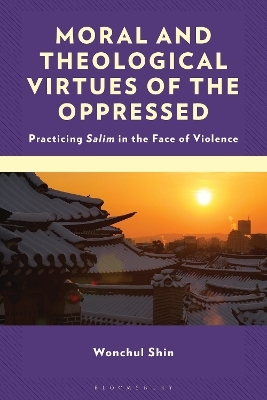
Moral and Theological Virtues of the Oppressed
Practicing Salim in the Face of Violence
Seiten
2026
Lexington Books/Fortress Academic (Verlag)
978-1-9787-1098-6 (ISBN)
Lexington Books/Fortress Academic (Verlag)
978-1-9787-1098-6 (ISBN)
- Noch nicht erschienen (ca. April 2026)
- Versandkostenfrei
- Auch auf Rechnung
- Artikel merken
This book focuses on discovering particular moral and theological virtues of the oppressed embodied in their daily practices of survival, resistance, and flourishing.
This book focuses on discovering particular moral and theological virtues of the oppressed, embodied in their daily practices of survival, resistance, and flourishing.
Wonchul Shin calls for a holistic vision of flourishing, including both individual and social flourishing, from an explicitly Korean cultural and historical context. Specifically, Shin considers the victims of political violence during the Korean regimes under Park Chung-hee and Chun Doo-hwan in the 1970s and 1980s and concurrent “family” resistance movements. In questioning virtues of sacrifice for a greater cause, this book argues that conventional Christian virtue discourse, which uplifts Jesus’ total sacrifice unto death, can reinforce unjust sociocultural structures that sustain structural and cultural violence against the oppressed. Shin uses the sacrifice and resistance of these Korean mothers and wives to suggest an alternative moral virtue, “the virtue of salim,” which envisions a particular virtue of the oppressed through resistance against oppression and celebrates the virtue of daily practices of survival, resistance, and flourishing
This book focuses on discovering particular moral and theological virtues of the oppressed, embodied in their daily practices of survival, resistance, and flourishing.
Wonchul Shin calls for a holistic vision of flourishing, including both individual and social flourishing, from an explicitly Korean cultural and historical context. Specifically, Shin considers the victims of political violence during the Korean regimes under Park Chung-hee and Chun Doo-hwan in the 1970s and 1980s and concurrent “family” resistance movements. In questioning virtues of sacrifice for a greater cause, this book argues that conventional Christian virtue discourse, which uplifts Jesus’ total sacrifice unto death, can reinforce unjust sociocultural structures that sustain structural and cultural violence against the oppressed. Shin uses the sacrifice and resistance of these Korean mothers and wives to suggest an alternative moral virtue, “the virtue of salim,” which envisions a particular virtue of the oppressed through resistance against oppression and celebrates the virtue of daily practices of survival, resistance, and flourishing
Wonchul Shin is Catherine of Siena Teaching Scholar in the ethics program at Villanova University.
Chapter 1: Introduction
Part One
Chapter 2: Heesaeng (Sacrifce)
Chapter 3: Kajok (Family)
Part Two
Chapter 4: Kido (Prayer)
Chapter 5: Salim (Life-Giving)
Chapter 6: Buhwal (Resurrection)
Appendix
Bibliography
| Erscheint lt. Verlag | 2.4.2026 |
|---|---|
| Zusatzinfo | 1 bw illus |
| Sprache | englisch |
| Maße | 152 x 229 mm |
| Themenwelt | Geisteswissenschaften ► Religion / Theologie |
| ISBN-10 | 1-9787-1098-4 / 1978710984 |
| ISBN-13 | 978-1-9787-1098-6 / 9781978710986 |
| Zustand | Neuware |
| Informationen gemäß Produktsicherheitsverordnung (GPSR) | |
| Haben Sie eine Frage zum Produkt? |
Mehr entdecken
aus dem Bereich


aus dem Bereich
Antisemitismus in der Bibel
Buch | Hardcover (2025)
Verlag Herder
CHF 29,90


