


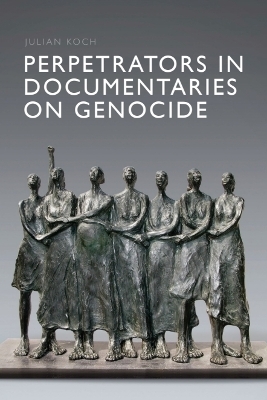
Perpetrators in Documentaries on Genocide
Seiten
2026
Edinburgh University Press (Verlag)
978-1-3995-5821-1 (ISBN)
Edinburgh University Press (Verlag)
978-1-3995-5821-1 (ISBN)
- Noch nicht erschienen (ca. Mai 2026)
- Versandkostenfrei
- Auch auf Rechnung
- Artikel merken
Analyses documentary representations of perpetrators and discusses why these representations matter.
Documentaries are the most common film genre representing genocide and thus significantly shape public understanding of the subject.
Perpetrators in Documentaries on Genocide is a wide-ranging comparative study that analyses how numerous genocides and their perpetrators have been presented in documentary film. Spanning seven 20th-century genocides across three continents and combining interviews with filmmakers, distant reading, content analysis, and historical research, this book tracks the multifaceted representational strategies of over 200 films.
Addressing both the local and global contexts impacting their production, the book finds that the socio-political circumstances in the aftermath of genocide, but also the concept of genocide itself, enormously shape the representation of perpetrator groups and their victims. This book highlights and critiques dominant trends in documentary representation, proposing a broader and methodologically innovative approach to studying the depiction of atrocities that provides an encompassing framework for understanding genocide documentaries.
Documentaries are the most common film genre representing genocide and thus significantly shape public understanding of the subject.
Perpetrators in Documentaries on Genocide is a wide-ranging comparative study that analyses how numerous genocides and their perpetrators have been presented in documentary film. Spanning seven 20th-century genocides across three continents and combining interviews with filmmakers, distant reading, content analysis, and historical research, this book tracks the multifaceted representational strategies of over 200 films.
Addressing both the local and global contexts impacting their production, the book finds that the socio-political circumstances in the aftermath of genocide, but also the concept of genocide itself, enormously shape the representation of perpetrator groups and their victims. This book highlights and critiques dominant trends in documentary representation, proposing a broader and methodologically innovative approach to studying the depiction of atrocities that provides an encompassing framework for understanding genocide documentaries.
Julian Koch is an independent researcher primarily interested in mass violence and its representation as well as conflict and health. His broad interests also include German and French twentieth-century poetry, on which he published his first book A Poetics of the Image (2021). He completed his undergraduate degree at Maastricht University, his Masters at Oxford University and his PhD in Comparative Literature at Queen Mary University of London.
Acknowledgements
Introduction
1. The Holocaust
2. The Armenian Genocide
3. The Herero and Nama Genocide
4. The Indonesian Genocide
5. The Cambodian Genocide
6. The Rwandan Genocide
7. The Bosnian Genocide
Conclusion
Illustrations
Filmography
Bibliography
Index
| Erscheint lt. Verlag | 12.5.2026 |
|---|---|
| Zusatzinfo | 3 colour graphs, 2 black and white graphs and 2 tables Colour ebook |
| Verlagsort | Edinburgh |
| Sprache | englisch |
| Maße | 156 x 234 mm |
| Themenwelt | Kunst / Musik / Theater ► Film / TV |
| Geisteswissenschaften ► Geschichte | |
| Sozialwissenschaften ► Kommunikation / Medien ► Medienwissenschaft | |
| ISBN-10 | 1-3995-5821-8 / 1399558218 |
| ISBN-13 | 978-1-3995-5821-1 / 9781399558211 |
| Zustand | Neuware |
| Informationen gemäß Produktsicherheitsverordnung (GPSR) | |
| Haben Sie eine Frage zum Produkt? |
Mehr entdecken
aus dem Bereich


aus dem Bereich


