


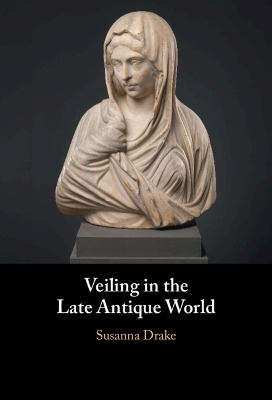
Veiling in the Late Antique World
Seiten
2025
Cambridge University Press (Verlag)
978-1-009-67348-8 (ISBN)
Cambridge University Press (Verlag)
978-1-009-67348-8 (ISBN)
Early Christian intellectuals used everyday practices of veiling to interpret sacred texts. These writers understood the divine as veiled, and the notion of a veiled spiritual truth informed their interpretation of the bible. This book explores the relation between the social history of the veil and the intellectual history of the concept of truth.
Veiling meant many things to the ancients. On women, veils could signify virtue, beauty, piety, self-control, and status. On men, covering the head could signify piety or an emotion such as grief. Late Roman mosaics show people covering their hands with veils when receiving or giving something precious. They covered their altars, doorways, shrines, and temples; and many covered their heads when sacrificing to their gods. Early Christian intellectuals such as Origen and Gregory of Nyssa used these everyday practices of veiling to interpret sacred texts. These writers understood the divine as veiled, and the notion of a veiled spiritual truth informed their interpretation of the bible. Veiling in the Late Antique World provides the first assessment of textual and material evidence for veiling in the late antique Mediterranean world. Susannah Drake here explores the relation between the social history of the veil and the intellectual history of the concept of truth as veiled/revealed.
Veiling meant many things to the ancients. On women, veils could signify virtue, beauty, piety, self-control, and status. On men, covering the head could signify piety or an emotion such as grief. Late Roman mosaics show people covering their hands with veils when receiving or giving something precious. They covered their altars, doorways, shrines, and temples; and many covered their heads when sacrificing to their gods. Early Christian intellectuals such as Origen and Gregory of Nyssa used these everyday practices of veiling to interpret sacred texts. These writers understood the divine as veiled, and the notion of a veiled spiritual truth informed their interpretation of the bible. Veiling in the Late Antique World provides the first assessment of textual and material evidence for veiling in the late antique Mediterranean world. Susannah Drake here explores the relation between the social history of the veil and the intellectual history of the concept of truth as veiled/revealed.
Susanna Drake is Professor of Religious Studies at Macalaster College. The author of Slandering the Jew: Sexuality and Difference in Early Christian Texts (2013), she specializes in late antique religions, Jewish and Christian relations, and gender and sexuality studies.
Introduction: veils and revelations; 1. Veiling in the ancient Mediterranean; 2. Veils in Corinth: Paul's first letter to the Corinthians; 3. Women's veiling practices in late antiquity; 4. Draping the sacred: veils in late ancient ritual, art, and architecture; 5. Origen's veils: the askēsis of interpretation; 6. Gregory's veils: Gregory of Nyssa's homilies on the song of songs; Epilogue: Derrida's tallith.
| Erscheinungsdatum | 10.12.2025 |
|---|---|
| Zusatzinfo | Worked examples or Exercises |
| Verlagsort | Cambridge |
| Sprache | englisch |
| Gewicht | 500 g |
| Themenwelt | Geschichte ► Allgemeine Geschichte ► Vor- und Frühgeschichte |
| Geschichte ► Allgemeine Geschichte ► Altertum / Antike | |
| Geschichte ► Teilgebiete der Geschichte ► Religionsgeschichte | |
| ISBN-10 | 1-009-67348-3 / 1009673483 |
| ISBN-13 | 978-1-009-67348-8 / 9781009673488 |
| Zustand | Neuware |
| Informationen gemäß Produktsicherheitsverordnung (GPSR) | |
| Haben Sie eine Frage zum Produkt? |
Mehr entdecken
aus dem Bereich



aus dem Bereich
auf den Spuren der frühen Zivilisationen
Buch | Hardcover (2023)
C.H.Beck (Verlag)
CHF 27,95
Konzepte – Methoden – Theorien
Buch | Softcover (2024)
UTB (Verlag)
CHF 55,85


