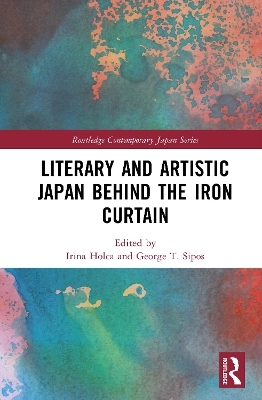
Literary and Artistic Japan behind the Iron Curtain
Routledge (Verlag)
9781041019275 (ISBN)
This book examines the public perception, scholarly reception, and critical analysis of Japan through translations of its literature and artistic endeavors within the temporal frame and geopolitical confines of the countries that were either occupied or left under the influence of the Soviet Union after World War II.
By engaging with literary translations from Japanese into languages such as Romanian, Russian, Czech, Hungarian, German, and Slovenian, alongside art exhibits and performance shows focused on Japan, this book provides an original contribution to the field of Japanese studies in Eastern and Central Europe and the former Soviet space. In addition, by offering a multifaceted, multilingual, and multicultural approach to the diverse realities of countries from the former communist bloc, the book sheds light on the unique relationships they created with literary and artistic Japan, as well as the unique ways in which they attempted to lift the Iron Curtain and gaze at the Asian Other, a subject of both fascination and identification.
Approaching the subject of Japanese culture through the unique lens of former communist bloc nations, this book will appeal to students and scholars of Japanese studies and Japanese literature, particularly in the context of translations.
Irina Holca is an associate professor of modern and contemporary Japanese literature at Tokyo University of Foreign Studies, Japan. George T. Sipos is an associate professor at the West University of Timişoara, Romania, where he teaches Japanese literature, language, and culture.
Introduction. Forbidden Space(s): “Japan” in the Constructed Realm behind the Iron Curtain Part I: The Concrete and the Conceptual: Reception of Japan 1. Shifting Imagery on the Covers of Clavell’s Shōgun and the Romanian Reception of Japanese Visual Culture 2. The “Rediscovery” of Japan in Hungary in the 1950s-1960s 3. The Reception of Modern Japanese Literature in the German Democratic Republic: A Survey 4. Directions in the Slovene Translation of Japanese Literature during the Postwar Years 5. The Hungarian Reception of The Hiroshima Panels and the Communist Desideratum for World Peace 6. The Return to the Myth: Japanese Literature in Soviet Moldova Part II:The Imagined: Japan as Symbol of Resistance 7. After the Freeze and the Thaw: Kawabata Yasunari’s Nobel Prize and the Soviet Rediscovery of Japan 8. Rays behind the Iron Curtain: Japan, Cinema, and Bulgarian Socialist Culture 9. Two Japanese Theater Classics in the Shadow of Socialist Realism in Hungary 10. Sōsaku-hanga and ‘Progressive Japanese Art’ in Soviet Art History from the Late 1950s to the mid-1970s 11. Japanese Poetic Expression against Communist Oppression: The Haiku/ Senryū of Dissident Karel Trinkewitz and Others 12. The Reception of Clavell’s Shōgun: Fantasizing about Japan in Communist Romania
| Erscheinungsdatum | 12.09.2025 |
|---|---|
| Reihe/Serie | Routledge Contemporary Japan Series |
| Zusatzinfo | 3 Tables, black and white; 28 Halftones, black and white; 28 Illustrations, black and white |
| Verlagsort | London |
| Sprache | englisch |
| Maße | 156 x 234 mm |
| Gewicht | 630 g |
| Themenwelt | Kunst / Musik / Theater ► Kunstgeschichte / Kunststile |
| Geisteswissenschaften ► Geschichte ► Allgemeine Geschichte | |
| Geisteswissenschaften ► Geschichte ► Regional- / Ländergeschichte | |
| Geisteswissenschaften ► Sprach- / Literaturwissenschaft ► Anglistik / Amerikanistik | |
| Geisteswissenschaften ► Sprach- / Literaturwissenschaft ► Literaturwissenschaft | |
| ISBN-13 | 9781041019275 / 9781041019275 |
| Zustand | Neuware |
| Informationen gemäß Produktsicherheitsverordnung (GPSR) | |
| Haben Sie eine Frage zum Produkt? |
aus dem Bereich