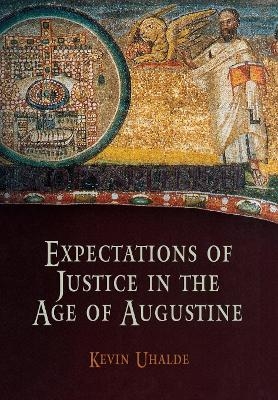
Expectations of Justice in the Age of Augustine
University of Pennsylvania Press (Verlag)
978-0-8122-3987-4 (ISBN)
Augustine, bishop of Hippo between 395 and 430, and his fellow bishops lived and worked through massive shifts in politics, society, and religion. Christian bishops were frequently asked to serve as intellectuals, legislators, judges, and pastors-roles and responsibilities that often conflicted with one another and made it difficult for bishops to be effective leaders. Expectations of Justice in the Age of Augustine examines these roles and the ways bishops struggled to fulfill (or failed to fulfill) them, as well as the philosophical conclusions they drew from their experience in everyday affairs, such as oath-swearing, and in the administration of penance.
Augustine and his near contemporaries were no more or less successful at handling the administration of justice than other late antique or early medieval officials. When bishops served in judicial capacities, they experienced firsthand the complex inner workings of legal procedures and social conflicts, as well as the fallibility of human communities. Bishops represented divine justice while simultaneously engaging in and even presiding over the sorts of activities that animated society-business deals, litigations, gossip, and violence-but also made justice hard to come by.
Kevin Uhalde argues that serving as judges, even informally, compelled bishops to question whether anyone could be guaranteed justice on earth, even from the leaders of the Christian church. As a result, their ideals of divine justice fundamentally changed in order to accommodate the unpleasant reality of worldly justice and its failings. This philosophical shift resonated in Christian thought and life for centuries afterward and directly affected religious life, from the performance of penance to the way people conceived of the Final Judgment.
Kevin Uhalde teaches history at Ohio University.
Introduction
1. Calumny: Well Known Reasons Why Justice Fails
Judicial culture
Juridical solutions: Roman law
Popular responses
The bishop's court
Juridical solutions: canon law
Social bonds and boundaries
2. "Judge Like God": What Bishops Claimed to Expect of Themselves
Between perfection and failure
Traditions of judgment and discernment
Spiritual discernment at work
Alternate traditions of discernment
The exemplary life of bishops
The idea fails
3. Christian Oaths: A Case Study in Practicality over Doctrine
Oaths are social bonds
The public life of oaths
Solemn promises plus some exemptions
Exegetes on swearing
Socialis necessitudo and the need for oaths
Swearing in the land of falsehood
4. Mercy Not Justice: How Penance Became a Worthy Act of Self-Incrimination
A profession of holiness
Preachers of penance
The penitential lives of religious professionals
The heroic lives of penitents
Compunction and discernment for all
The balance of mercy and justice
An end to the scholarly myth of decline and rigorism
Conclusion
Bibliography
Notes
Index
Acknowledgments
| Erscheint lt. Verlag | 12.3.2007 |
|---|---|
| Verlagsort | Pennsylvania |
| Sprache | englisch |
| Maße | 152 x 229 mm |
| Themenwelt | Geschichte ► Allgemeine Geschichte ► Vor- und Frühgeschichte |
| Geschichte ► Allgemeine Geschichte ► Altertum / Antike | |
| Geisteswissenschaften ► Geschichte ► Regional- / Ländergeschichte | |
| ISBN-10 | 0-8122-3987-3 / 0812239873 |
| ISBN-13 | 978-0-8122-3987-4 / 9780812239874 |
| Zustand | Neuware |
| Informationen gemäß Produktsicherheitsverordnung (GPSR) | |
| Haben Sie eine Frage zum Produkt? |
aus dem Bereich