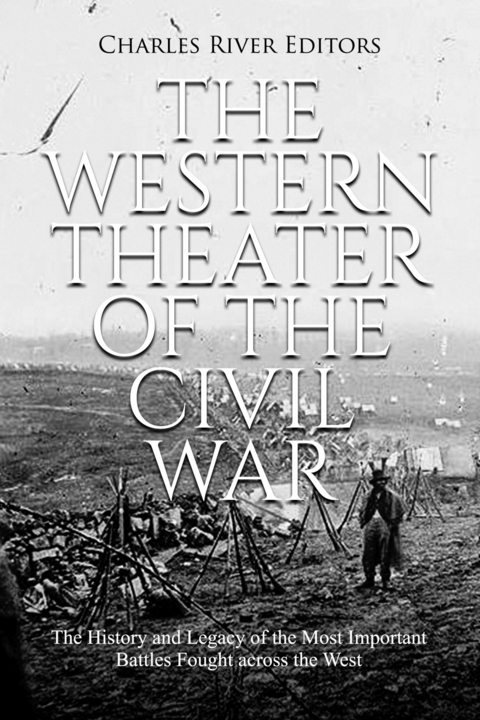
Western Theater of the Civil War (eBook)
425 Seiten
Charles River Editors (Verlag)
978-1-4753-3201-8 (ISBN)
While the Lincoln Administration and most Northerners were preoccupied with trying to capture Richmond in the summer of 1861, it would be the little known Ulysses S. Grant who delivered the Union's first major victories, over a thousand miles away from Washington. Grant's new commission led to his command of the District of Southeast Missouri, headquartered at Cairo, after he was appointed by 'The Pathfinder', John C. Fremont, a national celebrity who had run for President in 1856. Fremont was one of many political generals that Lincoln was saddled with, and his political prominence ensured he was given a prominent command as commander of the Department of the West early in the war before running so afoul of the Lincoln Administration that he was court-martialed.
In January of 1862, Grant persuaded General Henry 'Old Brains' Halleck to allow his men to launch a campaign on the Tennessee River. As soon as Halleck acquiesced, Grant moved against Fort Henry, in close coordination with the naval command of Flag Officer Andrew Hull Foote. The combination of infantry and naval bombardment helped force the capitulation of Fort Henry on February 6, 1862, and the surrender of Fort Henry was followed immediately by an attack on Fort Donelson on the Cumberland River, which earned Grant his famous nickname 'Unconditional Surrender'. Grant's forces enveloped the Confederate garrison at Fort Donelson, which included Confederate generals Simon Buckner, John Floyd, and Gideon Pillow. In one of the most bungled operations of the war, the Confederate generals tried and failed to open an escape route by attacking Grant's forces on February 15. Although the initial assault was successful, General Pillow inexplicably chose to have his men pull back into their trenches, ostensibly so they could take more supplies before their escape. Instead, they simply lost all the ground they had taken, and the garrison was cut off yet again.
While the Lincoln Administration and most Northerners were preoccupied with trying to capture Richmond in the summer of 1861, it would be the little known Ulysses S. Grant who delivered the Union's first major victories, over a thousand miles away from Washington. Grant's new commission led to his command of the District of Southeast Missouri, headquartered at Cairo, after he was appointed by "e;The Pathfinder"e;, John C. Fremont, a national celebrity who had run for President in 1856. Fremont was one of many political generals that Lincoln was saddled with, and his political prominence ensured he was given a prominent command as commander of the Department of the West early in the war before running so afoul of the Lincoln Administration that he was court-martialed.In January of 1862, Grant persuaded General Henry Old Brains Halleck to allow his men to launch a campaign on the Tennessee River. As soon as Halleck acquiesced, Grant moved against Fort Henry, in close coordination with the naval command of Flag Officer Andrew Hull Foote. The combination of infantry and naval bombardment helped force the capitulation of Fort Henry on February 6, 1862, and the surrender of Fort Henry was followed immediately by an attack on Fort Donelson on the Cumberland River, which earned Grant his famous nickname Unconditional Surrender . Grant s forces enveloped the Confederate garrison at Fort Donelson, which included Confederate generals Simon Buckner, John Floyd, and Gideon Pillow. In one of the most bungled operations of the war, the Confederate generals tried and failed to open an escape route by attacking Grant s forces on February 15. Although the initial assault was successful, General Pillow inexplicably chose to have his men pull back into their trenches, ostensibly so they could take more supplies before their escape. Instead, they simply lost all the ground they had taken, and the garrison was cut off yet again.
| Erscheint lt. Verlag | 1.5.2025 |
|---|---|
| Sprache | englisch |
| Themenwelt | Sachbuch/Ratgeber ► Geschichte / Politik ► 20. Jahrhundert bis 1945 |
| Geisteswissenschaften ► Geschichte ► Regional- / Ländergeschichte | |
| Schlagworte | Antietam • chickamauga • Confederate • Gettysburg • Lee • Lincoln • Stonewall |
| ISBN-10 | 1-4753-3201-7 / 1475332017 |
| ISBN-13 | 978-1-4753-3201-8 / 9781475332018 |
| Informationen gemäß Produktsicherheitsverordnung (GPSR) | |
| Haben Sie eine Frage zum Produkt? |
 EPUB (Ohne DRM)
Digital Rights Management: ohne DRM
Dieses eBook enthält kein DRM oder Kopierschutz. Eine Weitergabe an Dritte ist jedoch rechtlich nicht zulässig, weil Sie beim Kauf nur die Rechte an der persönlichen Nutzung erwerben.
Dateiformat: EPUB (Electronic Publication)
EPUB ist ein offener Standard für eBooks und eignet sich besonders zur Darstellung von Belletristik und Sachbüchern. Der Fließtext wird dynamisch an die Display- und Schriftgröße angepasst. Auch für mobile Lesegeräte ist EPUB daher gut geeignet.
Systemvoraussetzungen:
PC/Mac: Mit einem PC oder Mac können Sie dieses eBook lesen. Sie benötigen dafür die kostenlose Software Adobe Digital Editions.
eReader: Dieses eBook kann mit (fast) allen eBook-Readern gelesen werden. Mit dem amazon-Kindle ist es aber nicht kompatibel.
Smartphone/Tablet: Egal ob Apple oder Android, dieses eBook können Sie lesen. Sie benötigen dafür eine kostenlose App.
Geräteliste und zusätzliche Hinweise
Buying eBooks from abroad
For tax law reasons we can sell eBooks just within Germany and Switzerland. Regrettably we cannot fulfill eBook-orders from other countries.
aus dem Bereich