


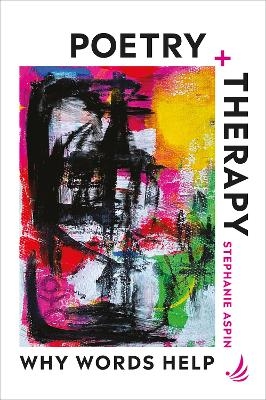
Poetry and Therapy
Why words help
Seiten
2025
PCCS Books (Verlag)
978-1-915220-60-8 (ISBN)
PCCS Books (Verlag)
978-1-915220-60-8 (ISBN)
Words and language offer us a way of expressing ourselves and our feelings in ways that feel psychologically helpful. Aspin takes us from the practice of writing therapeutically and passes through a range of psychological and psychoanalytic ideas, so that the reader gains a fuller understanding of the place of poetry within therapeutic practice.
What is poetry and what does poetry do? Why is poetry a force for psychological change?
Words and language - and by implication, creative writing - offer us a way of expressing ourselves and getting our feelings out into the world in ways that feel psychologically helpful. They offer us a route to catharsis and the opportunity to connect with other people. When we approach language poetically, language can do other things that bring about change at a psychological level. Poems allow us to hear and feel the multiplicity of meanings because this is how poetry works. Poetry actively encourages us to listen to language in more complex and multi-faceted ways - ways that make us take account of the sounds and rhythms of words, and their associations through its use of metaphor and other figurative tropes. It is because poetry asks us to move into a psychological space where meaning must be discovered and made that it is such fertile ground for psychological repair and healing.
Stephanie Aspin is an integrative therapist by training and in her clinical practice. Additionally, she has a background in literary criticism and theory. In Poetry and Therapy, she takes us from the practice of writing therapeutically and passes through a range of psychological and psychoanalytic ideas. She draws on philosophical ideas, including those about poetry, literature, and art more widely because they are important to understanding why words help. Ultimately, the reader gains a fuller understanding of the place of poetry within therapeutic practice, which includes not only the what but also the why.
Throughout, Aspin includes examples of work produced in her own clinical practice. She also includes references to published poems, many by poets such as T.S. Eliot, Emily Dickinson and Sylvia Plath. At the end of each chapter are exercises for the reader to try out and additional exercises are provided in the Appendix.
What is poetry and what does poetry do? Why is poetry a force for psychological change?
Words and language - and by implication, creative writing - offer us a way of expressing ourselves and getting our feelings out into the world in ways that feel psychologically helpful. They offer us a route to catharsis and the opportunity to connect with other people. When we approach language poetically, language can do other things that bring about change at a psychological level. Poems allow us to hear and feel the multiplicity of meanings because this is how poetry works. Poetry actively encourages us to listen to language in more complex and multi-faceted ways - ways that make us take account of the sounds and rhythms of words, and their associations through its use of metaphor and other figurative tropes. It is because poetry asks us to move into a psychological space where meaning must be discovered and made that it is such fertile ground for psychological repair and healing.
Stephanie Aspin is an integrative therapist by training and in her clinical practice. Additionally, she has a background in literary criticism and theory. In Poetry and Therapy, she takes us from the practice of writing therapeutically and passes through a range of psychological and psychoanalytic ideas. She draws on philosophical ideas, including those about poetry, literature, and art more widely because they are important to understanding why words help. Ultimately, the reader gains a fuller understanding of the place of poetry within therapeutic practice, which includes not only the what but also the why.
Throughout, Aspin includes examples of work produced in her own clinical practice. She also includes references to published poems, many by poets such as T.S. Eliot, Emily Dickinson and Sylvia Plath. At the end of each chapter are exercises for the reader to try out and additional exercises are provided in the Appendix.
Stephanie Aspin is an integrative psychotherapeutic counsellor, author, coach, teacher, academic and poetry lover. She has a PhD in Counselling Studies and a PhD in American Literature. She is co-founder of A-typicats Neurodiversity Training, Coaching & Consultancy. Stephanie often runs hands-on writing and expressive arts groups and she is a member of the Association of Person Centred Creative Arts (APCCA).
Preface: What is poetry, and what does poetry do?
1 To begin at the beginning
2 Writing in groups
3 Identity is not in the head
4 Telling tales
5 The isle is full of noises
Concluding thoughts: Dans le fond des forets votre image me suit
Appendix: Further exercises for practice
| Erscheinungsdatum | 31.05.2025 |
|---|---|
| Verlagsort | Manchester |
| Sprache | englisch |
| Maße | 138 x 216 mm |
| Themenwelt | Geisteswissenschaften ► Sprach- / Literaturwissenschaft ► Anglistik / Amerikanistik |
| Geisteswissenschaften ► Sprach- / Literaturwissenschaft ► Literaturwissenschaft | |
| Medizin / Pharmazie ► Medizinische Fachgebiete ► Psychiatrie / Psychotherapie | |
| Medizin / Pharmazie ► Physiotherapie / Ergotherapie ► Ergotherapie | |
| ISBN-10 | 1-915220-60-2 / 1915220602 |
| ISBN-13 | 978-1-915220-60-8 / 9781915220608 |
| Zustand | Neuware |
| Informationen gemäß Produktsicherheitsverordnung (GPSR) | |
| Haben Sie eine Frage zum Produkt? |
Mehr entdecken
aus dem Bereich


aus dem Bereich
Poetik eines sozialen Urteils
Buch | Hardcover (2023)
De Gruyter (Verlag)
CHF 83,90


