


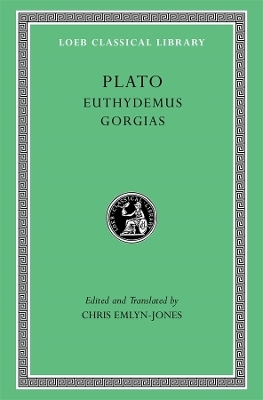
Euthydemus. Gorgias
Seiten
2025
Harvard University Press (Verlag)
978-0-674-99769-1 (ISBN)
Harvard University Press (Verlag)
978-0-674-99769-1 (ISBN)
Socrates against sophistry.
Plato of Athens, who laid the foundations of the Western philosophical tradition and in range and depth ranks among its greatest practitioners, was born to a prosperous and politically active family circa 427 BC. In early life an admirer of Socrates, Plato later founded the first institution of higher learning in the West, the Academy, among whose many notable alumni was Aristotle. Traditionally ascribed to Plato are thirty-five dialogues developing Socrates’ dialectic method and composed with great stylistic virtuosity, together with the Apology and thirteen letters.
The two dialogues in this volume, Euthydemus and Gorgias, probably date from the end of Plato’s early period in the late 380s. They contrast Socrates’ aims and methods with those of sophists, rhetoricians, and others who claimed the ability to teach excellence (aretē), while illustrating Socrates’ own conception thereof not as worldly power or political success but as a personal search for wisdom leading to happiness. Gorgias also contains a classic refutation of the “might is right” philosophy represented by Callicles, a ruthless up-and-coming politician.
This edition, which replaces the original Loeb editions by Sir Walter R. M. Lamb, offers text, translation, and annotation that are fully current with modern scholarship.
Plato of Athens, who laid the foundations of the Western philosophical tradition and in range and depth ranks among its greatest practitioners, was born to a prosperous and politically active family circa 427 BC. In early life an admirer of Socrates, Plato later founded the first institution of higher learning in the West, the Academy, among whose many notable alumni was Aristotle. Traditionally ascribed to Plato are thirty-five dialogues developing Socrates’ dialectic method and composed with great stylistic virtuosity, together with the Apology and thirteen letters.
The two dialogues in this volume, Euthydemus and Gorgias, probably date from the end of Plato’s early period in the late 380s. They contrast Socrates’ aims and methods with those of sophists, rhetoricians, and others who claimed the ability to teach excellence (aretē), while illustrating Socrates’ own conception thereof not as worldly power or political success but as a personal search for wisdom leading to happiness. Gorgias also contains a classic refutation of the “might is right” philosophy represented by Callicles, a ruthless up-and-coming politician.
This edition, which replaces the original Loeb editions by Sir Walter R. M. Lamb, offers text, translation, and annotation that are fully current with modern scholarship.
Chris Emlyn-Jones is Emeritus Professor of Classical Studies, The Open University, United Kingdom.
| Erscheinungsdatum | 17.10.2025 |
|---|---|
| Reihe/Serie | Loeb Classical Library |
| Übersetzer | Christopher Emlyn-Jones |
| Verlagsort | Cambridge, Mass |
| Sprache | englisch |
| Maße | 108 x 162 mm |
| Themenwelt | Geisteswissenschaften ► Philosophie ► Philosophie Altertum / Antike |
| Geisteswissenschaften ► Sprach- / Literaturwissenschaft ► Anglistik / Amerikanistik | |
| Geisteswissenschaften ► Sprach- / Literaturwissenschaft ► Literaturwissenschaft | |
| ISBN-10 | 0-674-99769-7 / 0674997697 |
| ISBN-13 | 978-0-674-99769-1 / 9780674997691 |
| Zustand | Neuware |
| Informationen gemäß Produktsicherheitsverordnung (GPSR) | |
| Haben Sie eine Frage zum Produkt? |
Mehr entdecken
aus dem Bereich
aus dem Bereich
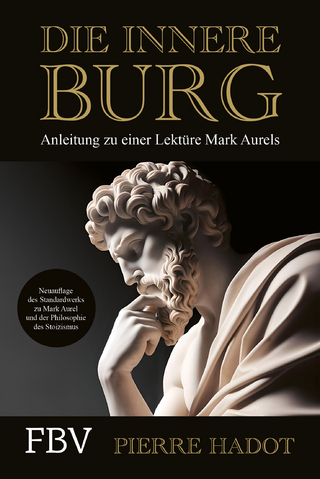
Anleitung zu einer Lektüre Mark Aurels
Buch | Hardcover (2025)
FinanzBuch Verlag
CHF 27,95


