


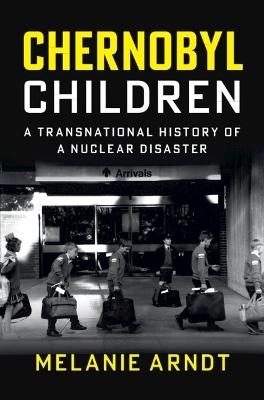
Chernobyl Children
A Transnational History of a Nuclear Disaster
Seiten
2025
Cambridge University Press (Verlag)
978-1-009-45776-7 (ISBN)
Cambridge University Press (Verlag)
978-1-009-45776-7 (ISBN)
In the wake of the Chernobyl disaster, more than a million Belarusian, Ukrainian, and Russian children were sent abroad. This insightful study demonstrates how this exposed the ecological consequences of a nuclear catastrophe to the world, and brought the human reality of the disaster into the lives of hundreds of thousands of people.
In the wake of the Chernobyl nuclear disaster, more than a million Belarusian, Ukrainian, and Russian children were sent abroad. Aided by the unprecedented efforts of transnational NGOs and private individuals, these children were meant to escape and recover from radiation exposure, but also from the increasing hardships of everyday life in post-Soviet society. Through this opening of the Soviet Union, hundreds of thousands of people in over forty countries witnessed the ecological, medical, social and political consequences of the disaster for the human beings involved. This awareness transformed the accident into a global catastrophe which could happen anywhere and have widespread impact. In this brilliantly insightful work, Melanie Arndt demonstrates that the Chernobyl children were both witness to and representative of a vanishing bipolar world order and the future of life in the Anthropocene, an age in which the human impact on the planet is increasingly borderless.
In the wake of the Chernobyl nuclear disaster, more than a million Belarusian, Ukrainian, and Russian children were sent abroad. Aided by the unprecedented efforts of transnational NGOs and private individuals, these children were meant to escape and recover from radiation exposure, but also from the increasing hardships of everyday life in post-Soviet society. Through this opening of the Soviet Union, hundreds of thousands of people in over forty countries witnessed the ecological, medical, social and political consequences of the disaster for the human beings involved. This awareness transformed the accident into a global catastrophe which could happen anywhere and have widespread impact. In this brilliantly insightful work, Melanie Arndt demonstrates that the Chernobyl children were both witness to and representative of a vanishing bipolar world order and the future of life in the Anthropocene, an age in which the human impact on the planet is increasingly borderless.
Melanie Arndt is Professor of Economic, Social and Environmental History and Vice Rector at the University of Freiburg, Germany.
List of figures; List of archives; Acknowledgements; Note on languages; List of abbreviations; Prologue: Prypiat – Artek – Boston; 1. A transnational disaster: currents and connections; 2. The disaster and after; 3. The Soviet Chernobyl children; 4. The Chernobyl children as 'children of the whole planet'; 5. The Chernobyl children; Concluding remarks; Bibliography; Index.
| Erscheinungsdatum | 06.08.2025 |
|---|---|
| Reihe/Serie | Studies in Environment and History |
| Übersetzer | Alastair Matthews |
| Zusatzinfo | Worked examples or Exercises |
| Verlagsort | Cambridge |
| Sprache | englisch |
| Maße | 159 x 235 mm |
| Gewicht | 660 g |
| Themenwelt | Geisteswissenschaften ► Geschichte |
| Naturwissenschaften ► Biologie ► Ökologie / Naturschutz | |
| ISBN-10 | 1-009-45776-4 / 1009457764 |
| ISBN-13 | 978-1-009-45776-7 / 9781009457767 |
| Zustand | Neuware |
| Informationen gemäß Produktsicherheitsverordnung (GPSR) | |
| Haben Sie eine Frage zum Produkt? |
Mehr entdecken
aus dem Bereich


aus dem Bereich
Methoden – Lösungen – Anwendungen
Buch | Hardcover (2025)
Hanser (Verlag)
CHF 69,95


