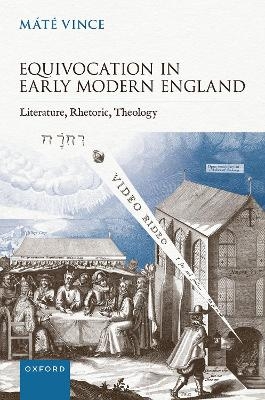
Equivocation in Early Modern England
Oxford University Press (Verlag)
978-0-19-895440-8 (ISBN)
Equivocation in Early Modern England: Literature, Rhetoric, Theology explores ideas about concealing the truth while seemingly revealing it. It is about the conflict, whether historical or fictional, between the interrogator's desire to gain information, the suspect's desire to hide the information, and the divine prohibition against lying. The Gunpowder Plot supposedly led to the revelation of the doctrine of equivocation, a secret teaching of the Roman Catholic Church that enabled concealing one's intentions and knowledge without lying. This book examines conflicting meanings of 'equivocation' to show how contemporary writers made sense of the theological-political debates, and how this in turn shaped their writings and understanding of how language works. It is an intellectual history of equivocation, tracing its evolution from antiquity to the present through an analysis of works by Euripides, Virgil, Shakespeare, Donne, rhetoricians from Cicero to Melanchthon, and theological polemicists, including Henry Garnet, Robert Persons, George Abbot, Thomas Morton, and Isaac Casaubon.
It combines a curiosity about equivocation as a linguistic, philosophical, and rhetorical notion that was keenly exploited by secular writers with a scrutiny of the cultural, political, and religious processes that contributed to its development. It explores the impact of sixteenth- and seventeenth-century literature, education, networks of correspondence, and controversies on the concept of ambiguity. It reveals how encounters with various forms of deception, including lying, strategic silence, dissimulation, and equivocation, resulted in an ever-growing anxiety about, and fascination with, ambiguity. It provides a radically new evaluation of equivocation that, as Macbeth puts it in his final despair, 'lies like truth'.
Máté Vince is a literary and intellectual historian of the early modern period. He works on the European Research Council-funded 'Textuality and Diversity: A Literary History of Europe and its Global Connections, 1545-1661' project with Warren Boutcher. At Warwick, he co-edited the critical edition of the Correspondence of Isaac Casaubon in England with Paul Botley, followed by an Irish Research Council Postdoctoral Fellowship at Trinity College Dublin. He has published on Shakespeare, classical reception, the history of rhetoric, and theological controversies, and taught literature, Latin, palaeography, and intellectual history in the UK, Ireland, and Hungary.
Introduction
Part I. Speech Conceived in Adultery
1: 'Utrum sententia vera sit': The Changing Concepts of Ambiguity in Later Sixteenth-Century Education in England
2: Human Ears and the Judgement of God: Deceit or Self-Defence?
3: 'Engendering a false conceit': The Gunpowder Plot and the Emergence of Jesuitical Equivocation
Part II. The Demise and Resurrection of Monstruous Equivocation
4: 'What species of monster is equivocation': Shakespeare, Donne, Casaubon, and the International Controversy about the Jesuits' Words
5: The Afterlife of Equivocation
Conclusion: Equivocation between Euripides and Bill Cain
| Erscheinungsdatum | 26.07.2025 |
|---|---|
| Verlagsort | Oxford |
| Sprache | englisch |
| Maße | 164 x 240 mm |
| Gewicht | 680 g |
| Themenwelt | Geschichte ► Allgemeine Geschichte ► Neuzeit (bis 1918) |
| Geisteswissenschaften ► Geschichte ► Regional- / Ländergeschichte | |
| Geisteswissenschaften ► Philosophie | |
| Geisteswissenschaften ► Sprach- / Literaturwissenschaft ► Anglistik / Amerikanistik | |
| Geisteswissenschaften ► Sprach- / Literaturwissenschaft ► Literaturwissenschaft | |
| ISBN-10 | 0-19-895440-9 / 0198954409 |
| ISBN-13 | 978-0-19-895440-8 / 9780198954408 |
| Zustand | Neuware |
| Informationen gemäß Produktsicherheitsverordnung (GPSR) | |
| Haben Sie eine Frage zum Produkt? |
aus dem Bereich