


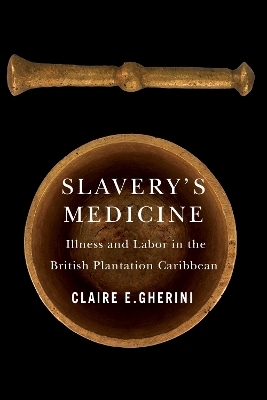
Slavery's Medicine
Illness and Labor in the British Plantation Caribbean
Seiten
2025
University of Virginia Press (Verlag)
978-0-8139-5275-8 (ISBN)
University of Virginia Press (Verlag)
978-0-8139-5275-8 (ISBN)
Healthcare and hierarchy in Caribbean plantation slavery
From their inception, British Caribbean sugar plantations generated wealth on the basis of nightmarish systems of labor exploitation, where illness was a constant of enslaved life. Then, in the second half of the eighteenth century, plantation owners tried to “improve” plantation slavery, targeting medicine and healing. But rather than improve rates of illness, they sought instead to make the work of medicine and care more economically predictable and efficient and to hurry the sick back to work. Healthcare became an arena for contests for power, as people struggled with one another over the terms of their work and how they recovered from illness. Slavery's Medicine uses a rich and substantial archival base to document the experiences of the sick, managers, doctors, absentee plantation owners, enslaved healers, and medical advice authors in this new, modern system of body management. Modern medicine ultimately sustained hierarchies among enslaved people and middling whites. Yet modern medicine also encouraged acts of resistance. It was, therefore, the creation of proprietors as well as enslaved men and women themselves.
From their inception, British Caribbean sugar plantations generated wealth on the basis of nightmarish systems of labor exploitation, where illness was a constant of enslaved life. Then, in the second half of the eighteenth century, plantation owners tried to “improve” plantation slavery, targeting medicine and healing. But rather than improve rates of illness, they sought instead to make the work of medicine and care more economically predictable and efficient and to hurry the sick back to work. Healthcare became an arena for contests for power, as people struggled with one another over the terms of their work and how they recovered from illness. Slavery's Medicine uses a rich and substantial archival base to document the experiences of the sick, managers, doctors, absentee plantation owners, enslaved healers, and medical advice authors in this new, modern system of body management. Modern medicine ultimately sustained hierarchies among enslaved people and middling whites. Yet modern medicine also encouraged acts of resistance. It was, therefore, the creation of proprietors as well as enslaved men and women themselves.
Claire E. Gherini is Assistant Professor of History at Fordham University.
| Erscheinungsdatum | 21.07.2025 |
|---|---|
| Reihe/Serie | Early American Histories |
| Zusatzinfo | 8 b&w illus |
| Verlagsort | Charlottesville |
| Sprache | englisch |
| Maße | 152 x 229 mm |
| Themenwelt | Geisteswissenschaften ► Geschichte ► Regional- / Ländergeschichte |
| Geschichte ► Teilgebiete der Geschichte ► Kulturgeschichte | |
| ISBN-10 | 0-8139-5275-1 / 0813952751 |
| ISBN-13 | 978-0-8139-5275-8 / 9780813952758 |
| Zustand | Neuware |
| Informationen gemäß Produktsicherheitsverordnung (GPSR) | |
| Haben Sie eine Frage zum Produkt? |
Mehr entdecken
aus dem Bereich



aus dem Bereich
Die Revolution des Gemeinen Mannes
Buch | Softcover (2024)
C.H.Beck (Verlag)
CHF 16,80
Eine Geschichte des Geschmacks
Buch | Hardcover (2025)
C.H.Beck (Verlag)
CHF 49,95


