


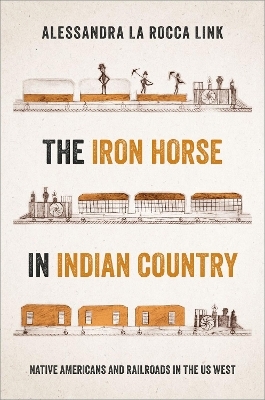
The Iron Horse in Indian Country
Native Americans and Railroads in the US West
Seiten
2025
Oxford University Press Inc (Verlag)
978-0-19-767439-0 (ISBN)
Oxford University Press Inc (Verlag)
978-0-19-767439-0 (ISBN)
The Iron Horse in Indian Country examines the complex dynamic between Native peoples and the nineteenth century's chief transportation technology: railroads, spotlighting the ways in which Native peoples organized and appropriated railroads to resist colonialism and establish themselves as decisive actors in a modern world.
The Iron Horse in Indian Country examines the relationships between Indigenous peoples and railroads that unfolded in the American West during the nineteenth and early twentieth centuries.
Historians have long pondered the railroad's profound and far-reaching role in transforming the United States' economic, political, social, and physical landscapes. The Iron Horse in Indian Country de-centers and reframes this scholarship by spotlighting both the inner workings of railroad colonialism and the means by which Indigenous peoples incorporated railroads into their own networks. By foregrounding Indigenous entanglements with railroads, La Rocca Link challenges deep-seated stereotypes of Indians as either violently resisting the juggernaut of the Iron Horse, or simply vanishing at the first blast of a locomotives whistle.
This project begins with a study of Indigenous contributions to the Pacific Railway Surveys of the 1850s, and extends through to the rise of automobile travel and the passage of the Indian Citizenship Act in the 1920s. The Iron Horse in Indian Country demonstrates that even as railroad-driven colonialism brought calamities to Indigenous communities, Native peoples turned trains into a literal and figurative vehicle of survival, repurposing this novel technology to establish themselves as decisive actors in a modern world.
The Iron Horse in Indian Country examines the relationships between Indigenous peoples and railroads that unfolded in the American West during the nineteenth and early twentieth centuries.
Historians have long pondered the railroad's profound and far-reaching role in transforming the United States' economic, political, social, and physical landscapes. The Iron Horse in Indian Country de-centers and reframes this scholarship by spotlighting both the inner workings of railroad colonialism and the means by which Indigenous peoples incorporated railroads into their own networks. By foregrounding Indigenous entanglements with railroads, La Rocca Link challenges deep-seated stereotypes of Indians as either violently resisting the juggernaut of the Iron Horse, or simply vanishing at the first blast of a locomotives whistle.
This project begins with a study of Indigenous contributions to the Pacific Railway Surveys of the 1850s, and extends through to the rise of automobile travel and the passage of the Indian Citizenship Act in the 1920s. The Iron Horse in Indian Country demonstrates that even as railroad-driven colonialism brought calamities to Indigenous communities, Native peoples turned trains into a literal and figurative vehicle of survival, repurposing this novel technology to establish themselves as decisive actors in a modern world.
Alessandra La Rocca Link teaches at the Upper School of Louisville Collegiate School. She holds a PhD in history from the University of Colorado Boulder and was a fellow at the Clements Center for Southwest Studies at Southern Methodist University.
to come
| Erscheinungsdatum | 05.07.2025 |
|---|---|
| Zusatzinfo | more than 30 black and white figures/illustrations |
| Verlagsort | New York |
| Sprache | englisch |
| Maße | 156 x 18 mm |
| Gewicht | 450 g |
| Themenwelt | Geisteswissenschaften ► Geschichte ► Regional- / Ländergeschichte |
| Geschichte ► Teilgebiete der Geschichte ► Religionsgeschichte | |
| Geschichte ► Teilgebiete der Geschichte ► Wirtschaftsgeschichte | |
| ISBN-10 | 0-19-767439-9 / 0197674399 |
| ISBN-13 | 978-0-19-767439-0 / 9780197674390 |
| Zustand | Neuware |
| Informationen gemäß Produktsicherheitsverordnung (GPSR) | |
| Haben Sie eine Frage zum Produkt? |
Mehr entdecken
aus dem Bereich


aus dem Bereich


