


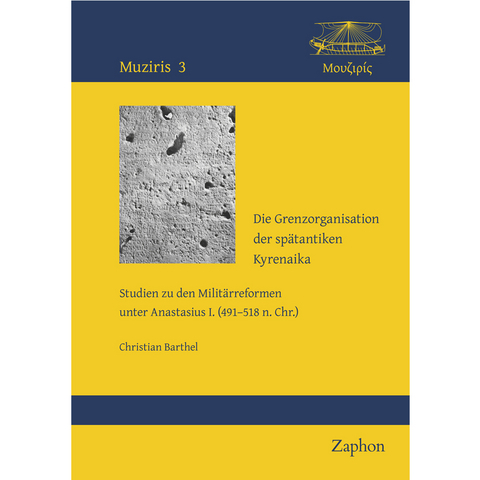
Die Grenzorganisation der spätantiken Kyrenaika
Studien zu den Militärreformen unter Anastasius I. (491–518 n. Chr.)
Seiten
Im Zentrum der Untersuchung steht die historische Auswertung eines 14 Bestimmungen umfassenden Gesetzestextes aus der Regierungszeit von Anastasius I. (491–518 n. Chr.). Dieses Gesetz, das in der Forschung unter dem Titel de rebus Libycis bzw. de rebus Libyae Pentapolis denuo constituendis bekannt ist, wurde auf Stein verewigt und in mehreren Städten der Kyrenaika, dem östlichen Teil des modernen Libyens, entdeckt. Diese Region befand sich am südwestlichen Rand des (ost-)römischen Reiches und wurde folglich als Grenzraum aufgefasst. Zu den wichtigsten Neuerungen der spätrömischen Zeit gehörte die Organisation eines solchen Grenzbereichs in einem Dukat, das einem als dux limitis bezeichneten Funktionsträger unterstellt wurde. In diesem Zusammenhang bieten die Bestimmungen des Anastasius einen hervorragenden Einblick in einen Akt der politischen Kommunikation zwischen der kaiserlichen Zentrale, dessen untergeordneten Verwaltungsorganen und der Peripherie des Herrschaftsraumes in der Form des dukalen Amtssprengels. In der Folge soll daher durch die systematische Analyse des Gesetzes die von den militärischen Erfordernissen geprägten Organisationsstrukturen des libyschen Dukats untersucht werden. Bei der in der Kyrenaika überlieferten Inschrift handelt es sich um eine kaiserliche Konstitution und damit um eine römische Staatsurkunde. In der epigrafischen Forschung hat in den letzten Jahrzehnten der fruchtbare Ansatz Fuß gefasst, solche Dokumente und Texte nicht mehr losgelöst von ihrem Aufstellungsort, der unmittelbar adressierten Öffentlichkeit sowie dem verwendeten Material des Inschriftträgers und im Einzelfall sogar des Monuments, welche die jeweilige Inschrift zierte, zu untersuchen.
Der libysche Militärerlass des Anastasius wurde bislang in das Jahr 501 n. Chr. datiert. Dies beruhte allerdings auf einer falschen Lesung der Kaisertitulatur. Im Rahmen der Untersuchung konnte das Jahr 492 n. Chr. als neuer terminus post quem bestimmt werden. Aufgrund dieser neuen Datierung war es möglich, die Bestimmungen des Kaisers in der Pentapolis mit der im Protokoll seiner Thronbesteigung überlieferten Forderung der hauptstädtischen Bevölkerung nach einer stärkeren Beachtung der militärischen Belange des Reiches zu verbinden. Anastasius kam dieser Forderung in seiner umfassenden Erneuerung des Militärs nach. Wie nun die libyschen Inschriften detailliert belegen, lässt sich diese Reform in zwei Teile gliedern: Im ersten Teil wurden vornehmlich reichsweite Standards etabliert, bekräftigt und feinjustiert. Im zweiten Teil wurden hingegen die speziellen Regelungen für den jeweiligen Geltungsbereich festgelegt. Es sind diese Anordnungen, die die Reform der Dukate ausmachten. Aufbauend auf den in der Kyrenaika gewonnen Beobachtungen wurden dann die übrigen Grenzbereiche des oströmischen Reiches in den Blick genommen. Dabei wurde deutlich, dass ein weiterer wichtiger Baustein der Reformen im Ausbau der militärischen Infrastruktur lag. The focus of the study is the historical evaluation of a legal text comprising 14 provisions from the reign of Anastasius I (491–518 AD). This law, known in research under the title de rebus Libycis or de rebus Libyae Pentapolis denuo constituendis, was immortalized on stone and discovered in several cities in Cyrenaica, the eastern part of modern Libya. This region was located on the southwestern edge of the (Eastern) Roman Empire and was therefore viewed as a border area. One of the most important innovations of the late Roman period was the organization of such a border area in a ducat, which was placed under the authority of an official known as dux limitis. In this context, Anastasius' provisions offer an excellent insight into an act of political communication between the imperial headquarters, its subordinate administrative bodies and the periphery of the area of rule in the form of the ducal administrative district. The aim of this study is to use a systematic analysis of the law to examine the organizational structures of the Libyan ducat, which were shaped by military requirements. The inscription preserved in Cyrenaica is an imperial constitution and thus a Roman state document. In recent decades, epigraphic research has adopted a fruitful approach of examining such documents and texts in isolation from their location, the public they are directly addressed to, the material used by the inscription bearer and, in individual cases, even the monument that adorned the respective inscription.
Anastasius' Libyan military decree was previously dated to 501 AD. However, this was based on an incorrect reading of the imperial title. As part of the investigation, the year 492 AD was determined as the new terminus post quem. Due to this new dating, it was possible to link the emperor's regulations in the Pentapolis with the demand of the capital's population for greater attention to the military interests of the empire, as recorded in the protocol of his accession to the throne. Anastasius complied with this demand in his comprehensive reform of the military. As the Libyan inscriptions now show in detail, this reform can be divided into two parts: In the first part, primarily empire-wide standards were established, reinforced and fine-tuned. In the second part, however, the special regulations for the respective area of application were laid down. It is these regulations that constituted the reform of the ducats. Building on the observations made in Cyrenaica, the other border areas of the Eastern Roman Empire were then examined. It became clear that another important component of the reforms was the expansion of the military infrastructure.
Der libysche Militärerlass des Anastasius wurde bislang in das Jahr 501 n. Chr. datiert. Dies beruhte allerdings auf einer falschen Lesung der Kaisertitulatur. Im Rahmen der Untersuchung konnte das Jahr 492 n. Chr. als neuer terminus post quem bestimmt werden. Aufgrund dieser neuen Datierung war es möglich, die Bestimmungen des Kaisers in der Pentapolis mit der im Protokoll seiner Thronbesteigung überlieferten Forderung der hauptstädtischen Bevölkerung nach einer stärkeren Beachtung der militärischen Belange des Reiches zu verbinden. Anastasius kam dieser Forderung in seiner umfassenden Erneuerung des Militärs nach. Wie nun die libyschen Inschriften detailliert belegen, lässt sich diese Reform in zwei Teile gliedern: Im ersten Teil wurden vornehmlich reichsweite Standards etabliert, bekräftigt und feinjustiert. Im zweiten Teil wurden hingegen die speziellen Regelungen für den jeweiligen Geltungsbereich festgelegt. Es sind diese Anordnungen, die die Reform der Dukate ausmachten. Aufbauend auf den in der Kyrenaika gewonnen Beobachtungen wurden dann die übrigen Grenzbereiche des oströmischen Reiches in den Blick genommen. Dabei wurde deutlich, dass ein weiterer wichtiger Baustein der Reformen im Ausbau der militärischen Infrastruktur lag. The focus of the study is the historical evaluation of a legal text comprising 14 provisions from the reign of Anastasius I (491–518 AD). This law, known in research under the title de rebus Libycis or de rebus Libyae Pentapolis denuo constituendis, was immortalized on stone and discovered in several cities in Cyrenaica, the eastern part of modern Libya. This region was located on the southwestern edge of the (Eastern) Roman Empire and was therefore viewed as a border area. One of the most important innovations of the late Roman period was the organization of such a border area in a ducat, which was placed under the authority of an official known as dux limitis. In this context, Anastasius' provisions offer an excellent insight into an act of political communication between the imperial headquarters, its subordinate administrative bodies and the periphery of the area of rule in the form of the ducal administrative district. The aim of this study is to use a systematic analysis of the law to examine the organizational structures of the Libyan ducat, which were shaped by military requirements. The inscription preserved in Cyrenaica is an imperial constitution and thus a Roman state document. In recent decades, epigraphic research has adopted a fruitful approach of examining such documents and texts in isolation from their location, the public they are directly addressed to, the material used by the inscription bearer and, in individual cases, even the monument that adorned the respective inscription.
Anastasius' Libyan military decree was previously dated to 501 AD. However, this was based on an incorrect reading of the imperial title. As part of the investigation, the year 492 AD was determined as the new terminus post quem. Due to this new dating, it was possible to link the emperor's regulations in the Pentapolis with the demand of the capital's population for greater attention to the military interests of the empire, as recorded in the protocol of his accession to the throne. Anastasius complied with this demand in his comprehensive reform of the military. As the Libyan inscriptions now show in detail, this reform can be divided into two parts: In the first part, primarily empire-wide standards were established, reinforced and fine-tuned. In the second part, however, the special regulations for the respective area of application were laid down. It is these regulations that constituted the reform of the ducats. Building on the observations made in Cyrenaica, the other border areas of the Eastern Roman Empire were then examined. It became clear that another important component of the reforms was the expansion of the military infrastructure.
| Erscheinungsdatum | 24.02.2025 |
|---|---|
| Reihe/Serie | Muziris ; 3 |
| Verlagsort | Münster |
| Sprache | deutsch |
| Maße | 180 x 250 mm |
| Gewicht | 1000 g |
| Themenwelt | Geisteswissenschaften ► Archäologie |
| Geschichte ► Allgemeine Geschichte ► Altertum / Antike | |
| Schlagworte | Anastasius I • Kyrenaika • Römisches Reich |
| ISBN-10 | 3-96327-264-3 / 3963272643 |
| ISBN-13 | 978-3-96327-264-6 / 9783963272646 |
| Zustand | Neuware |
| Informationen gemäß Produktsicherheitsverordnung (GPSR) | |
| Haben Sie eine Frage zum Produkt? |
Mehr entdecken
aus dem Bereich



aus dem Bereich
ohne den ganzen langweiligen Kram
Buch | Hardcover (2025)
C.H.Beck (Verlag)
CHF 36,40
von den Anfängen bis zum Untergang
Buch | Hardcover (2025)
Alfred Kröner Verlag
CHF 48,95


