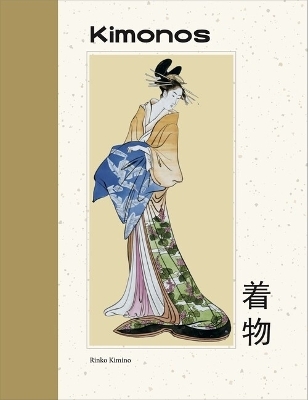
Kimonos
Amber Books (Verlag)
978-1-83886-612-9 (ISBN)
Kimonos reveals the intricacies of Japanese dress from the 3rd century to the present. Including garments for women, men and children, the details have been selected both for their exquisite beauty and craftsmanship, and for how much they impart about the wearer’s identity, be it age, status or taste. A comprehensive introduction, illuminating the main periods and key themes of Japanese fashion history, is followed by thematic chapters that cover all eras of clothing. Each garment or illustration is accompanied by text exploring its structure and the fascinating range of decorative techniques employed, including embroidery, weaving, lacquering, stencilling, dyeing and digital technology. The kimono has a rich history spanning hundreds of years, and is still worn today as fashionable clothing in Japan.
Rinko Kimino has written 20 books on kimonos, Japanese folk craft and kabuki and her work has appeared in several books, magazines and newspaper articles. Her works are geared toward the youth of Japan, and promote Japanese traditions such as kimonos and Japanese traditional crafts with a modern sensibility. As a curator of Japanese culture, she wants to share with and educate others on the beauty and healing/calming benefits the classic Japanese ritual of kimonos, kabuki, Japanese calligraphy, traditional art & craft and tea ceremonies can provide. She is also a curator for the development of new kimonos and Japanese accessories to appeal to a contemporary audience. She lives in Tokyo, Japan.
Introduction
1. Construction and Textiles How kimonos are made, details of the patterns and techniques used, and examples of different textiles
2. Structure and Styles of Kimonos • Seasonal kimono patterns worn with floral or natural patterns according to the season. Show the floral patterns worn on kimonos for 12 months • Traditional and auspicious Japanese patterns introduce kimonos and obi with traditional and auspicious patterns, used since ancient times in Japan, and an explanation of their meanings.
3. Classical Japan • Yamato period to Nara period (300–794 CE) • Heian period to Azuchi–Momoyama period (794–1600) • Edo period (1603–1867)
4. Modern Japan • Meiji period (1868–1912) • Taishō period (1912–1926) • Shōwa period (1926–1989) • Heisei period (1989–2019) • Reiwa period (2019-present)
5. Kimonos for life milestones Kimonos worn at milestones in life from birth to death, including: shrine visits(1yo), Shichigosan (3yo,5yo,7yo), Jusan Mairi(13yo), Coming of Age Ceremonies (20yo), graduation ceremonies, weddings, parents' kimonos for wedding (tomesode and haori hakama), mourning clothes, and funeral attire.
| Erscheinungsdatum | 16.10.2025 |
|---|---|
| Reihe/Serie | Quarterbound Cultures Collection |
| Zusatzinfo | Index; Halftones, color; Halftones, black and white; Illustrations, color |
| Sprache | englisch |
| Maße | 212 x 276 mm |
| Gewicht | 1000 g |
| Themenwelt | Kunst / Musik / Theater ► Design / Innenarchitektur / Mode |
| Kunst / Musik / Theater ► Kunstgeschichte / Kunststile | |
| Geschichte ► Teilgebiete der Geschichte ► Kulturgeschichte | |
| Sozialwissenschaften ► Soziologie ► Spezielle Soziologien | |
| ISBN-10 | 1-83886-612-4 / 1838866124 |
| ISBN-13 | 978-1-83886-612-9 / 9781838866129 |
| Zustand | Neuware |
| Informationen gemäß Produktsicherheitsverordnung (GPSR) | |
| Haben Sie eine Frage zum Produkt? |
aus dem Bereich