


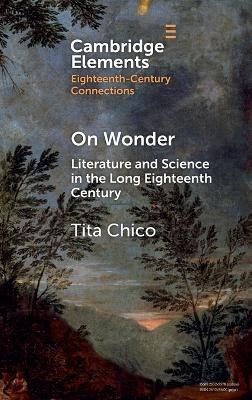
On Wonder
Literature and Science in the Long Eighteenth Century
Seiten
2025
Cambridge University Press (Verlag)
978-1-009-53967-8 (ISBN)
Cambridge University Press (Verlag)
978-1-009-53967-8 (ISBN)
This is an Element about wonder − as an object, as a feeling, as an invitation to study, and as a way of thinking in both literary and scientific texts of the long eighteenth century. Studying wonder in the long eighteenth century helps us to understand our current disciplinary configurations and provides the potential for a more critical practice.
This is an Element about wonder − as an object, as a feeling, as an invitation to study, and as a way of thinking in both literary and scientific texts of the long eighteenth century. Wonder is at the heart of natural philosophical inquiry in the long eighteenth century, its inaugural provocation, its long-standing problematic. Yet wonder requires observation and imagination, operating together, if uneasily, to give shape to forms of scientific, literary, and social knowledge, shaping how thinking works − and who can do it. Studying wonder in the long eighteenth century helps us to understand our current disciplinary configurations, and also how wonder itself embodies the potential for a more capacious critical practice. Studying wonder as an epistemology, praxis, and thematic in the long eighteenth century also carries the promise of invigorating and reimagining our own critical, creative endeavors.
This is an Element about wonder − as an object, as a feeling, as an invitation to study, and as a way of thinking in both literary and scientific texts of the long eighteenth century. Wonder is at the heart of natural philosophical inquiry in the long eighteenth century, its inaugural provocation, its long-standing problematic. Yet wonder requires observation and imagination, operating together, if uneasily, to give shape to forms of scientific, literary, and social knowledge, shaping how thinking works − and who can do it. Studying wonder in the long eighteenth century helps us to understand our current disciplinary configurations, and also how wonder itself embodies the potential for a more capacious critical practice. Studying wonder as an epistemology, praxis, and thematic in the long eighteenth century also carries the promise of invigorating and reimagining our own critical, creative endeavors.
1. Why wonder; 2. Defining wonder; 3. Science's wonder; 4. Wonder as veneration; 5. Wonder's science; 6. To know with wonder; 7. Wonder's subjunctive mood; 8. The ends of wonder; References.
| Erscheinungsdatum | 15.02.2025 |
|---|---|
| Reihe/Serie | Elements in Eighteenth-Century Connections |
| Zusatzinfo | Worked examples or Exercises |
| Verlagsort | Cambridge |
| Sprache | englisch |
| Maße | 152 x 229 mm |
| Gewicht | 249 g |
| Themenwelt | Geisteswissenschaften ► Sprach- / Literaturwissenschaft ► Anglistik / Amerikanistik |
| Geisteswissenschaften ► Sprach- / Literaturwissenschaft ► Literaturwissenschaft | |
| ISBN-10 | 1-009-53967-1 / 1009539671 |
| ISBN-13 | 978-1-009-53967-8 / 9781009539678 |
| Zustand | Neuware |
| Informationen gemäß Produktsicherheitsverordnung (GPSR) | |
| Haben Sie eine Frage zum Produkt? |
Mehr entdecken
aus dem Bereich

aus dem Bereich
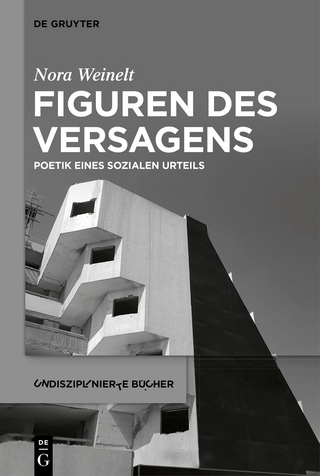
Poetik eines sozialen Urteils
Buch | Hardcover (2023)
De Gruyter (Verlag)
CHF 83,90


